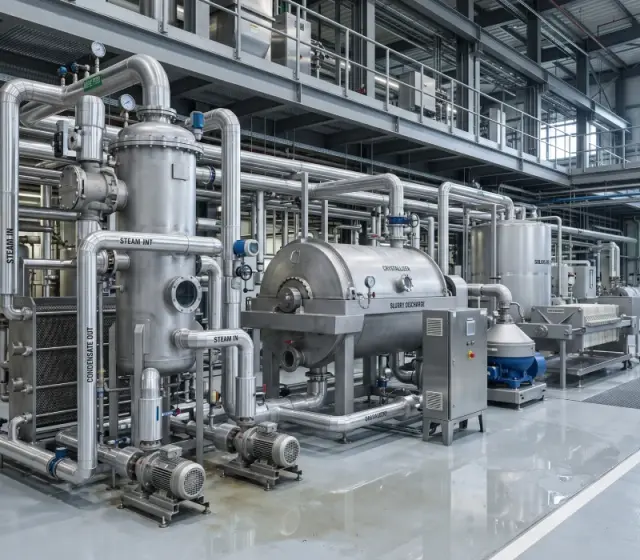
Understanding Zero Liquid Discharge Systems: The Industrial Water Revolution
Water management in industrial plants is no longer a choice—it’s a necessity for compliance, cost control, and corporate sustainability. Zero Liquid Discharge (ZLD) systems represent a transformative approach, ensuring that wastewater from manufacturing or processing operations is entirely treated and recycled, leaving no liquid effluent discharged to the environment. This methodology maximizes water recovery, minimizes environmental risk, and positions plants at the forefront of responsible operations.
The Role of ZLD in Different Industries
Across heavy industries such as chemicals, pharmaceuticals, power generation, textiles, and food processing, ZLD systems have become vital. High water usage, toxic effluents, and strict regulatory pressures drive these sectors to adopt advanced water treatment. Enercon Worldwide delivers tailored ZLD solutions, helping clients comply with local discharge norms and global best practices. For example, power plants can recycle cooling tower blowdown, textile mills treat dye-laden water, and pharmaceutical plants achieve compliance with stringent pollutant limits—all by implementing effective ZLD technologies.
Key Technologies in Zero Liquid Discharge Solutions
Modern ZLD systems utilize a staged approach integrating technologies such as:
- Pre-treatment Units: Removal of suspended solids and oil via clarifiers, filters, and chemical dosing.
- Membrane-Based Processes: Reverse osmosis (RO), ultrafiltration, and nanofiltration achieve high levels of dissolved solid reduction.
- Evaporation and Crystallization: Multiple-effect evaporators and forced-circulation crystallizers concentrate brine, extracting maximum water and leaving recoverable solids.
- Thermal Technologies: Mechanical vapor recompression and thermal drying to optimize water reuse.
Enercon Worldwide engineers integrate these elements to custom-fit plant requirements, balancing CAPEX, OPEX, and footprint concerns.
Maximizing Water Recovery and Reuse: Practical Plant Applications
The principal aim of ZLD is to recover the highest amount of water for re-use within the plant. Typical applications include:
- Reusing treated water for cooling towers or boiler feed (after appropriate polishing).
- Recovering salts or by-products for potential resale or safe disposal.
- Reducing raw water intake, thus lowering water procurement costs and ensuring plant water security during local shortages.
Enercon Worldwide’s ZLD installations in the textile and chemical industries demonstrate water recovery rates exceeding 97%, translating into significant long-term cost savings and stable operations even in water-stressed regions.
Energy Efficiency Strategies in ZLD System Design
Thermal processes in ZLD can be energy-intensive. Modern best practices focus on limiting energy consumption through:
- Integrating advanced heat exchangers to recover and reuse latent heat within the system.
- Deploying hybrid systems that combine membrane filtration with minimum liquid discharge thermal steps.
- Optimizing process parameters via automation and intelligent control logic to run evaporators and crystallizers only when needed.
Enercon Worldwide’s process optimization and utility audits identify further opportunities for saving energy, often reducing ZLD plant energy costs by up to 25% for industrial clients.
Cost Optimization: Reducing Total Cost of Ownership
Reducing lifecycle costs is essential for any CAPEX-heavy water project. Enercon Worldwide achieves this by:
- Selecting low-maintenance membranes and corrosion-resistant materials for long-term durability.
- Offering modular ZLD systems for scalable expansion as production grows.
- Implementing real-time monitoring and predictive maintenance to avoid unexpected shutdowns.
Strategic investments in high-efficiency components reduce downtime, maintenance frequency, and chemical consumption—resulting in a lower total cost of ownership and rapid system payback.
Sustainability and Environmental Compliance Benefits
ZLD systems play a pivotal role in sustainable industrial growth. By completely eliminating effluent discharge, plants can:
- Meet or exceed environmental discharge standards—avoiding penalties and shutdown risks.
- Improve reputation with stakeholders, regulators, and local communities.
- Offset environmental impact via water stewardship initiatives and sustainability reporting.
Enercon Worldwide’s ZLD projects are often central to industrial clients’ Environmental, Social, and Governance (ESG) commitments, supporting certifications such as ISO 14001 and green factory ratings.
Overcoming Operational Challenges in ZLD Implementation
While ZLD brings significant benefits, industrial clients must address several operational hurdles:
- Scaling and fouling of membranes or heat exchangers due to high TDS streams.
- High power demands of thermal evaporators in large facilities.
- Managing and disposing of solid cake safely and cost-effectively.
Enercon Worldwide engineers counteract these issues through precise feed water characterization, antiscalant dosing, regular cleaning-in-place (CIP) protocols, optimized chemical consumption, and providing end-to-end support with remote diagnostics and automation.
Comparing ZLD with Conventional Effluent Treatment Plants (ETP)
Unlike traditional ETPs, which may discharge treated water containing dissolved solids, ZLD ensures complete water and material recovery. Key differences include:
- Resource Utilization: ZLD enables water loop closure versus partial reuse or discharge from ETPs.
- Regulatory Compliance: ZLD future-proofs against tightening discharge norms, while ETP upgrades may be required to stay compliant.
- Long-Term ROI: ZLD delivers ongoing water savings, improved compliance, and potential by-product revenue.
Enercon Worldwide guides industrial customers in evaluating transition paths from ETPs to integrated ZLD solutions based on water balance, budgets, and local regulations.
Industry-Specific ZLD Applications and Success Stories
Power Plants: ZLD is critical in managing cooling water blowdown where water scarcity and zero discharge mandates exist.
Textile & Dyeing: Addressing the complex challenge of color and TDS through advanced pre-treatment, followed by RO and thermal processing.
Chemicals: Treating high-organic, high-saline wastewaters with multi-stage, automated ZLD processes.
Metals & Mining: Managing acid mine drainage and process wash waters, safeguarding downstream water bodies.
Enercon Worldwide’s portfolio features successful ZLD deployments in all these sectors, delivering repeatable results and strategic compliance advantages.
The Future of Zero Liquid Discharge: Digitalization, Automation, and Circularity
Looking forward, ZLD is evolving quickly. Digital sensors and IoT-enabled controls allow for predictive maintenance and real-time process optimization. Modular, AI-driven ZLD skids reduce project timelines and make advanced water recovery affordable even for smaller industries. Integration with renewable energy (such as solar-thermal assist for evaporators) targets net-zero water and carbon footprints. For forward-thinking manufacturers, partnering with engineering leaders like Enercon Worldwide is key to unlocking the full value of ZLD—transforming compliance into competitive advantage and building truly circular, future-ready plants.
Related Enercon solutions
Planning an energy or utility project? Talk to the engineers at Enercon Worldwide or request a consultation. You can also browse all our business areas.