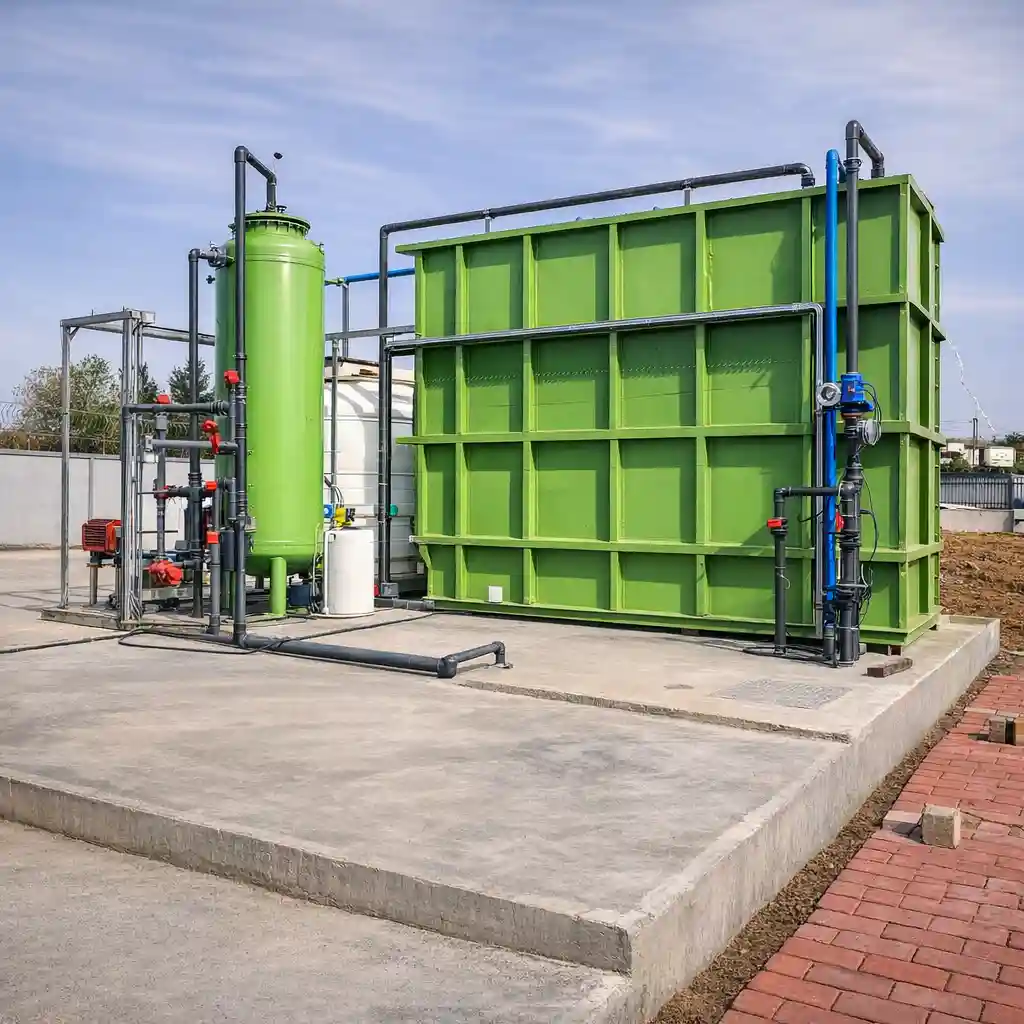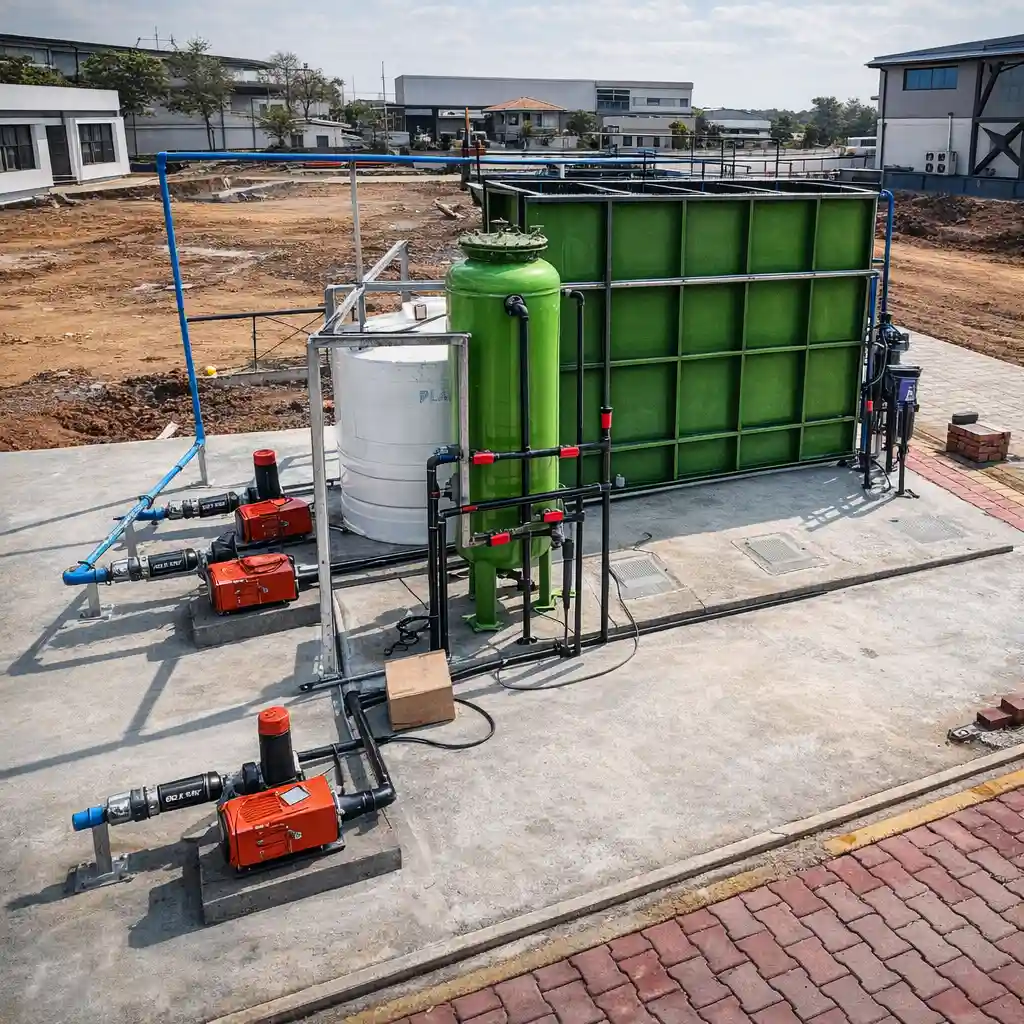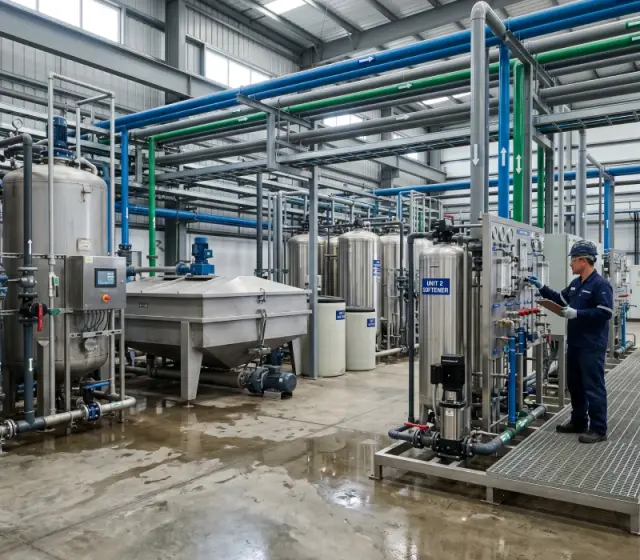
Pre-treatment conditions feedwater before downstream treatment. Based on source-water analysis and system design, filtration, clarification, softening, or dosing can help manage suspended solids, hardness, and membrane-fouling risks ahead of reverse osmosis.

About
Reverse osmosis pre-treatment prepares feedwater for the selected membrane system. The treatment train is determined by the source water and can address suspended solids, turbidity, hardness, or other identified fouling risks.
Depending on the water analysis and process requirements, pre-treatment may use screening, filtration, clarification, softening, sedimentation, or chemical dosing. These are selected as needed rather than applied as a fixed package, and form an upstream stage before reverse osmosis.

Process
Review feedwater quality and the requirements of the downstream treatment process
Select suitable screening, clarification, or filtration where source-water analysis indicates a need
Use softening or chemical dosing when required by the water analysis and system design
Confirm the conditioned water is suitable for the specified downstream process
Send conditioned feedwater to the reverse osmosis or other selected treatment stage
Industries
Pre-treatment stages are selected according to feedwater quality and downstream process requirements.
Upstream conditioning for RO systems where indicated by water analysis and design
Feedwater conditioning for selected industrial utility processes
Water preparation based on process-water quality requirements
Source-water preparation before downstream treatment
Filtration and conditioning stages selected for the raw-water source
Advantages
Specifications
Pre-treatment options are configured around source-water analysis and downstream process needs.
Selected to address suspended solids and turbidity where required
Considered when feedwater hardness requires conditioning
Included where water chemistry and process design call for dosing
Upstream treatment is selected to suit the specified membrane process
Treatment stages are determined by raw-water characteristics
Pre-treatment can be arranged with downstream treatment stages
Operating parameters can be monitored as defined by system requirements
Equipment is selected for the water source and treatment objective
Comparison
Sector Focus
Feedwater conditioning for selected utility processes
Water preparation for defined process-water requirements
Source-water conditioning for process systems where required
Pre-treatment before a specified downstream treatment stage
Gallery
Filtration and conditioning stages selected to prepare feedwater for downstream treatment.
Related solutions
Reverse osmosis (RO) is a membrane treatment option for reducing dissolved salts and impurities where feedwater quality and treatment objectives call for it. It can form part of a broader basic or tertiary water-treatment process.
High-capacity biomass and coal fired boilers engineered for reliable steam generation, optimized combustion, and continuous industrial performance.
Designed to enhance the performance, efficiency, and reliability of existing boiler systems through targeted upgrades, modern components, and optimized combustion technologies.
Specialized agro waste boilers designed to efficiently utilize fibrous biomass fuels like EFB, palm fibre, Napier grass, and wood bark.
Blogs
Engineering articles from the Enercon team on this topic.

A practical engineering guide to selecting, sizing, installing and maintaining PVC pipe for island water supply, desalination, wastewater and commercial utility systems in the Maldives.
Read article
แนวทางประเมินเครื่องกรองน้ำ RO สำหรับโรงงาน ตั้งแต่คุณภาพน้ำดิบ การออกแบบระบบ การใช้พลังงานและสารเคมี ไปจนถึงการบำรุงรักษาและการคำนวณต้นทุน
Read article
แนวทางเลือกถังเก็บน้ำสำหรับโรงงานและอาคารพาณิชย์ โดยพิจารณาคุณภาพน้ำ ความจุ วัสดุ ระบบปั๊ม การควบคุม และต้นทุนตลอดอายุการใช้งาน
Read article