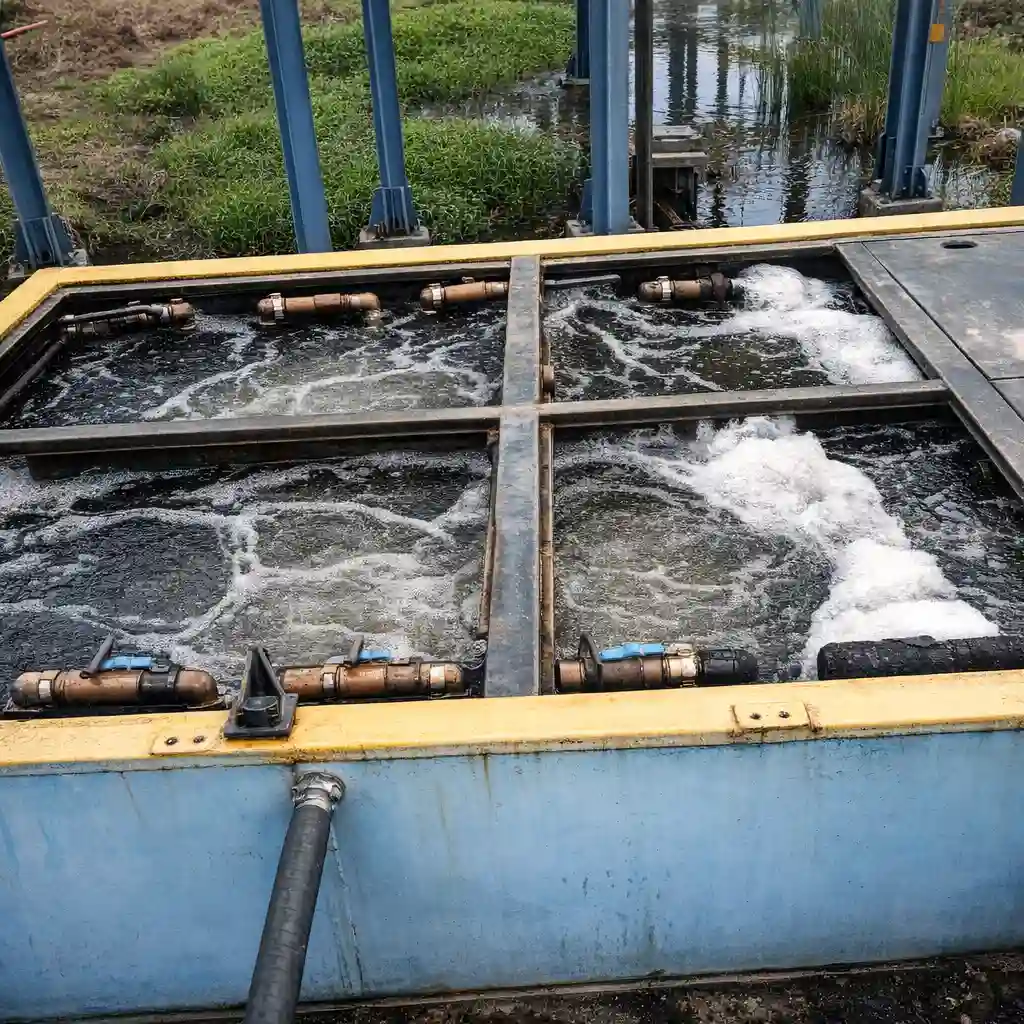
When a Western India textile plant received a Central Pollution Control Board (CPCB) show-cause notice for breaching ZLD discharge norms, the stakes were clear: upgrade to full Zero Liquid Discharge or face plant suspension and daily penalties exceeding ₹2 lakh. With regulatory pressure mounting—CAQM deadlines in NCR by 2025 and state boards across Tamil Nadu, Gujarat, and Maharashtra stepping up inspections—manufacturers can’t afford to treat ZLD as a someday upgrade. The investment case is no longer theoretical: ZLD system adoption isn’t just about license renewal, it’s about operational continuity and water security in increasingly water-stressed regions.
Zero Liquid Discharge Systems: How They Work and What Makes Them Industrial-Grade
Zero Liquid Discharge (ZLD) is a comprehensive water treatment architecture that ensures closed-loop water reuse by converting all liquid effluent into solids, with only reclaimed water and dry salts as outputs. For industrial plants, a ZLD system typically integrates:
- Pre-treatment (screening, oil & grease removal)
- Primary & secondary effluent treatment (biological, chemical, and physical processes)
- Advanced membrane filtration—commonly Reverse Osmosis (RO) or Nanofiltration (NF) systems
- Multiple Effect Evaporators (MEE), sometimes with Thermal Vapour Recompression (TVR)
- Crystallizers and centrifuges for salt separation
- Condensate recovery and recycling for process/feed use
Depending on the trade effluent characteristics, ZLD systems are engineered to handle flows from 50 m³/day (small drug units) up to 3,500+ m³/day (large textile dyeing or chemical manufacturing). Operating temperatures in MEEs often reach 70–110°C; the footprint depends on plant scale and evaporation rates but can range from 250 to 2,000 m². Enercon Worldwide customizes these footprints to suit sector and plot constraints.
Industrial Sectors: Who Needs ZLD and Why
Textile dyeing & processing units—especially in Tamil Nadu, Gujarat, and Rajasthan—face strict PCB and CAQM mandates to recover over 95% of water. A typical 500 m³/day dye house generates high TDS, colour, and organic loads; here, ZLD eliminates all liquid discharge, safeguarding river basins and aquifers. Plants failing audits are regularly issued closure threats.
Chemical and pharma manufacturers in hotspots like Hyderabad, Ankleshwar, and Dahej operate under effluent load restrictions and CETP capacity constraints. Heavy metals, solvents, and hazardous organic residues push ZLD from an option to an operational requirement, especially as global pharma majors enforce supplier ESG audits.
Paper mills, distilleries, tanneries, and food processing operations—each with their sector-specific effluent profiles—are under similar scrutiny. For instance, food processers in the NCR must demonstrate genuine zero-discharge water loops to avoid CAQM show-cause notices, with Enercon Worldwide supporting compliance roadmaps for such clients.
Energy Efficiency Gains: Modern ZLD vs. Legacy Approaches
Older ZLD installations consumed upwards of 80–120 kWh per m³ of distillate, driven by high steam and electrical loads in conventional evaporators. Contemporary systems, leveraging mechanical vapour recompression (MVR), hybrid membrane-thermal designs, and optimized material selection, routinely achieve 25–40% lower specific energy consumption. For comparison:
- Legacy 3-stage MEE: ~110 kWh/m³ water recovered
- Modern hybrid RO + MEE: 58–68 kWh/m³ (textiles/chemical)
This translates to 12–18% net utility savings for plants upgrading from decade-old systems—substantial at scale. Enercon Worldwide’s sector-tuned designs further recover thermal energy from condensate, reducing boiler loading and steam cost per tonne.
Cost Optimization: Real-World ZLD Payback Analysis for India & GCC
Let’s quantify. A 1,000 m³/day textile ZLD retrofit in Gujarat typically costs ₹13–16 crore (including auxiliary utilities). Operating costs—factoring power, chemicals, consumables, and manpower—average ₹42–55/m³ of feed. However, plants recover 80–92% of water as permeate (usable for process, boiler, cooling), cutting raw water purchases significantly.
Sample ROI Scenario:
- Raw water cost: ₹60/m³ (municipal or tanker)
- Water recovery: 800 m³/day
- Savings: 800 × ₹60 × 330 days ≈ ₹1.58 crore/year
- Annual O&M differential: ₹1.1–1.3 crore (incl. salt disposal)
- CPCB/PCB non-compliance fine risk: ₹30 lakh–₹2 crore/year (if non-ZLD)
Typical payback, net of regulatory risk, is usually 3.5–5.5 years. Food manufacturers in UAE and Saudi Arabia, facing water tariffs of $1.70–$2.10/m³, achieve similar break-evens—especially for plants with integrated wastewater/condensate reuse. For CAPEX-intensive projects, Enercon Worldwide’s phased modularization (ZLD train by train) can further optimize cost curve and operational risk.
Sustainability, Compliance, and Environmental Impact
Under India’s ZLD drive, CPCB guidelines (April 2021 and subsequent circulars) targeting priority sectors have transformed compliance from suggestion to necessity. Plants now face:
- Zero liquid discharge certification tied to water consent renewals
- Annual PAT scheme audits factoring in process water reuse
- Local Pollution Control Board (PCB) inspection blitzes and online effluent monitoring mandates
Each ZLD retrofit avoids direct discharge of 160,000–320,000 m³/year of effluent for mid-large plants, directly safeguarding community groundwater—a major ESG signal. Carbon emissions are also impacted: ZLD with integrated heat recovery can cut steam use by 8–15%, usually 180–320 tonnes of CO2 avoided annually for every 1,000 m³/day project.
The Cost of Delay: Fines, Shutdowns, and Reputational Risk
ZLD is as much about risk management as about engineering. Plants operating out-of-compliance face:
- PCB fines ranging from ₹10,000/day (small units) to ₹2 lakh/day (large polluters)
- Immediate suspension risk and show-cause notices—especially during monsoon/raw water scarcity
- Downgraded ESG ratings, impacting export contracts and investor standing
- Escalating water procurement costs due to growing legal curb on groundwater withdrawals
In the GCC, penalties under the new UAE Industrial Wastewater Regulations (2023) now reach AED 100,000–500,000—sufficient to blunt monthly plant EBIT. The opportunity cost of non-action isn’t just regulatory and financial; it’s the loss of business continuity during enforcement periods.
Operational Challenges: Integrating and Running a ZLD Plant
Implementation comes with pain points—and addressing these is central to project success and TCO:
- Variable effluent profiles: Textile and chemical plants see daily TDS/flow fluctuation. Flexible ZLD skids sized for peak and average load smooth out flux, while automated feedback control stabilizes operations.
- Space constraints: Brownfield units rarely have spare plot. Enercon Worldwide utilizes 3D plant modeling and vertical stackers (especially for MEEs and RO racks) to minimize footprint.
- Energy intensity: ZLD is utility-hungry, but heat integration and latest MVR evaporators noticeably reduce steam and power demand.
- O&M/Manpower: Skilled operation and online monitoring (SCADA) are crucial; remote diagnostics and modular plant design reduce downtime and unplanned shutdowns.
Solving Implementation Bottlenecks
- Pre-project effluent treatability studies are non-negotiable
- Pilot plant trials validate recovery targets ahead of full-scale investment
- Vendor’s commissioning and long-term support capability (such as Enercon Worldwide’s operational guarantees) can de-risk adoption
ZLD Technology Comparison: Thermal, Membrane, and Hybrid Approaches
Not all ZLDs are created equal. The major options:
- Thermal-only ZLD: High-grade MEEs and crystallizers, proven for complex chemicals/pharma, but energy intensive (typ. 100–120 kWh/m³ overall SEC).
- Hybrid ZLD (RO + MEE): For textile, paper, and food units with a high recoverable fraction. Achieves 85–90% water reclamation in RO (SEC 3–6 kWh/m³) with evaporators treating only the RO reject, slashing thermal footprint and OPEX by up to 40%.
- Membrane-only (High-recovery): For low-to-medium TDS effluents; limited by scaling and organics fouling but viable for select food, beverage, and electronics sectors.
Technology selection is not one-size-fits-all; it’s tuned to effluent variability, space, steam availability, and downtime tolerance. Enercon Worldwide’s sector-experienced team assists with technology benchmarking and pilot validation, not just specification matching.
Sector Applications: In-Depth Industrial Scenarios
Textile Dyeing Plant—Tamil Nadu, 500 m³/day
Challenge: Hot, coloured effluent with TDS > 12,000 ppm and seasonal spikes. Compliance audit mandated a 95% water recovery.
Enercon’s Solution: Multi-stage hybrid ZLD (RO + MEE + salt crystallizer). RO recovers 83%, single MEE for reject, online monitoring integrated with PCB’s EMS portal. Water recovered used for dye process (“zero freshwater for process”).
Outcome: Compliance certificate retained, raw water dependency cut by 70,000 m³/year, OPEX optimized through condensate heat recovery.
Chemical Manufacturing—Dahej, 1,100 m³/day
Challenge: High COD, solvents, heavy metals, fluctuating TDS. ETP and RO unable to achieve desired closure, export customers demand ZLD for ESG audits.
Solution: Robust pre-treatment, solvent stripper, MEE with forced circulation, salt centrifuges. Enercon provided integrated SCADA and operator training.
Outcome: Achieved <2% liquid residue, met export ESG/REACH standards, averted ₹1 crore annual PCB fines.
Food Processing—UAE, 700 m³/day
Challenge: Seasonally variable effluent, limited utility access, water prices > $1.8/m³.
Solution: Compact containerized hybrid ZLD, high-recovery RO, vapor compression MEE, remote O&M support.
Outcome: Reduced water procurement by 76%, system payback in 3.3 years, environmental clearance obtained with scope for modular expansion.
Future Trends in Zero Liquid Discharge Systems
AI-integrated Smart Operations: Machine learning and AI-driven process control optimize membrane cleaning, chemical dosing, and evaporation sequencing, lifting reliability and reducing chemical costs by 8–12% in early trials.
Hydrogen and Circular Effluent Valorization: Ongoing work in high-TDS brine-to-green hydrogen electrolysis offers cradle-to-cradle salt/chemical recovery, especially relevant where effluent composition supports value recovery.
Modular/Containerized ZLD: For smaller batch plants and food/pharma, modular systems allow scale-out and rapid commissioning, fitting space-poor brownfield sites with phased investment.
Integrated Carbon/Energy Auditing: Coupling ZLD with plant-wide SCADA enables monitoring water, waste, and energy KPIs, crucial for meeting future PAT/ESG reporting and audit-readiness.
How to Choose the Right ZLD System: Decision-Making Criteria for Plant Managers
Core Evaluation Checklist
- Effluent variability: daily flow/TDS seasonality and shock loads
- Footprint and layout adaptability (vertical or modular options for brownfields)
- Energy source (steam/power limits, potential for heat integration)
- Water recovery target vs. salt/solids disposal plan
- Automation and remote operations readiness (SCADA, remote O&M)
- Past commissioning track record and service support (like Enercon Worldwide’s regional presence)
- Pilot plant data and real-world guarantees (not just vendor catalogue promises)
Warning Signs That Signal Urgent ZLD Upgrade
- Repeated PCB show-cause or non-compliance notices
- Disposal costs for tanker/solid waste spiraling upward
- Rising raw water procurement due to tightening government curbs
- Export client pressures on environmental/ESG records
- Frequent unplanned shutdowns or MEE/RO system failures
Enercon Worldwide supports discovery audits and pre-project feasibility for plants navigating these critical decision points.
Seizing the Compliance Window: The Urgency and the Next Step
Manufacturers in sectors targeted by CPCB and the CAQM face a compressed timeline: ZLD projects average 9–15 months from detailed engineering to commissioning—including Feasibility, PCB clearance, procurement, and phasing plant downtime for tie-ins. Plants eyeing the FY 2025–26 compliance window (especially in NCR, Gujarat, and Tamil Nadu) must initiate technology selection and pilot studies early to de-risk shutdown risk.
The next logical move is a structured feasibility or water audit, assessing process water streams, effluent loads, and integration hurdles. Whether benchmarking existing ZLD performance, planning scale-up, or preparing for new regulatory scrutiny, collaborative engineering—rooted in site realities—is essential. Enercon Worldwide has partnered with manufacturers across chemicals, textiles, and food to navigate technical and compliance complexity, delivering not just ZLD systems but a future-proof approach to water stewardship and operational security.
Regulatory deadlines and rising water security risks won’t pause. Industrial decision makers should see ZLD adoption not as a last-resort compliance step, but as strategic investment in uninterrupted production and long-term cost control. Begin with a water audit or pilot—to ensure your plant moves ahead of the compliance curve, not in reaction to it. For those ready to act, experienced partners like Enercon Worldwide can ensure every drop—literal and financial—counts.
Related Enercon solutions
Planning an energy or utility project? Talk to the engineers at Enercon Worldwide or request a consultation. You can also browse all our business areas.