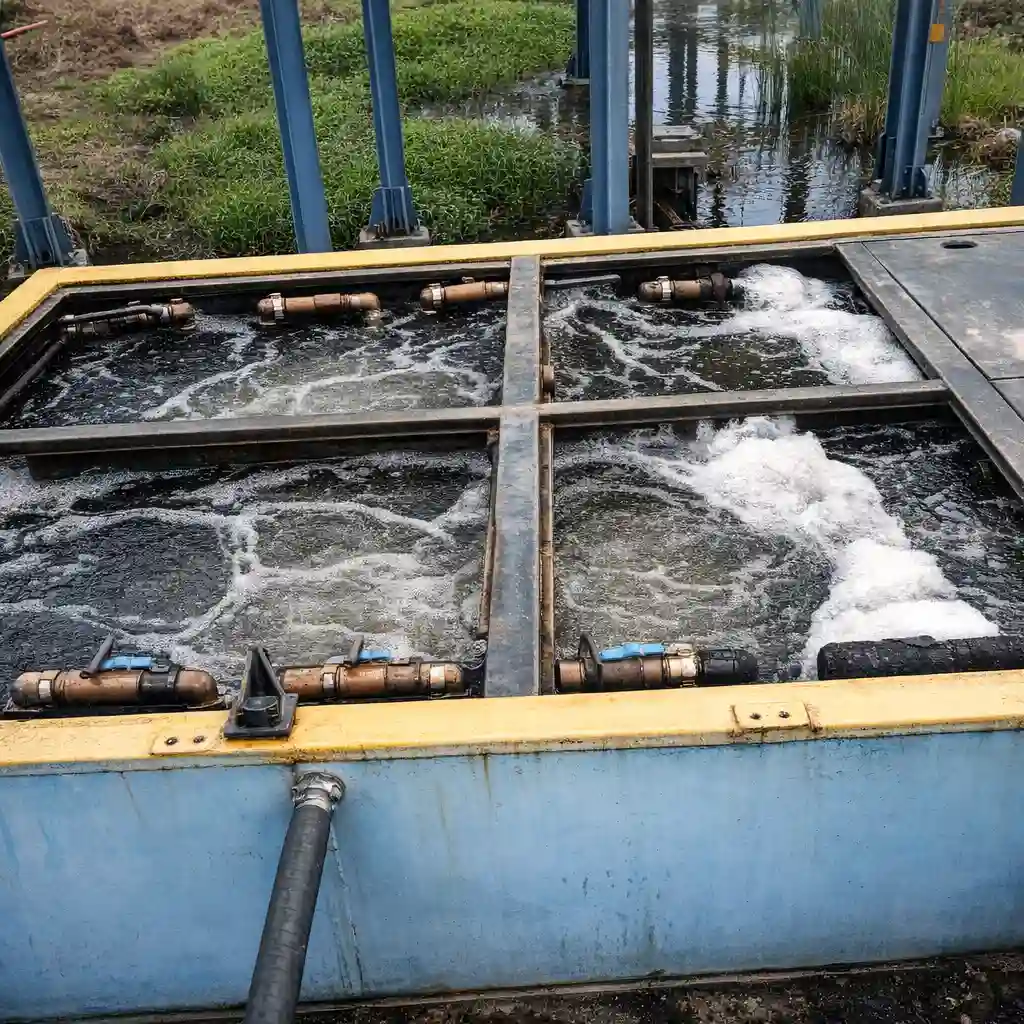
A leading textile processor in Gujarat faced a sudden CPCB inspection and received a notice: implement a true zero liquid discharge (ZLD) system within six months—or risk shutdown and daily penalties of ₹1.5 lakh. For thousands of industrial plants in India and the GCC, ZLD is no longer a distant goal but an operational necessity, with real financial and reputational consequences for inaction.
Regulatory Drivers Making Zero Liquid Discharge Systems Mission-Critical
CPCB’s revised guidelines for textile, chemical, and pharma units—especially in Gujarat, Tamil Nadu, and Maharashtra—have set non-negotiable ZLD mandates for plants discharging even partially treated effluent. The January 2023 extension for ZLD compliance under the CAQM for NCR industries, and increasing crackdowns under the Ganga Action Plan and GCC’s National Environmental Standards for Wastewater, signal a firm intent: discharge must be eliminated at source. Industrial plants that delay risk not simply fines, but closure and blacklisting in export markets with strict ESG audits.
For example, pharma manufacturers in Hyderabad’s Patancheru cluster have faced multiple shutdowns since 2022 for not achieving ZLD in effluent treatment. In the GCC, major dairy and F&B units in Saudi Arabia and the UAE are required to demonstrate ZLD as a condition for permit renewal. Non-compliance now directly threatens operational continuity and future business.
How Industrial Zero Liquid Discharge Systems Work
ZLD systems integrate a sequence of physical-chemical, biological, and thermal processes to recover virtually all wastewater for reuse, generating no liquid effluent discharge. The core process typically includes an effluent pre-treatment unit (equalization, clarification), advanced biological/chemical treatment, membrane systems (RO, UF, NF), and thermal evaporation followed by crystallization.
Typical ZLD Process Flow
- Pre-treatment: Screens, clarifiers, equalization tanks to remove gross solids and balance flows
- Primary ETP: Biological and chemical treatment to reduce organic load, COD, and TDS
- Membrane Filtration: Multi-stage reverse osmosis (RO) or nanofiltration (NF) to concentrate dissolved solids and recover >85% of high-quality permeate for plant reuse
- Evaporation-Crystallization: Mechanical vapor recompression (MVR) or forced circulation evaporators concentrate RO reject, followed by centrifugation or filter presses to produce solid salt cake
System capacities range from 50 m3/day for small textile dyeing units to over 5,000 m3/day for integrated chemical or paper mills. Typical operating temperatures for evaporators are 70–110°C, and RO systems operate at 10–40 bar, demanding robust engineering for reliability.
Industry Use Cases: Where ZLD Delivers Maximum Value
Textile dyeing and finishing units in Tirupur, Erode, Surat, and Panipat have implemented ZLD to comply with state PCB mandates, recovering 88–93% of water. A typical 600 m3/day textile plant achieves ZLD by recovering up to 560 m3/day for dye bath reuse, slashing freshwater abstraction costs. A chemical manufacturing cluster in Dahej upgraded to ZLD to handle high TDS wastewater—recovering over 90% water via multi-effect evaporators (MEE) and RO, and converting salts to saleable byproducts.
In the GCC, a major beverage manufacturer in Abu Dhabi adopted ZLD to offset groundwater restrictions, reusing 95% of process water, reducing freshwater purchases by over SAR 3.2 million per year, and demonstrating compliance to local authorities and global brand ESG standards. Likewise, leading pharma exporters in Hyderabad and Vizag must adopt ZLD to secure US/EU market access, as non-compliance can result in export bans.
Comparing ZLD Systems with Conventional Effluent Treatment Plants (ETP)
Traditional ETPs focus on pollutant reduction, typically achieving up to 80–85% removal of organic and inorganic load—but discharge a treated effluent, often falling short of newer discharge norms for TDS and COD.
- Conventional ETP: Lower investment (~₹30–40 lakh for 500 m3/day), only 65–80% water recovery, residual discharge creates ongoing pollution risk
- ZLD Systems: Higher capex (₹1.5–3.5 crore for 500 m3/day), >95% water recovery, zero discharge, meets all present and anticipated CPCB/GCC norms
For high TDS waste streams (e.g., dyes, pharmaceutical actives), only ZLD ensures full compliance. Enercon Worldwide’s engineering teams frequently support plants in migrating from legacy ETPs to full ZLD, optimizing for sector, effluent chemistry, and footprint constraints.
Energy Efficiency Insights and Impact on Opex
Energy consumption is a key challenge for ZLD, especially in evaporation steps, which typically account for 70–85% of a ZLD plant’s total operating cost. Modern MEE systems with mechanical vapor recompression can reduce specific energy consumption to 60–90 kWh/m3 feed, compared to 120–150 kWh/m3 in older thermal evaporators. Integration with waste heat sources, such as boiler blowdown or process condensate streams, can further lower utility costs by 15–25%.
Reverse osmosis and nanofiltration pre-concentration minimizes the volume sent to evaporation, enhancing overall system efficiency. Textile ZLD plants in Tamil Nadu utilizing waste heat from coal/biomass boilers and solar-thermal assist have demonstrated total Opex reductions of ₹9–14 per m3 treated effluent compared to conventional systems.
Cost Optimization, ROI, and Payback Analysis for ZLD
Installing a full-scale ZLD system represents a significant capital investment, but the ROI is compelling when factoring absolute water savings, compliance risk avoidance, and ESG-driven export opportunities. For an Indian textile processing unit (capacity: 800 m3/day): typical ZLD Capex = ₹2.5–3.5 crore; annual Opex (energy, chemicals, maintenance) = ₹1.0–1.5 crore. At 92% water recovery, with municipal/groundwater rates of ₹35/m3, the annual water cost offset is up to ₹92 lakh. Factoring in zero discharge penalty avoidance (₹1–2 crore/year risk) and production continuity, a typical ZLD payback period is 2.3–3.8 years for most high water-use sectors.
In the GCC context, water tariffs and scarcity mean faster ROI: an Abu Dhabi food processing plant (1,200 m3/day) saw a payback in under 2.5 years by eliminating water import costs and demonstrating regulatory compliance for license renewal. Enercon Worldwide offers process audits to model cost-benefit scenarios tailored to water and effluent rates across India and the Middle East.
Environmental and Compliance Benefits: From Regulation to Reputation
Full ZLD eliminates liquid effluent, ensuring compliance with CPCB and state PCB zero discharge mandates, and facilitating GreenCo/IGBC certification for Indian manufacturing. For a 600 m3/day dye house, this avoids 216,000 m3 of polluted discharge per year and about 540 tonnes of BOD/COD entering water bodies—frequently cited in ESG audits. Food and beverage units in the GCC that achieve ZLD now qualify for favorable tariff rates and compliance points under Saudi Vision 2030’s water stewardship goals.
Sustainability teams can report 85–98% reduction in liquid waste, as well as up to 80% reduction in freshwater withdrawals—directly supporting PAT scheme performance for eligible sectors. The ability to convert recovered salts (e.g., sodium sulfate, sodium chloride) to value-added industrial inputs offers further economic and circularity gains.
Cost of Inaction: Real Risks from Delaying ZLD Implementation
Plants that postpone ZLD upgrades face more than financial penalties. In Q4 2022 alone, over 45 textile and tannery units in the Ganga basin received CAQM-mandated closure notices. In the GCC, failure to demonstrate water balance and ZLD compliance can halt plant license renewals and ban exports. Typical penalties for non-compliance in India range from ₹20,000/day to ₹1.5 lakh/day, with direct impact on production revenue.
Non-compliance now translates into:
- Operational shutdowns and loss of market share
- Ineligibility for export contracts requiring ESG and zero discharge proof
- Reduced investor confidence, impacting capital access and insurance premiums
- Escalating freshwater procurement and effluent disposal costs as norms tighten each year
Operational Challenges in ZLD: What Plant Managers Need to Consider
Achieving robust, reliable ZLD performance is not without hurdles. Effluent variability (fluctuating COD/TDS), scaling and fouling of membranes, skilled O&M manpower shortages, and high evaporation energy loads are persistent pain points. Space constraints in older plants challenge retrofits, and improper pre-treatment can lead to frequent RO membrane failure—raising Opex and downtime.
How Leading Plants Solve These Problems
- Deploying automated chemical dosing and real-time sensor controls to handle effluent variability
- Implementing cascading RO and stepwise membrane replacement to reduce downtime and extend asset life
- Partnering with experienced ZLD engineering firms like Enercon Worldwide for tailored layout, modular system integration, and remote monitoring/SCADA support
- Staff upskilling through on-site O&M training and digital SOPs to reduce reliance on outside technicians
Enercon Worldwide’s track record in commissioned ZLD retrofits demonstrates that integrated design, advanced automation, and hybrid energy supply (combining waste heat and solar) can halve unplanned outages and lower lifetime system costs by up to 18%.
Sector-Specific ZLD Applications: Textile, Pharma, and Chemical Industry Examples
Textile Processors in Tamil Nadu
Challenge: High-volume, high-TDS effluent from dyeing/finishing requires not only COD/BOD reduction, but complete TDS removal for compliance to 2023 TNPCB norms.
Solution: Two-stage RO (76–84% recovery) plus MEE and crystallization—recovering water for dye bath reuse and converting salt cake into road-building byproduct. Result: Water procurement reduced by 78%, closure risk eliminated, and system payback in 3.1 years.
Pharma Export Units (Hyderabad–Vizag)
Challenge: Stringent norms for API and solvent in effluent, export market requirements for zero discharge, and high variability in batchwise loads.
Solution: Deep-bed filtration, advanced oxidation, dual membrane train, automated balance tanks for buffering, and step-wise evaporative capacity. Result: API content in discharge reduced to below 1 ppm, 89% water reuse, and uninterrupted export permits.
Chemical Manufacturers (Dahej/Bharuch)
Challenge: Complex effluent, variable TDS/COD, and high salinity impacting coastal water tables.
Solution: Hybrid ZLD with cascading RO-MVR, real-time TDS monitoring, and flexible modular evaporator trains. Result: Achieved 94% water recovery, clarified salt cake output for industrial consumers, and achieved compliance for unit expansion.
Key Technology Selection Criteria and Decision Support for ZLD
Not all ZLD systems are created equal. Technology selection—RO module type, evaporator configuration, level of automation—should match effluent profile, available footprint, water cost, and regulatory risk profile. Plant managers should rigorously evaluate:
- System compatibility with effluent chemistry (TDS, hard COD, variance)
- Energy consumption per m3 recovered—evaluate MEE vs. solar-assisted vs. pure thermal evaporators
- If modular expansion and integration with existing utilities is feasible
- Vendor O&M support, remote monitoring, and local engineering presence
- Proven plant reference cases in similar industry/flow regime
- Ability to recover salts as value-added byproducts, reducing disposal costs
Plants should demand pilot plant test data and clear 5- to 7-year lifecycle cost projections—Enercon Worldwide’s assessment methodology includes pilot trials, digitized water balance calculations, and integration studies to de-risk technology selection.
Emerging Trends: The Future of Industrial ZLD
Sectors are moving towards modular, skid-mounted ZLD units for easier retrofit and scalability, especially for batch-processing plants and space-constrained urban locations. Alkaline and biological pre-treatment steps are being integrated upstream to reduce chemical consumption and lower overall energy use.
Industry 4.0 digitalization is gaining traction, with real-time SCADA and IoT sensor suites helping reduce Opex by 10–15% via predictive cleaning/maintenance. In India, hydrogen and biogas-fired steam generation is being trialed to drive evaporators, further lowering Scope 1 emissions. By 2027, analysts expect more than 60% of large ZLD projects in India and the GCC to deploy these advanced predictive and modular features driven by tightening environmental audits and water pricing.
Checklist: Is Your Plant Ready for Industrial ZLD?
For plant managers and decision-makers, ZLD readiness means more than a compliance checkbox. Use this quick framework:
- Received notice, inspection, or stakeholder mandates requiring ZLD?
- Water procurement or discharge costs rising by >10% per annum?
- Planning capacity expansion, product line addition, or export market push?
- Current ETP struggling with TDS >2,000 mg/l or COD >1,000 mg/l?
- Lacking remote plant control/data for effluent or O&M?
If any answer is yes, immediate feasibility assessment is recommended. Enercon Worldwide supports detailed site surveys, pilot studies, and regulatory due diligence to help plants derisk their ZLD journey—before fines or shutdowns threaten operations.
Act Now: Lead Times, Compliance Deadlines and the Road Ahead
Full-scale industrial ZLD projects typically require 10–18 months from feasibility to commissioning, including detailed design, equipment manufacturing, pilot testing, and site integration. With 2024–2025 CPCB and GCC regulatory deadlines tightening, and ESG audits hardening for export access, waiting puts plants at real operational risk. The logical next step is a plant-specific water/effluent audit and a technology and cost-benefit feasibility study—not just vendor rates, but lifecycle Opex, reliability, and support. Plants that act now not only comply, but unlock long-term water security, reduced procurement costs, and create a demonstrable ESG advantage for customers and investors. Enercon Worldwide’s ZLD engineering teams are ready to help at every stage—from pilot trials to full system commissioning—ensuring compliance, cost control, and futureproofed water management.
Related Enercon solutions
Planning an energy or utility project? Talk to the engineers at Enercon Worldwide or request a consultation. You can also browse all our business areas.