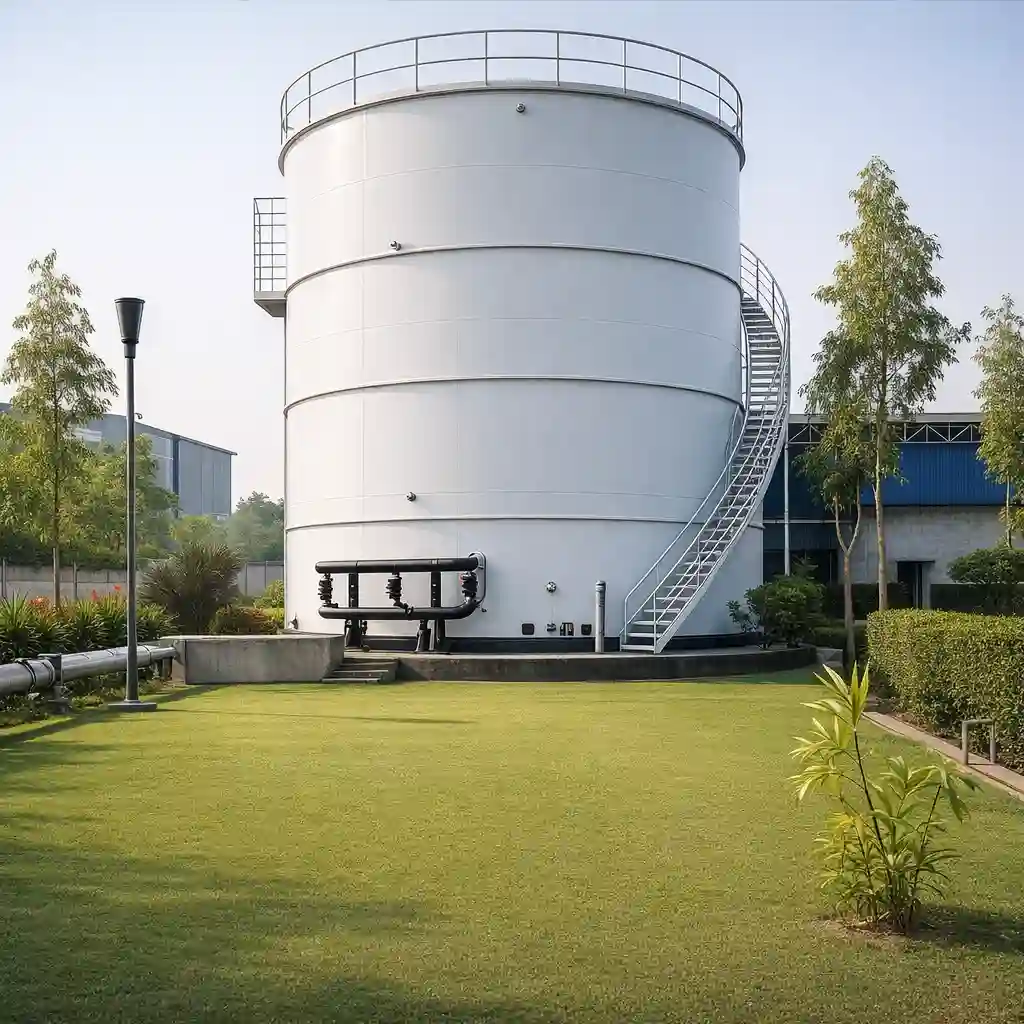
Under revised Central Pollution Control Board (CPCB) regulations, dyeing units in the Tiruppur textile cluster face ₹10 lakh per day closure threats if even one drop of untreated effluent escapes. Similar zero liquid discharge (ZLD) mandates now span pharma, chemicals, and food processing across India. Delaying ZLD implementation is not just an environmental risk — it’s a direct threat to plant operations, permitting, and bottom line.
Why Zero Liquid Discharge is Mission-Critical for Indian Manufacturers
The CPCB’s ZLD directive, adopted by multiple State PCBs, now forces effluent-heavy sectors like textiles, chemicals, pharmaceuticals, and tanneries to completely eliminate liquid discharge from their processes. For example, Tamil Nadu’s 2023 notification made ZLD compulsory for all textile units exceeding 25 KLD of effluent generation. The Ganga Action Plan’s next phase will enforce ZLD for all large-scale tanneries and chemical units in Uttar Pradesh and Bihar by April 2026.
In the absence of ZLD, plants risk:
- Immediate suspension of ‘Consent to Operate’
- Daily fines escalating up to ₹25 lakh/month
- Risk of production shutdowns and supply chain disruption
- Loss of ‘green’ incentives or PAT scheme eligibility
ZLD is no longer a future strategy — it’s current industrial survival, especially in water-stressed zones.
ZLD System Fundamentals: How It Works, With Typical Specs
A Zero Liquid Discharge system is designed to recover, reuse, and recycle >95% of industrial water while converting dissolved and suspended solids into manageable solid waste. The process typically integrates several unit operations, including:
- Pre-treatment (coarse screens, neutralization, oil-water separation)
- Primary and secondary effluent treatment (clarifiers, biological reactors)
- Membrane filtration (ultrafiltration, reverse osmosis — RO) capturing 85–90% of water
- Thermal evaporation (mechanical vapor recompression, multi-effect evaporators) reducing remaining liquid volume by >98%
- Crystallization to convert salts to solids for disposal/recovery
For a 1 MLD effluent textile plant:
- RO recovery: 85–90%
- Evaporator & crystallizer recovery: up to 99%
- Footprint: ZLD plants often need 750–1,500 m² per MLD, dependent on effluent character
- Power: 600–1,200 kWh/MLD (mainly for evaporation)
Enercon Worldwide works with clients to optimize each process step, minimizing both OPEX and CAPEX. System design is tailored for influent characteristics — COD, TDS, mixed salts, and heavy metals can each alter optimal flowsheet selection.
Sector-Specific ZLD Use Cases: Textiles, Pharma, Chemicals, and More
Textile Dyeing (Tiruppur, Surat): Units processing cotton and synthetic blends generate 300–600 m³/day colored, high-COD effluent. Typical ZLD configs here combine MBBR-biological treatment, ceramic UF, two-stage RO (for >90% water recovery), and brine evaporators. At a leading 4 MLD plant, Enercon Worldwide enabled ~3,800 m³/day water recirculation, trimming raw water costs by over ₹6 crore annually.
Pharmaceutical/Bulk Drugs (Hyderabad Cluster): Pharma effluent contains high TDS, active organics, and antimicrobial agents — making biological treatment challenging. Leading players deploy thermal hydrolysis pre-treatments, MVR-based evaporators, and forced circulation crystallizers for robust contaminant removal and ZLD compliance. Plants achieve TDS <100 mg/L in recovered water, suitable for reuse in cooling towers and washing lines.
Chemicals & Agrochemicals (Gujarat): Effluents rich in sodium, chlorides, or complex spent solvents require acid/alkali neutralization and selective ion exchange before ZLD integration. Plants serving the Dahej and Vapi chemical belts are leveraging ZLD to meet both Indian and GCC export customer sustainability mandates — avoiding up to 30,000 tonnes/year of untreated effluent disposal, with water recovery rates >85%.
Energy Efficiency and Waste Minimization in ZLD Systems
Legacy ZLD systems were notorious for high energy and steam demand — especially the evaporator section. Modern ZLD designs now adopt high-efficiency mechanical vapor recompression (MVR) and hybrid RO–evaporation integration, slashing energy use.
- Typical MVR evaporator energy consumption: 30–45 kWh/m³ (vs. 120+ kWh/m³ for conventional evaporators)
- State-of-the-art ZLD systems achieve total water recovery at 80–90% of the energy input of older plants
- By maximizing upstream RO recovery, total evaporator load — and thus thermal footprint — is minimized
Enercon Worldwide’s process benchmarking shows that textile plants upgrading to MVR-based ZLD reduce steam consumption by 20–30% and often cut overall utility OPEX by ₹0.5 to ₹1 per litre of effluent treated compared to pre-2015 designs.
Cost Optimization and ROI: The Real Payback from ZLD
ZLD systems demand upfront investment (₹4–8 crore/MLD, depending on effluent), but the economic case now tilts decisively toward rapid payback due to compliance necessity, utility savings, and resource recirculation. Consider a 2 MLD textile ZLD installation in Tamil Nadu:
- CAPEX: ₹11 crore (evaporator-heavy design for 40,000 ppm TDS)
- OPEX: ₹180/kL (power, steam, chemicals, maintenance)
- Raw water savings: ₹66–85/kL (wild water tariffs in drought zones)
- Eliminated effluent disposal fees: ₹25–35/kL
- Typical ROI: 2.8–3.5 years based on avoided penalties, operation continuity, and resource savings
For pharma and chemicals, ZLD implementation now directly enables uninterrupted exports to Europe and the US, where ‘zero discharge’ supplier proof is mandatory. Omission or delay can mean lost orders worth crores per month.
Enercon Worldwide provides tailored lifecycle modeling: clients can compare cash flows pre- and post-ZLD to build robust capital proposals for boards and investors. These models often reveal that ZLD quickly pays for itself in water-scarce, regulation-intensive regions.
Sustainability, Compliance, and Environmental Impact: ZLD in Practice
ZLD is not simply a compliance box — it transforms plants into circular water users:
- Reduces freshwater withdrawal by 80–95%
- Avoids discharge of up to 750,000 kL/yr effluent at a typical 2 MLD plant, eliminating ~1,800 tonnes/yr of contaminants (COD, TDS, colorants, trace metals)
- Enables >70% reduction in hazardous landfill volumes via crystallizer management and selective salt recovery
For operators under the PAT scheme, CPCB ZLD compliance directly impacts eligibility and baseline credits for water use and pollution, in turn influencing profitability. Ongoing audits for CAQM (Delhi NCR) favour ZLD-certified sites for expanded production licenses. In the GCC, authorities such as Saudi Arabia’s MEWA mandate ‘no liquid discharge’ in new industrial clusters. ZLD assures readiness for such evolving requirements.
The Cost of Inaction: Non-Compliance, Production, and Reputation Risks
Plants delaying ZLD adoption now face risks far exceeding system installation cost:
- CPCB and State Board fines: ₹10 lakh to ₹50 lakh/month, with cumulative unpaid penalties exceeding ₹2 crore at some pharmaceutical hubs
- Forced shutdowns: Each 10-day closure at a 2 MLD unit equals lost revenue of ₹1–2 crore, not counting contract penalties
- Loss of PAT/ESG certification: Hindering investor, lender, and export client relations
- Legal action and damaged community standing
Enercon Worldwide has supported remediation deployments for sites whose delayed ZLD adoption led to months-long closure and legal battles. The financial and business continuity case for early, proactive ZLD is now overwhelming.
Operational Challenges: Overcoming Pain Points in ZLD Adoption and Maintenance
Real-world ZLD projects tackle major engineering and operations hurdles:
- Variable effluent quality (shifting COD/TDS loads seasonally) — demands flexible process controls and modular system expansion
- Evaporator scaling — managed via anti-scalant dosing, periodic cleaning, and feed-side temperature control
- High energy demand — mitigated with hybrid RO-evaporation design, waste heat recovery, and advanced drives
- Solid waste handling — robust crystallizer and dewatering solutions minimize landfill demand
To address implementation hurdles like spatial limitations and workforce upskilling, Enercon Worldwide offers compact ZLD modules and operator training programs. Integration with existing ETP infrastructure is engineered to minimize downtime — most retrofits can be completed within a 45–60 day window.
ZLD Technology Comparison: Old vs New, and Key Selection Criteria
Plants evaluating ZLD options face a series of technology choices, each with sharp performance, OPEX, and reliability impacts.
Legacy ZLD vs. Modern Hybrid Systems:
- Conventional ZLD: stand-alone evaporators, high thermal load, 70–80% water recovery, increased scaling risk
- Modern hybrid ZLD: multi-stage RO plus MVR evaporator, >92% water recovery, 25–40% lower energy cost, reduced O&M downtime
Vendor/Design Checklist for Decision-Makers:
- Influent and output quality test results (TDS, COD, hardness, heavy metals)
- Project experience in your sector (textile vs pharma vs chemicals)
- Demonstrated OPEX figures from reference sites in India/GCC
- Ability to deliver retrofit in brownfield conditions with minimal disruption
- Operator training/after-sales support for maintenance
Enercon Worldwide provides full technology comparison matrices and supports site audits — helping clients match the right process chain to effluent complexity, local water pricing, and long-term compliance scenarios.
In-Depth Industry Applications: Textile, Pharma, and Chemical Case Studies
Textiles: Tiruppur ZLD Cluster
A 3.5 MLD dyeing facility implemented a twin-stage RO + MVR evaporator ZLD solution engineered by Enercon Worldwide. Outcome: 92% water recovery, ₹8 crore/year savings via raw water reduction, full PAT scheme compliance. Shutdown risk removed, export orders regained after 2019 compliance action.
Pharma: Hyderabad Active Pharma Ingredients Manufacturer
Faced with 60,000 ppm TDS influent, biological and MVR thermal integration delivered consistent <100 mg/L output for recirculation. Savings: ₹3.7 crore/year, no hazardous liquid discharge for two years, secure European customer certifications.
Chemicals: Dahej Agrochemical Unit
Crystallizer-centered ZLD project (1.2 MLD) handled mixed brine/solvent loads. Water recovery exceeded 89%, landfill waste dropped by 41%. Plant enabled for GCC green manufacturing audits, safeguarding $9 million annual export contracts.
Future Trends: Where ZLD is Headed in India and the GCC
Several technology evolutions are rapidly reshaping ZLD:
- AI and Smart Sensing: Predictive fouling detection and real-time optimization drastically cut downtime and manual intervention
- Low-Grade Waste Heat Integration: Using plant waste heat to drive evaporators, reducing purchased steam by up to 40%
- Salt/Mineral Recovery: Increasing value extraction from solid brine, e.g., sodium sulphate for commercial sale, moving toward circular economy models
- Modular/Containerized ZLD Units: Compact, rapid deployment solutions — especially vital for brownfield plants or shifting industrial zones
Enercon Worldwide is actively piloting mobile ZLD and advanced brine mining projects across Indian clusters expected to expand these capabilities nationwide in 2025–2027.
Decision-Making Guidance: Evaluating, Selecting, and Justifying ZLD Investment
ZLD Readiness Checklist
- Effluent volume and characteristics mapped (24 months minimum data)
- CPCB/state PCB notifications and deadlines tracked
- Existing ETP audit for integration potential
- Preliminary land/spatial plan for additions
- Full-lifecycle OPEX/ROI calculation (including avoided penalties and export incentives)
- Reference site visits to operational ZLD plants in your sector
If your plant lies within mandated ZLD territory or is export-sensitive, delay now equals avoidable cost. Engage an experienced design-build partner — such as Enercon Worldwide — early to ensure feasibility, compliance, and ROI are built in from day one.
Urgency and Next Steps: Navigating ZLD Project Timelines and Compliance Deadlines
Full-scale ZLD retrofits require 10–14 months from design to commissioning — even longer where permitting, brownfield integration, or high-salinity effluent is involved. Plants targeted by 2026 CPCB/CAQM deadlines or GCC ‘no discharge’ mandates should launch assessment and vendor selection immediately to avoid bottlenecks later in the compliance cycle.
The key decision points are:
- Verify regulatory timelines for your plant’s region and sector (some require ZLD by Q2 2025)
- Quantify all ROI drivers — direct water savings, avoided fines, and new market access
- Prioritize proven vendors with case studies in similar industries — Enercon Worldwide’s technology-neutral approach can help benchmark and value-engineer the right solution
Zero Liquid Discharge is now the industrial compliance baseline — but smart plants view it as a lever to lower OPEX, assure uninterrupted operation, and enhance their sustainability story. Before the next compliance cycle closes, a site-specific ZLD feasibility audit is the logical next step. It is both a risk shield and a business accelerator in today’s industrial climate.
Related Enercon solutions
Planning an energy or utility project? Talk to the engineers at Enercon Worldwide or request a consultation. You can also browse all our business areas.