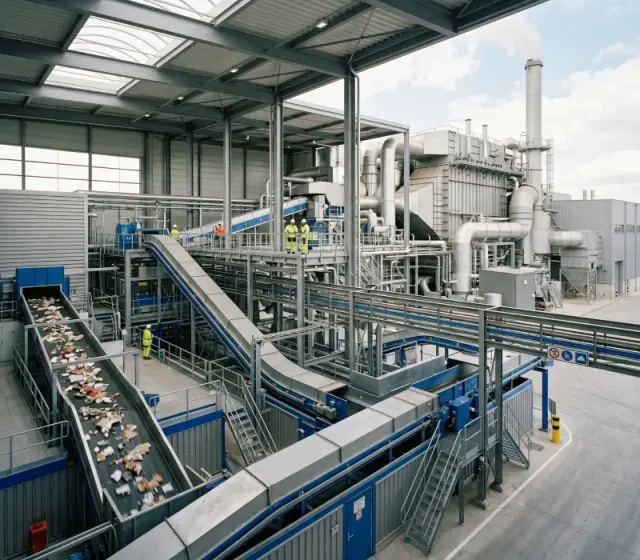
Cement plants in Gujarat routinely lose ₹2–6 crore worth of fuel energy each year via hot exhaust gases vented directly to the atmosphere. For a 5000 TPD cement line, this translates to over 11 MW of untapped thermal potential – value quite literally going up in smoke. Across India’s process industries, waste heat recovery boilers (WHRB) are quickly shifting from a “nice to have” to a compliance-driven, economically justified imperative.
Waste Heat Recovery Boilers: Core Technology and Industry Fit
Waste heat recovery boilers are engineered systems that capture residual heat from industrial exhaust streams and convert it into useful steam or electricity. Unlike standard fired boilers, WHRBs draw from sources like kiln flue gases (cement), sponge iron off-gases (steel), or exhaust from furnaces and engines (chemicals, oil & gas), requiring little or no auxiliary fuel. Common configurations include single- or double-pressure heat recovery steam generators (HRSG), smoke tube and water tube designs per process needs, and modular footprints suitable for retrofitting older plants.
Key Engineering Specifications:
- Capacity: 1—60+ TPH (tonnes per hour) steam output
- Heat Source Gas Temperatures: 250°C—1000°C typical (cement, steel, glass, coking industries)
- Steam Pressures: 6—66 bar-g, superheated or saturated
- Thermal Efficiency: Up to 92% (modern multi-stage units with economizer and air preheater)
- Fuel Saving Potential: 20–60% of auxiliary boiler fuel requirement offset
Sector Adoption Scenarios
- Cement plants: Waste heat from preheater and clinker cooler gases, 10–15% reduction in specific heat consumption after WHRB installation.
- Steel mills (sponge iron/DRI): Flue gas recuperation reduces total CO2 emissions by 8–14%.
- Food processing: Oven and fryer exhaust recovery delivers 500–2000 kg/hour steam for process or cleaning, offsetting LPG or FO use.
Achievable Energy Efficiency Gains: Industrial Benchmarks
Traditional process plants without waste heat recovery typically operate at global “energy intensity” levels far above best practice. For instance, pre-WHRB cement plants average 75–78 kWh/t clinker power use, while plants with even basic HRSG integration drop to 60–65 kWh/t (a 15–23% power improvement). In steel, figures show up to 5 GJ/t steel thermal reduction when both waste heat and process heat are maximized.
Efficiency Uplifts by Industry:
- Cement WHRB: Steam generation amounting to 20–30% of captive generation needs; 6–9% fuel cost reduction per tonne produced.
- Steel DRI WHRB: Plant-wide boiler thermal efficiency of 88–92%, up from 78–82% baseline with old steam boilers.
- Chemical/pharma: 8000–10,000 kCal/Nm3 heat content harnessed from drying and incinerator flue gas.
Financial Impact: Cost Savings and Realistic Payback Periods
Adopting waste heat recovery boilers offers tangible operating cost reductions for energy-intensive factories. Over 250 cement and steel plants in India that commissioned WHRBs between 2018–2023 reported average full-system payback periods of 24–36 months, considering both fuel savings and avoided generation costs.
India Market Payback Example
A 4000 TPD cement plant producing 12 TPH steam via WHRB saves approximately 3600 tonnes of coal per year.
- Annual Fuel Cost Saved: 3600 t x ₹10,000/t (coal, 2024) = ₹3.6 crore saved/year
- Typical WHRB System CapEx: ₹6–8 crore (turnkey, including engineering and commissioning)
- Simple Payback: 1.7–2.2 years.
When grid electricity is displaced (e.g., cogeneration/HRSG), savings can double: power at ₹7/kWh offset by steam turbine output leverages the ROI even further, shortening paybacks to 15–20 months for large facilities. For SMEs, partial waste heat recovery retrofit (e.g., oven/fryer exhaust in food plants) delivers 18–30% annual fuel bill savings with 2.5–3 year paybacks typical.
Compliance, Regulation, and Cost of Inaction
Driven by the PAT (Perform, Achieve, Trade) scheme, CPCB’s air emission standards, and new CAQM region mandates, Indian process industries now face quantifiable risks in delaying WHRB adoption. Under PAT Cycle IV, cement/clinker and steel plants must demonstrate year-on-year reductions in specific energy consumption. Fines for shortfall can reach ₹10 lakh per non-compliant installation, with reputational losses mounting during ESG audits if avoidable CO2 emissions persist.
- CPCB/CAQM Penalties: Non-compliant industrial clusters face daily fines of ₹1–3 lakh for exceeding prescribed emission/energy norms. Some Gurugram-Delhi plants served closure warnings ahead of 2025 targets.
- GCC Markets: Oman and UAE’s industrial efficiency regulations (cf. Abu Dhabi Environment Policy No. 6) are similarly tightening. Plants without waste heat recovery face future restrictions on GHG-intensive boiler or furnace permits.
For export-focused operations, neglecting modern WHRBs risks long-term risk to market access, especially as EU and US buyers demand Scope 1 emission reporting and visible abatement mechanisms during supplier audits.
Sustainability and Environmental Payoff: Quantifiable Impact
Each tonne of coal avoided via waste heat utilization reduces CO2 emissions by nearly 2.5 tonnes. In cement, 10 MW of heat recovery typically means 16,000–18,000 tCO2 avoided per year. Steel sponge iron mills with full off-gas WHRB integration meet 8–12% of sitewide energy demand renewably, cutting absolute emissions and making PAT compliance a realistic, recurring outcome.
For water-intensive industries, advanced WHRBs paired with condensation and heat exchange save 40–60 KL/day process water versus conventional boilers, supporting ZLD (zero liquid discharge) strategies and water recycling obligations under state pollution control board (PCB) rules.
Regulatory Crosswalk
- PAT Scheme: Targeted reductions in specific energy consumption (SEC)
- CPCB/CAQM: Lower NOx, SOx by minimizing auxiliary fuel firing
- GCC Standards: Efficiency minimums for process heat and “waste-to-wealth” incentives
Industry Applications: Deep Dives
Cement Manufacturing: WHRB for Clinker Cooler and Preheater Gases
Case: An integrated Gujarat cement plant (6,000 TPD) deployed a dual-pressure WHRB system on its preheater and cooler exhaust. Key configuration: 2 HRSG units (13 TPH, 10 bar-g steam each), steam used for captive power and process. Outcome: 13% reduction in overall coal use (4,520 tonnes/yr), 17,000 tCO2/yr avoided, ROI in 1.9 years.
Steel (Sponge Iron/DRI): Flue Gas Recovery for Steam and Power
Bhubaneswar-based DRI cluster: Multiple kilns retrofitted with WHRBs (10–20 TPH capacity each). Gas at 900°C yields 10 bar-g steam for turbo-generator. Result: 14% sitewide grid power replaced with WHRB output, meeting PAT targets without additional CapEx on power purchase, with 10,000–12,000 tonnes/year CO2 cut at each plant.
Food Processing (Bakery/Snacks): Oven Exhaust Recovered for Process
A Maharashtra snack facility pipes 230°C exhaust from four fryers to a waste heat recovery boiler, generating 2 TPH steam. This replaces 90,000 litres/year of furnace oil, saving ₹70 lakh/year on fuel and 220 tonnes CO2/year. The system paid back in 2.1 years and enabled water reuse via condensate, improving compliance with Maharashtra PCB.
Technology Comparison: WHRB versus Alternatives
Plants often ask: why not just install new high-efficiency boilers or solar thermal systems?
Boiler Comparison Framework
- Old Auxiliary Fired Boilers: 70–78% efficiency, high Opex, full fuel reliance, no exhaust recovery
- Modern WHRB: 82–92% “apparent” thermal efficiency (as heat isn’t “paid for” twice), fuel neutral, lower Opex, emissions automatically reduced
- Solar Thermal (India): Limited to 5–7 bar-g pressures, large footprint, variable output vs constant process demand
For base load requirements and 24x7 process heat, WHRBs are superior for most energy-intensive sectors, especially where exhaust streams are high-temperature and continuous.
Implementation and Operational Challenges: Engineering Pitfalls
Despite the allure, practical challenges exist. Successful projects – like those executed by Enercon Worldwide – depend on confronting:
- Exhaust Variability: Inconsistent flue gas flows (e.g., batch operations in chemicals or food) challenge sizing and can impact steam reliability.
- Space and Retrofit Constraints: Brownfield plants may lack space or exhaust access; custom modular WHRB designs can mitigate but cost and schedule impact must be considered.
- Corrosive/Particulate Laden Gases: Cement and steel off-gases often carry high dust or acid content, requiring robust tube metallurgy (e.g., SA213, Incoloy) and effective cleaning systems.
- Downtime and Integration: Retrofitting can require 7–21 days of controlled shutdown – vital for project planning and stakeholder buy-in.
- O&M Skills Gap: Staff must be trained in WHRB-specific operations to ensure sustained efficiency; digital SCADA can help alleviate manpower challenges.
Decision-Making Support: Selection Criteria and Vendor Evaluation
To maximize ROI and compliance assurance, manufacturers should evaluate WHRB projects using the following checklist:
- What is the continuous exhaust flow rate (Nm3/hr) and temperature profile?
- Are there high particulate or corrosive components in off-gas? What metallurgy and cleaning systems are needed?
- What is the minimum reliable steam demand (TPH, pressure, quality) for the application?
- Will the WHRB be entirely retrofitted or integrated into new builds? What is the realistic project downtime?
- Is there a potential for future plant expansion or fuel flexibility?
- Has the vendor delivered similar scale projects in your sector (e.g., cement, steel, food)?
- Does the engineering partner, like Enercon Worldwide, offer performance guarantees, local support, and integration with digital controls?
Warning Signs:
- Frequent stack visual emissions, high stack temperatures (>250°C), or excessive auxiliary fuel bills signal that WHRB potential is underutilized.
- Plants approaching PAT or CPCB cycle deadlines without WHRB feasibility studies should treat this as an urgent red flag.
Future Trends: Where Industrial Waste Heat Recovery Is Heading
- Hydrogen/Green Fuels Integration: WHRBs adapted for dual-source heat (waste gas plus hydrogen co-firing) to improve decarbonization.
- AI/SCADA Predictive Maintenance: Deployment of advanced monitoring and control (leak detection, fouling prediction), reducing unscheduled downtime by up to 30%.
- Modularization: Factory-built, transportable WHRB modules for quicker, lower-risk brownfield retrofits.
- Carbon Capture Readiness: Integration points pre-designed for add-on post-combustion CO2 capture units, supporting future regulatory and ESG ambitions.
- Circular Economy Loops: Use of heat recovered for water desalination/ZLD or supplying adjacent industrial users in a cluster or park setting.
Enercon Worldwide remains involved in several such innovation pilots across India and the GCC, ensuring future-ready WHRB deployments.
Key Takeaways: Accelerating WHRB Adoption Before Regulatory and Cost Pressures Bite
For energy-intense sectors in India and the GCC, waste heat recovery boilers deliver double-digit efficiency gains, short and defensible paybacks (1.7–3 years), and sustained environmental compliance. Concrete success across cement, steel, and food manufacturing has shown these benefits are repeatable, and with impending PAT and CPCB deadlines, proactive action is critical.
- Action Step: Plants aiming to qualify under the April 2026 PAT or CAQM cycle should begin WHRB feasibility or energy audit studies no later than Q3 2024 – commissioning lead-times average 8–14 months.
- Decision Support: A site-specific heat and energy audit, delivered by engineering partners with sector expertise such as Enercon Worldwide, is the fastest path to quantify actual ROI and avoid regulatory risk.
Whether you operate a brownfield cement kiln, expanding steel DRI line, or a food manufacturing facility upgrading to meet new emission and energy norms, waste heat recovery boilers should now be central to your optimization and compliance strategy. The next logical step: commission a professional WHRB feasibility assessment and review the customized ROI projections for your plant before windows narrow for incentive and penalty compliance. With the right partner, the full economic and environmental value of waste heat can be unlocked on a timeline that protects both profitability and regulatory peace of mind.
Related Enercon solutions
Planning an energy or utility project? Talk to the engineers at Enercon Worldwide or request a consultation. You can also browse all our business areas.