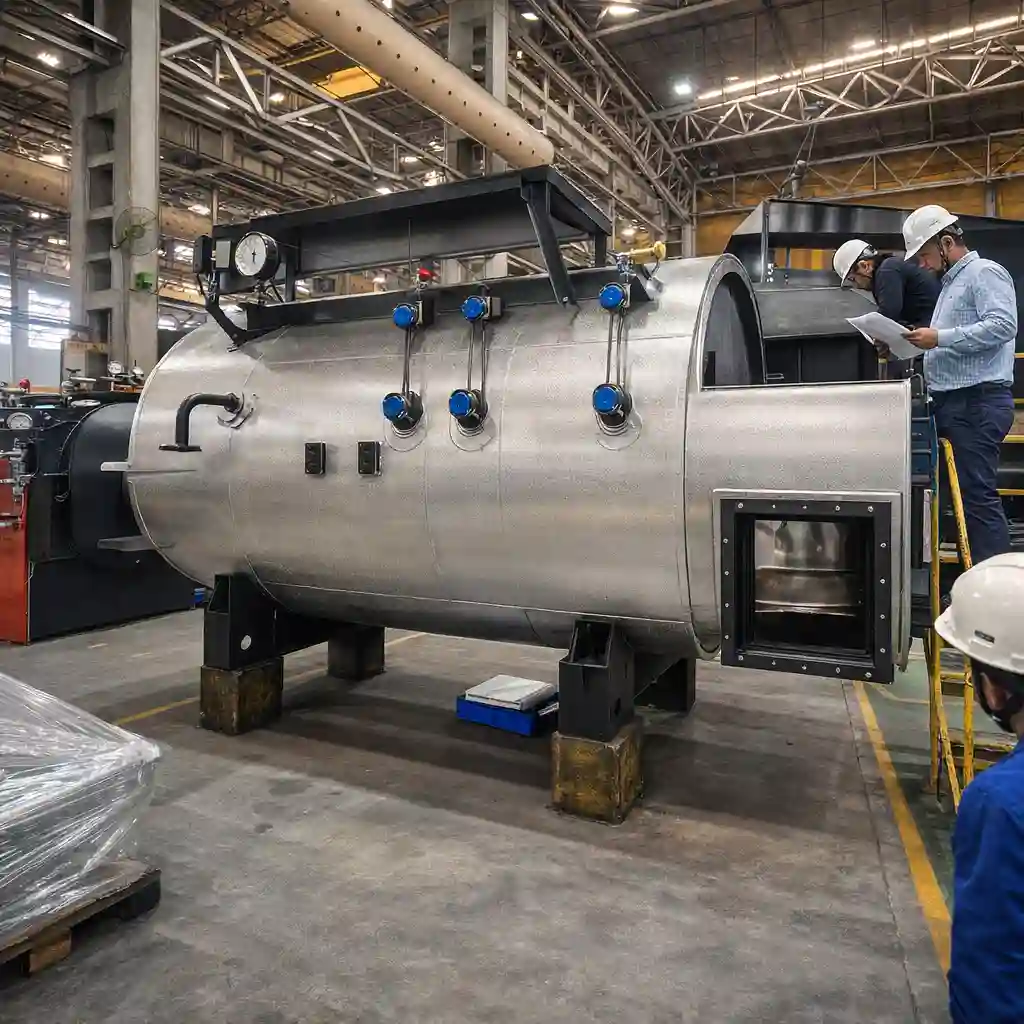
Cement plants in India lose an average of 35% of their total fuel energy as exhaust heat. At current coal prices, that's ₹3–8 crore per year exiting through the stack — profit leaking with every tonne produced. For a 1 million TPA cement unit in Madhya Pradesh, a professionally engineered waste heat recovery boiler (WHRB) cut the plant's purchased power requirement by 18% and delivered a full payback in under three years. This isn't academic theory; it's the new baseline for competitive manufacturing in the era of tightening CPCB norms and the Perform, Achieve, and Trade (PAT) scheme's next cycle. Here's what industrial operations teams need to know — and act on — about waste heat recovery boilers in 2024.
Industrial Use Cases: Where Waste Heat Recovery Delivers Maximum Impact
Waste heat recovery boilers are not just a compliance tool; they're a strategic lever for energy and utility cost reduction across a spectrum of industries facing high thermal loads and regulatory scrutiny. Cement, steel, glass, chemical, and fertilizer plants have been early adopters, but food processing, textiles, and petrochemicals are rapidly following suit driven by fuel inflation and zero liquid discharge (ZLD) mandates.
Operational Scenario Example – Cement Sector: A South Indian integrated cement factory with four preheater strings and a captive power demand of 16 MW implemented a 15 MW WHRB system using kiln exhaust. The result was a direct electricity cost saving of ₹7,800 per operating hour — over ₹12 crore yearly — and 41,000 tCO2/year of emissions avoided, directly tied to state PCB and PAT Scheme targets.
Operational Scenario Example – Steel & Metals: A secondary steel manufacturer in the western region utilized a waste heat boiler on its electric arc furnace off-gas at 800°C, generating process steam for pickling and captive power. This enabled a reduction in grid power purchase by 24% and created a resilience buffer against summer grid curtailments common across the region.
How Waste Heat Recovery Boilers Work: Core Technology and Integration
At its core, a waste heat recovery boiler captures sensible heat from exhaust gases — typically from kilns, furnaces, ovens, or turbines — and converts it into useful steam or hot water that can be directly consumed in process applications or used for power generation via a steam turbine. Think of it as extracting every last calorie from your plant’s fuel bill before it vanishes into the atmosphere.
Key Engineering Specifications
- Capacity Range: Industrial WHRBs range from 1 to 40+ MW(e) of power equivalent, or 5 to 300+ tonnes/hr of steam, tailored per process.
- Heat Source Temperatures: Typical inlet gas temperatures are 300–900°C (cement, glass, steel).
- Steam Conditions: 10–98 bar(g) pressure, 180–520°C temperature, based on application (low-pressure for process, high-pressure for power generation).
- Typical Efficiency: Heat recovery efficiency from 60–75% of available exhaust enthalpy, depending on gas quality and fouling potential.
- Footprint & Integration: WHRBs are designed for vertical or horizontal layouts to suit space constraints, often retrofitted into existing flue gas paths with minimal process interruption.
Enercon Worldwide engineers tailor every WHRB system to the host process, ensuring compatibility with existing fuel types (coal, petcoke, natural gas, biomass, oil) and customized controls for seamless plant operation.
Energy Efficiency Improvements: Quantified Benchmarks
Industrial plants upgrading from conventional process boilers to integrated waste heat recovery solutions consistently see measurable efficiency gains:
- Cement (Clinker Lines): Increase overall plant energy efficiency from 22–27% to 30–37%, translating to 9–15% less fuel consumption per tonne of product.
- Steel Plants: Average electricity import reduction of 17–25%, with combined cycle configurations yielding further savings.
- Chemicals/Pharma: Waste heat utilization can cover 40–65% of process steam demand, slashing both energy usage and carbon intensity.
To put this into context: older fire-tube boilers often operate at 78–82% thermal efficiency. By recovering exhaust heat via a WHRB system, composite boiler system efficiency frequently reaches 89–93% — a jump worth ₹1–2 crore per year for mid-sized units (assuming 30,000–50,000 TPA product output).
Cost Optimization and Realistic Payback: A Grounded ROI Analysis
For Indian industrial sites, the economics of waste heat recovery boilers are shaped by fuel type, utility price inflation, operational hours, and local incentives. Here’s a realistic worked example:
ROI Example – Cement Plant, India
- Plant Capacity: 1.2 million TPA clinker, 18 MW captive power demand, 7,500 operating hours/year
- WHRB System: 12 MW(e), hot gas at 400–700°C
- Installed Cost (2024): ₹28–34 crore (inclusive of engineering, balance of plant, commissioning)
- Electricity Cost Offset: ₹5.8/unit x 80 million units/year = ₹46.4 crore saved annually
- Net Payback: 1.1–2.2 years, even after accounting for O&M (₹1–1.5 crore/year)
Comparable results are seen in steel rerolling mills, glass factories, and fertilizer complexes — for example, gas turbine-based WHRBs in fertilizer can offset 40–50% of their steam or power purchase cost. Many GCC plants see paybacks of 2.5–3.5 years, depending on gas tariffs and power purchase agreements.
Enercon Worldwide's expertise spans design-to-commissioning to maximize such ROI, factoring in local EPC costs, integration complexity, and utility interconnection.
Sustainability, Emissions Reduction, and Regulatory Compliance
WHRBs deliver far more than just OPEX savings; they're a cornerstone for environmental and ESG mandates:
- CO2 Reduction: For each MWh of power produced from recovered heat, 0.82 tonnes of CO2 emissions are avoided (India grid factor, 2024). A 10 MW WHRB = 58,000 tCO2/year avoided.
- PAT Scheme & CPCB Compliance: PAT Cycle VI rewards energy savings certificates (ESCerts) to high-performing plants. Installing a WHRB not only helps meet designated targets but often overachieves, creating a secondary marketable asset.
- State Pollution Boards & CAQM: Several states (Gujarat, Maharashtra, Rajasthan) are requiring demonstrated heat recovery for large emitters, with CAQM mandating energy intensity reductions and linking expansions to green audits. Non-compliance risks include penalties, closure notices, and expansion permit refusals.
- GCC Regulatory Drivers: Initiatives such as Saudi Arabia’s energy efficiency standards and the UAE's ICV program reward domestic value addition and reduced GHG footprints — WHRBs are a clear accelerator for compliance.
Adopting waste heat recovery is not just about avoiding penalties; it also unlocks access to green financing, bolsters ESG ratings for export credibility, and future-proofs against tightening norms — priorities where Enercon Worldwide partners closely with plant management teams.
The Cost of Inaction: Hidden Losses and Compliance Risks
The biggest risk confronting industrial plants isn’t the price of a WHRB project — it’s the escalating cost of doing nothing:
- Direct Losses: For a mid-sized fertilizer plant, 110,000 Gcal/yr is vented unused. Even at a conservative ₹600/Gcal fuel cost, that’s ₹6.6 crore written off annually.
- Compliance Penalties: The CPCB issued 149 closure threats in 2023 to non-compliant large process plants. Under PAT, failing to meet targets causes buy-back of ESCerts at market price (₹1,750–2,100 each) or direct fines.
- ESG and Investor Impacts: Major MNC buyers are now demanding verified energy intensity data. Lack of a WHRB can cost Indian chemical exporters lucrative Western contracts, as audits expose excessive emissions intensity.
With energy and regulatory costs both rising into double digits annually, most plants waiting on WHRB adoption will cross a no-turn-back point within 18–24 months. Early action pays off in both cash and compliance security.
Operational Challenges — and How Leading Plants Solve Them
Implementing and operating WHRB systems brings real challenges that must be confronted head-on:
- Space & Integration: Brownfield retrofits can confront footprint constraints. Custom vertical boiler designs, modular skids, and staged commissioning minimize disruption. In one case, Enercon Worldwide completed a 9 MW WHRB retrofit for a running steel furnace in under 45 days with zero unscheduled shutdowns.
- Gas Quality Variability: Cement kilns and chemical plants produce dust- and acid-laden flue gases. Advanced tube cleaning, corrosion-resistant alloys, and smart soot-blowers maintain performance, with annualized downtime averaging less than 2% across benchmark installations.
- Manpower Skills: Running WHRBs requires operation teams to learn new monitoring and maintenance routines. Plants investing in vendor-supported O&M contracts or digital training resources maintain >98% system uptime.
Proactively addressing these challenges is at the heart of Enercon Worldwide’s project delivery philosophy and long-term performance contracting.
Technology Comparison: Waste Heat Recovery Boilers vs. Conventional Solutions
Why not simply upgrade to a more efficient process boiler or add a new turbine? Comparing options helps crystallize WHRB advantages:
Modern WHRB vs. Traditional Boilers
- Fuel Dependency: WHRBs exploit energy already paid for, reducing future fuel price risk. Process boilers require incremental fuel and generate additional emissions.
- Efficiency Gains: Conventional upgrades yield 2–4% higher thermal efficiency; adding WHRBs increases total plant energy utilization by 7–12% or more.
- Regulatory Fit: Only heat recovery solutions are recognized by PAT/CAQM as qualifying for premium ESCerts or green clearances.
WHRB vs. Direct Power Purchase
- Electricity Tariff Volatility: With Indian grid tariffs increasing by 8–12% annually and GCC markets shifting towards commercial pricing, in-house power from WHRBs is both cost-predictable and more reliable.
Decision-makers balancing capex constraints, long-term sustainability goals, and near-term compliance deadlines overwhelmingly favor WHRBs where viable heat sources exist.
Industry-Specific Waste Heat Recovery Applications
Cement Plants – Kiln Exhaust Utilization
Challenge: High-grade kiln exit gases (320–390°C) vented untapped. Solution: Horizontal WHRBs integrated post-ESP, generating saturated or superheated steam (10–40 bar). Outcome: Up to 35% reduction in grid power or diesel genset operation, verified by Thermax and Enercon projects pan-India.
Steel Rolling Mills – Furnace Off-Gas Recovery
Challenge: Intermittent, high-dust furnace flue gases. Solution: Rugged water-tube WHRBs with continuous online tube cleaning systems. Outcome: 8–15% reduction in total plant energy cost, improved competitiveness against global imports.
Textile Processing – Hot Oil and Thermopac Integration
Challenge: 80–150°C exhaust from stenter and dryer units wasted to atmosphere. Solution: Compact economizer-cum-WHRB modules for pre-heating boiler feedwater and generating process steam. Outcome: 22–28% reduction in specific steam cost, minimizing ZLD-associated evaporation loads and complying with evolving GIDC guidelines.
Future Trends in Waste Heat Recovery Boiler Systems
The next five years will bring meaningful innovation to WHRBs. Here’s what’s becoming reality on the ground, not just in R&D:
- Hydrogen Cofiring: New WHRBs are being designed for compatibility with hydrogen-blended fuels and oxy-fuel combustion environments, enabling deeper decarbonization in steel and cement.
- AI-Enabled Predictive Maintenance: Real-time diagnostics using vibration, temperature, and fouling data will halve unplanned downtime and extend tube life, especially in high-dust environments.
- Modular, Prefabricated Designs: For both greenfield and brownfield projects, modular WHRB packages cut site construction time by 20–35% and lower site safety risk.
- Integrated Carbon Capture Ready: Progressive plants are already specifying WHRBs that can incorporate downstream carbon capture, futureproofing major process investments against potential carbon tax regulation.
Enercon Worldwide is actively delivering pilot deployments of digitally enhanced, modular WHRB systems for both Indian and GCC markets, leveraging lessons learned from top-tier global engineering and local execution.
Decision-Making Guidance: Engineering Criteria and Vendor Selection for WHRB Projects
For plant managers and utility heads weighing waste heat recovery, making the right technology and partner choices is critical. Here’s a practical evaluation checklist:
Waste Heat Recovery Boiler Selection Checklist
- Assess true available waste heat (flow x delta-T x annual hours) — don’t rely solely on vendor theoreticals.
- Request life-cycle cost analysis, not just capex/opex breakup.
- Insist on references for similar sector, process type, and fuel mix.
- Verify engineering for corrosion, fouling, and acid dewpoint challenges.
- Factor in local service, spares, and O&M support for the first 3 years post-commissioning.
- Check digital integration capability (PLCs, SCADA) for utility management.
- Demand clear performance guarantees: efficiency, uptime (%), emissions, and output.
Warning signs include lowball quotes lacking detailed heat balance, lack of site references, or ambiguous energy saving estimates. Engage partners like Enercon Worldwide offering turnkey assessment-to-commissioning services — not just equipment sales.
Next Steps: Deadlines, Feasibility, and Making Waste Heat Recovery a Competitive Advantage
Plants aiming to complete a WHRB investment ahead of PAT Cycle VII deadlines or before grid tariff hikes take effect must acknowledge typical project lead times: from feasibility study to commissioning, expect 8–14 months depending on site readiness and integration complexity. Delaying feasibility means accepting another year or two of compliance risk and untapped savings. For cement, steel, and petrochemical units looking to anchor long-term competitiveness, acting now ensures timely compliance and sustainable cost leadership.
The logical next step is a rigorous energy audit and heat mapping feasibility study — quantifying untapped value and scoping site-specific challenges. Enercon Worldwide routinely partners with industry leaders to execute this process, delivering actionable technical and financial roadmaps.
Summarizing the decision criteria: quantify your waste heat streams, align timelines with regulatory cycles, prioritize partners with demonstrable sector experience and local execution capacity, and demand quantified guarantees. Done right, WHRBs deliver some of the fastest and most reliable industrial ROI available — not just a regulatory checkbox, but a long-term competitive lever for India and the GCC alike.
Related Enercon solutions
Planning an energy or utility project? Talk to the engineers at Enercon Worldwide or request a consultation. You can also browse all our business areas.