Cement plants in India lose an average of 35% of their total fuel energy as hot exhaust gases — representing ₹2–6 crore worth of recoverable value per year, simply escaping through the stack. As coal and gas prices climb and regulatory eyes tighten on energy intensity, managers can no longer justify letting this energy walk away. Waste heat recovery boilers (WHRBs) transform this invisible loss into significant operational savings, offering paybacks often under three years, with added benefits in compliance, emissions, and long-term competitiveness.
Industrial Use Cases: Where Waste Heat Recovery Boilers Deliver Maximum Impact
Waste heat recovery boilers have become essential in sectors where continuous high-temperature processes produce large volumes of exhaust gas. In the Indian context, cement, steel, and glass manufacturing plants stand out as primary beneficiaries. For example, a 5,000 TPD (tonnes per day) cement plant in Gujarat typically vents kiln exhaust gases at 300–350°C, wasting energy equivalent to 10–15 MW. Installing a WHRB here harnesses this heat to generate up to 18–22 tonnes/hour of steam, which is then used for captive power or process needs. Similarly, integrated steel plants in Odisha deploying WHRBs in their sinter plants or blast furnace gas lines achieve electricity offsets of 10–15%, directly reducing grid dependency.
Beyond heavy industry, food & beverage, textiles, chemicals, and pharmaceuticals also adopt WHRBs to recover heat from dryers, ovens, and reaction systems. A textile dyeing unit in Tamil Nadu, for instance, utilized a compact WHRB to pre-heat process water from exhaust gases, trimming fuel costs by 11% and reducing steam make-up load by 6 tonnes/day.
How Waste Heat Recovery Boilers Work: Process, Specifications, and Configurations
At their core, waste heat recovery boilers are heat exchangers designed to extract useful thermal energy from hot industrial exhausts. Simply put, they function like a car radiator in reverse: hot flue gas passes over tubes filled with water, causing the water to vaporize and produce steam. Typically, these units operate in the following temperature regimes:
- Exhaust Gas Inlet: 250°C to 950°C (cement and steel flues at the upper end; food and textiles at the lower)
- Steam Output: 3–40 TPH (tonnes per hour), at 10–60 bar depending on process requirements
- Boiler Efficiency: Modern WHRBs achieve 78–88% heat recovery efficiency, depending on exhaust gas quality and flow rate
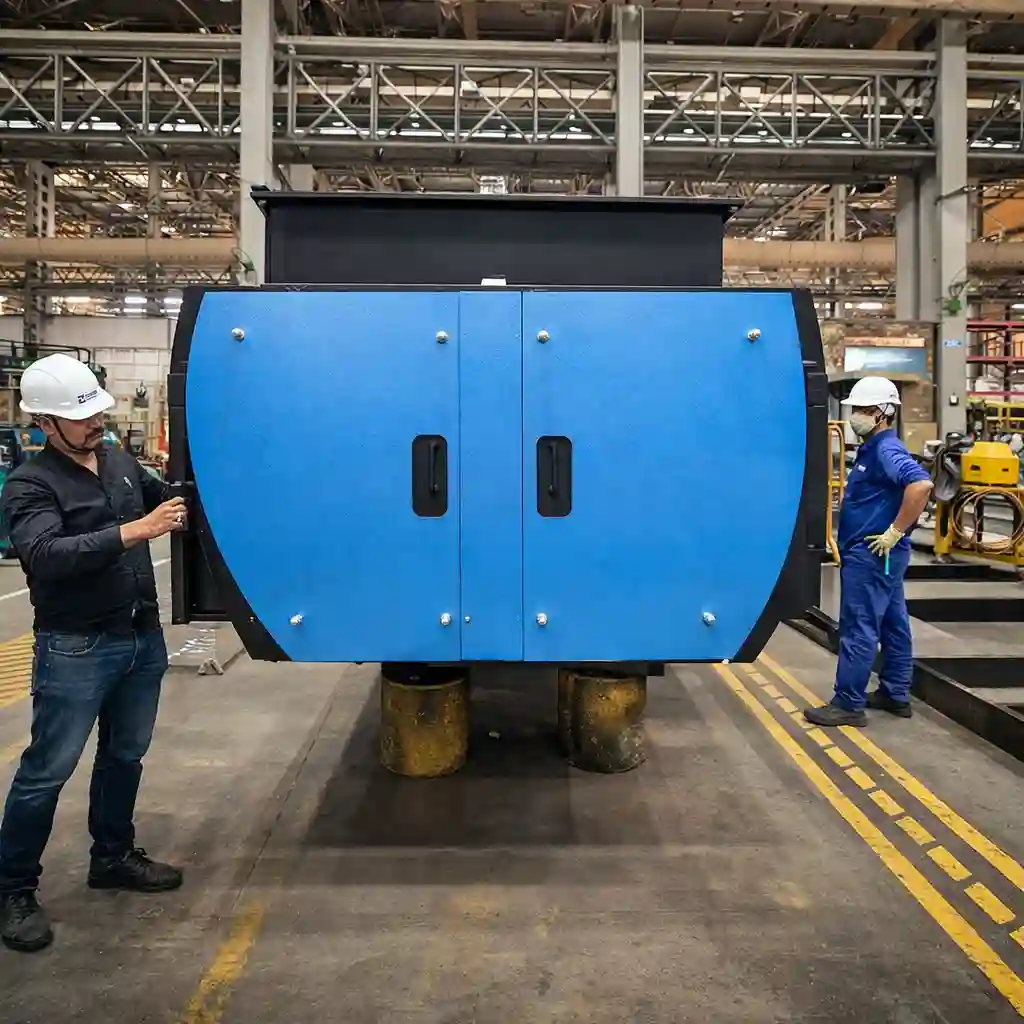
WHRB configurations can be fire-tube (for low volumes, <20 TPH), water-tube (for high capacity and pressure), or hybrid designs integrated with gas cleaning systems. Enercon Worldwide frequently engineers modular skid-mounted WHRBs suitable for retrofit in space-constrained plants, especially where existing utility layouts pose integration challenges.
Energy Efficiency Gains: Quantified Improvements and Benchmarks
The efficiency benefits from WHRB implementation are tangible. Older process plants without waste heat recovery typically see overall thermal efficiencies in the range of 55–65%. With a properly sized waste heat recovery boiler, plant-wide thermal efficiencies can increase by 10–18 percentage points — often reaching 70–82% in real-world Indian operating conditions. For a steel re-rolling mill burning ₹10 crore worth of natural gas annually, this translates into direct fuel savings of ₹1.2–1.6 crore each year after WHRB installation.
Side-by-side benchmarks reveal:
- Cement Kiln Preheater Exhaust: WHRB yields 650–850 kWh of electricity per tonne of clinker
- Sinter Plant Off-Gas: Steam production increases by 18–22 TPH, improving internal power self-sufficiency up to 15%
- Textile Stenter Exhaust: Lower-grade heat recycled as process water pre-heating, cutting steam consumption by 8–12%
Cost Optimization: Payback Analysis and Financial Impact in India/GCC
The capital cost for installing a WHRB system for a medium-sized process plant (10–20 TPH steam) in India ranges from ₹5 to ₹10 crore, depending on capacity and site factors. Operating savings are heavily influenced by local fuel prices and electricity tariffs. For cement, steel, or chemical plants, annual OPEX reduction via WHRBs typically falls between 8%–20% of the plant’s fuel bill.
India: Realistic Payback Example
A textile plant on the outskirts of Surat, running three stenter lines and two dryers, invested ₹3.2 crore in a 12 TPH WHRB system. The recovered heat displaced an equivalent of ₹1.15 crore/year in furnace oil purchases (at ₹75/litre). The simple payback: 2.8 years, excluding additional benefits from reduced cooling requirements and process water costs.
GCC Markets
In Saudi Arabia or UAE, where natural gas prices (post-subsidy reforms) are now $1.2–2.0/MMBTU, WHRBs offset up to 8–12% of fired boiler gas consumption. A 15 TPH installation typically shows a 3–4 year payback, but this can drop further as electricity tariffs and carbon pricing tighten in the GCC region.
Sustainability and Environmental Compliance: Indian and GCC Regulatory Drivers
Waste heat recovery isn’t purely a bottom-line play: it’s increasingly a necessity for environmental compliance. In India, the PAT (Perform, Achieve, and Trade) scheme by BEE rewards cement, steel, paper, and textile plants meeting energy intensity targets — with tradable energy savings certificates (ESCerts) for over-achievers. A typical 3–5 MW WHRB in a cement unit can help avoid 12,000–19,000 tonnes of CO2 emissions annually, assisting facilities in outpacing their PAT targets and safeguarding against CAQM (Commission for Air Quality Management) penalties levied in Delhi-NCR for energy-inefficient operations.
For chemical or pharmaceutical manufacturers in Maharashtra, zero liquid discharge (ZLD) compliance often mandates reducing effluent temperature and volume. Feasible only with heat recovery, this allows process water recycling and aligns with stringent MPCB (Maharashtra Pollution Control Board) norms. GCC nations are also ramping up enforceable limits on greenhouse gas and NOx/SOx emissions; robust WHRB projects in the region now frequently factor environmental credits and future carbon tax exposure into ROI calculations.
The Cost of Non-Compliance and Waiting: What Plants Stand to Lose
Deferring a WHRB upgrade can be surprisingly expensive. In Indian cement clusters, plants that miss their PAT cycle by over 5% energy intensity face result-based penalties — averaging ₹35 lakh for mid-tier plants per cycle, with additional loss of brand reputation and eligibility for future projects. State pollution boards are intensifying spot stack audits, and recurring failure to demonstrate energy recovery precipitates closure notices or stricter emissions caps.
- Fuel Price Volatility: Delayed WHRB projects expose operations to future volatility in coal/gas prices. A ₹3 rise per litre of furnace oil equates to ₹30 lakh extra annual OPEX on a 10,000 TPA operation.
- Production Risk: Older, inefficient hot gas handling often leads to greater wear and unplanned shutdowns, risking 3–5% annual output loss on average.
- ESG Audit Issues: Global supply chain partners increasingly require GHG intensity proof; plants without energy recovery fall short on critical ESG metrics, jeopardizing offtake agreements.
Operational Challenges and Engineering Solutions in WHRB Implementation
Despite clear paybacks, several challenges can slow WHRB adoption. Fuel quality and exhaust characteristics vary widely: cement kiln gases, for example, may fluctuate in dust content and temperature, complicating boiler design. High-dust WHRBs require robust soot blowing and tube cleaning systems to maintain performance (Enercon Worldwide often integrates automatic retractable soot blowers in such designs).
Space constraints are a second common hurdle, especially for brownfield retrofits. Modular, vertically stacked WHRBs — sometimes with custom foundations and gas path routing — are now increasingly specified for Indian and GCC installations where land is costly or inaccessible. Integration downtime can be minimized by pre-assembly of skid modules offsite, reducing typical shutdowns to 12–20 days for commissioning.
Technology Comparison: WHRBs Versus Traditional Fired Boilers and Modern Alternatives
Traditional fired boilers require constant fuel input and present plant thermal efficiencies in the 75–82% range (for solid fuels) and 84–89% (for natural gas). Waste heat recovery boilers, by contrast, use what was previously a liability — hot emissions — as a near-zero-cost energy source. In Indian cement plants, adding WHRBs typically offsets 20–30% of process heat previously supplied by fired boilers, reducing both primary fuel cost and auxiliary power draw for cooling systems.
- WHRBs vs. Fired Boilers: WHRBs offer ~30% greater energy efficiency for steam used in captive processes, with no incremental CO2 output. They are typically limited in capacity by process exhaust volume but excel in plants with consistent high-temp waste flows.
- WHRBs vs. Combined Heat & Power (CHP): CHP systems can further boost plant self-sufficiency, but involve additional equipment and complexity. Many Enercon Worldwide clients combine WHRBs with CHP for maximum cost and emissions benefit.
Industry-Specific Applications: Deep Dive into Cement, Textile, and Food Processing Scenarios
Cement Plants
A 4,000 TPD rotary kiln cement plant near Raipur installed a 15 MW WHRB across its two production lines. The WHRB delivered 45,000 tonnes/year of steam for power generation, resulting in annual coal savings of ₹2.2 crore and 14,500 tonnes of CO2 emissions avoided — comfortably exceeding their PAT obligations.
Textile Dyeing Units
In Ludhiana, a cluster of textile dyeing units adopted compact, low-pressure WHRBs on stenter exhausts. Each WHRB (6–8 TPH) pre-heated boiler feedwater and process water, resulting in per-unit steam cost reduction of ₹5–6 lakh per annum — supporting competitiveness in a cost-sensitive sector facing strict Punjab PCB discharge norms.
Food and Beverage Processing
A leading tomato paste manufacturer in Nashik replaced direct-fired steam generation with a WHRB capturing evaporation line exhaust. Besides saving ₹35 lakh annually in LPG, they cut process water heating emissions by 280 tonnes CO2, strengthening their ESG scorecard for global customers.
Future Trends in Waste Heat Recovery: Innovations Shaping the Next Decade
The next phase of WHRB deployment is being shaped by several innovations:
- Integration with Hydrogen Firing: New WHRBs are being designed to handle hydrogen-enriched exhausts (up to 20% blend), preparing for low-carbon fuel transitions in the steel and chemicals sectors.
- AI-Based Predictive Maintenance: Smart sensors and edge analytics flag fouling or tube leaks before they disrupt operation, minimizing downtime in energy-intensive clusters.
- Modular & Skid-Mounted WHRBs: Shorter lead times (down to 4–6 months from order to commissioning) driven by factory-assembled modules — an area where Enercon Worldwide’s engineering teams have executed multiple textile and chemical retrofits.
- Industry 4.0 SCADA Integration: New WHRBs support dynamic, remote optimization of steam output, stack monitoring for compliance, and seamless reporting for ESG and PAT documentation.
Decision-Making Guidance: Evaluating WHRB Projects for Maximum Value
Key Evaluation Checklist
- Exhaust Gas Quality: Is the temperature, flow, and dust content stable enough for reliable heat recovery?
- Steam Demand Profile: Does your process allow for consistent utilization of recovered steam (power, heating, process)?
- Project Footprint: Can a WHRB be integrated without disrupting existing operations — or is modularity required?
- Compliance Horizon: Are there upcoming PAT, CAQM, or local PCB deadlines that accelerate ROI by avoiding penalties?
- Vendor Engineering Depth: Does the solution provider (such as Enercon Worldwide) have a track record in your sector, and capability for after-sales support?
Warning Signs That Signal Immediate Action
- Stack gas temperatures above 250°C exiting the plant
- Monthly furnace oil or natural gas bills exceeding ₹50 lakh without offset credits
- Repeated stack audit non-conformances or failed energy audits
Enercon Worldwide works with industrial clients to conduct onsite energy audits, simulation studies, and ROI modelling — ensuring that a WHRB retrofit is right-sized and tuned for regulatory as well as commercial goals.
Strategic Next Steps: Making Your Waste Heat Recovery Boiler Investment Count
With April 2026 PAT scheme targets approaching, most mid-to-large plants should already be in the feasibility and vendor selection phase for WHRB projects if they want to commission ahead of mandatory compliance cycles. Lead times (from design to full commissioning) average 8–14 months. Waiting risks not only missed PAT credits, but exposure to new emissions standards and unhedged energy cost increases.
Facility managers are encouraged to begin with a site-specific waste heat audit — often coordinated by engineering partners like Enercon Worldwide — to map exhaust sources, quantify potential, and prioritize projects accordingly. Remember, the plants able to demonstrate best-in-class energy intensity by the next compliance deadline will hold the competitive, regulatory, and cost advantage in their industry sector. Acting early on WHRB implementation isn't just about ticking a box — it's about future-proofing plant economics and sustainability in an era of rising scrutiny and relentless competition.
Related Enercon solutions
Planning an energy or utility project? Talk to the engineers at Enercon Worldwide or request a consultation. You can also browse all our business areas.