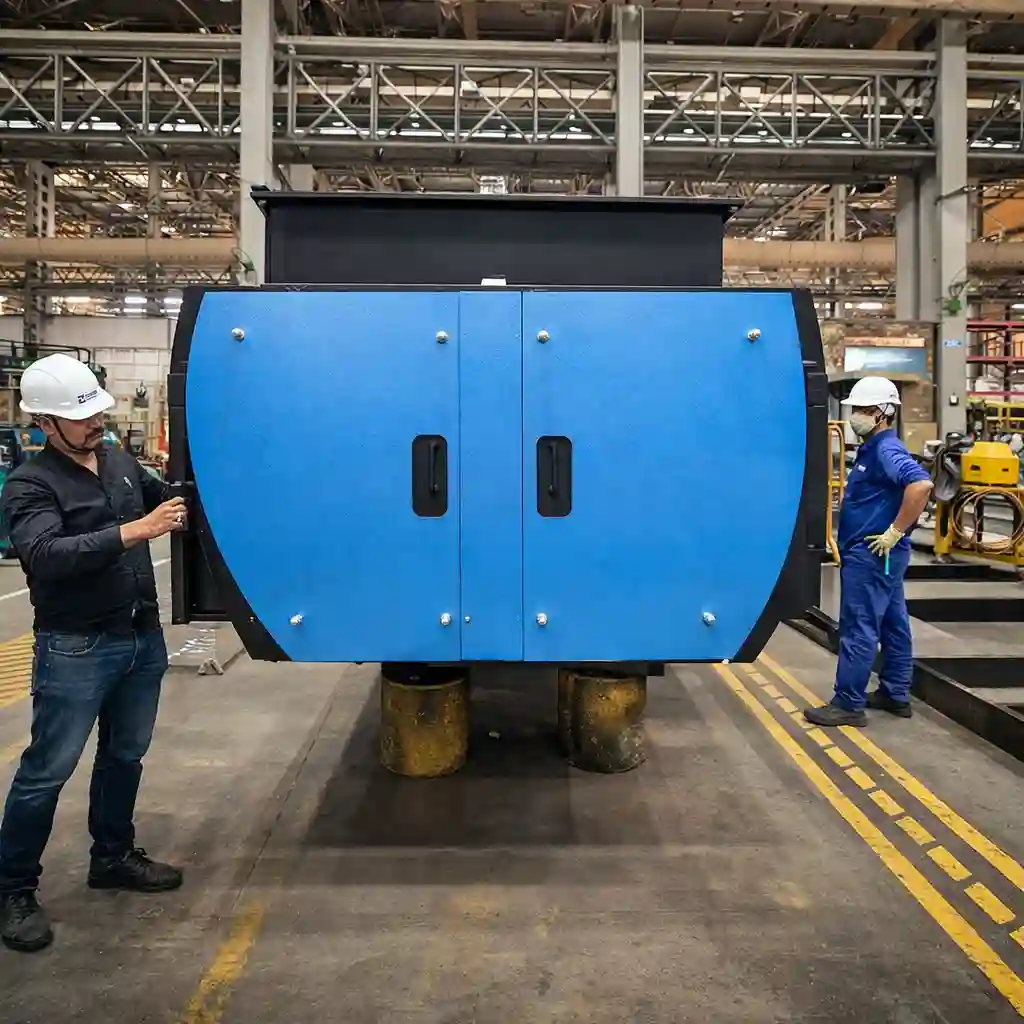
Cement plants in India lose an average of 35% of their total fuel energy as exhaust heat. At current coal prices, that represents ₹2–6 crore of recoverable value per year—simply walking out of the stack. For many manufacturers, ignoring waste heat recovery is no longer a missed opportunity—it's a direct financial and compliance risk.
Industrial Waste Heat Recovery: Where It Matters Most
Waste heat recovery (WHR) delivers transformative results in industries with high thermal loads and continuous operations. In a 1.5 million TPA cement plant in Gujarat, installing a WHR boiler on the preheater and clinker cooler recovered 14 MW of lost energy—translating to 32 GWh annual power generation and 19,000 tonnes of CO2 avoided. Steel mills, chemical plants, and food processors also have enormous untapped potential, with stack gases, cooling water, flue gas, and exhausts representing significant energy sinks.
Operational scenarios:
- Cement: Kiln and preheater exhaust gases (280–360°C) power steam turbines, generating 10–40% of plant electricity needs.
- Steel Re-rolling: Flue gas from reheating furnaces (350–900°C) preheats combustion air, achieving up to 20% fuel reduction.
- Textiles: Hot dye effluent and air dryers are retrofitted with heat exchangers, saving 12–17% on steam demand.
- Food Processing: Boiler blowdown and cooking exhausts are channelled to supply process hot water, often with sub-18 month paybacks.
How Waste Heat Recovery Systems Work in Practice
Waste heat recovery systems intercept thermal energy leaving process equipment—stacks, furnaces, dryers, compressors—and either reuse it directly or convert it into steam/electricity. The core technology options include:
- Waste Heat Recovery Boilers (WHRBs): Capture heat from exhaust gases to generate steam at 10–64 bar and 180–480°C, typically from 2 TPH to 80 TPH capacities. Used in cement, steel, glass, and power augmentation.
- Heat Exchangers: Shell-and-tube or plate-type units transfer low- to medium-temperature heat (60–250°C) to process water, air, or other fluids.
- Thermal Oil Heaters: For direct reuse of heat when process temperatures are below steam point or where integration is complex.
Modern WHR systems are engineered to minimize pressure drop, protect downstream equipment from particulate fouling (via cyclones, bag filters), and integrate with existing control/SCADA infrastructure. Footprints vary, with horizontal layouts (WHRBs) needing 80–250 sq.m for mid-sized systems, while heat exchanger retrofits can be completed inside existing utility corridors.
Energy Efficiency Benchmarks: Quantifying the Gains
WHR is proven to close glaring efficiency gaps in Indian and GCC industry. Key performance benchmarks include:
- Cement: Power self-generation of 25–40 kWh/ton clinker (15–35% of plant load); 18–25% reduction in grid power draw.
- Steel: Fuel-to-steam efficiency rises from 67–72% (legacy) to 84–89% (with WHR integration) in typical re-rolling mills.
- Chemical and Petrochemical: WHR-integrated process heaters deliver up to 16% fuel savings with ROI periods of 2–3 years at LNG/LDO price benchmarks.
On average, incorporating stack and hot water waste heat recovery in large manufacturing complexes leads to:
- 6–12% overall fuel consumption reduction
- Boiler thermal efficiencies rising above 88–92% with economizer/APH retrofits
- Annual steam cost savings of ₹30–85 lakh for every 10 TPH recovered load
Cost Optimization and ROI: Real-World Numbers
For a mid-sized chemical plant in Gujarat processing 600 TPD, a WHRB with 16 TPH steam output can displace over ₹1.1 crore/year in coal or gas costs (based on ₹2800/tonne steam). Typical project CAPEX: ₹3–7 crore, with payback periods of 16–30 months, factoring in operation and maintenance.
Food processing units in the GCC deploying plate heat exchangers to reclaim heat from boiler blowdown have seen utility gas bills drop 12–15%—equivalent to SAR 200–400K annual savings. Payback is often under 2 years, and even faster where local power purchase tariffs exceed ₹7/kWh (India) or $0.10/kWh (GCC).
Enercon Worldwide’s site-specific feasibility studies regularly identify “hidden” recovery points that are missed in standard audits, ensuring actual savings match projections. Plants need to factor downtime, integration, and fuel price volatility into their proforma, but real-world case studies confirm: effective WHR is routinely the quickest high-ticket investment to payback in thermal-intensive sectors.
Compliance Mandates and the Price of Inaction
Indian pollution control regulations, led by the CPCB and regional State Pollution Control Boards, have accelerated the industrial case for waste heat recovery. Textile, cement, sugar, and large process industries must now meet energy consumption and emission intensity targets under the PAT scheme—non-achievement results in compliance penalties as high as ₹10 lakh per shortfall certificate, and reputational risk for ESG reporting.
The CAQM’s draft mandates for energy and emission audits, especially in NCR and other critically polluted clusters, directly credit WHR investments during compliance reviews. Inaction, or delayed deployment, can mean more than fines: plants risk closure notices, fuel supply curtailment, missed green tax rebates, and lost PAT “white certificate” revenue opportunities.
In the GCC, UAE and Saudi Arabia’s Vision 2030/2060 environmental goals are pushing industrial players to adopt waste heat recovery, with new regulations often requiring quantifiable progress on energy and water efficiency at each license renewal.
Operational and Engineering Challenges—and How They're Solved
Implementing a WHR system brings real-world challenges that must be engineered for success:
- Fuel and Exhaust Variability: Fluctuating process loads require robust control systems and variable-speed fans/IDFDs to maintain optimal recovery rates.
- Particulate Fouling: High-dust industries like cement or steel risk clogging heat surfaces; mitigation options include optimized tube spacing, inline soot blowers, and upstream dust collection upgrades.
- Space Constraints: Older plants often lack room for full WHRBs. Compact modular designs, vertical layouts, or external structures are solutions, with pre-engineered models reducing civil impact.
- Downtime Risk: Tie-ins during shutdowns must be tightly scheduled—Enercon Worldwide uses phased commissioning and modular skidded solutions to minimize line stoppages.
Long-term O&M success depends on skilled manpower and digital monitoring. IoT-enabled WHR systems now deliver predictive alerts for cleaning, valve adjustments, and anomaly detection, driving up system availability above 97% in advanced sites.
Technology Comparison: Modern WHR vs. Legacy Systems
Choosing the right WHR technology is critical. Key comparisons:
- WHRBs vs. Direct Steam Generation: WHRBs are better for high-temperature, high-flow exhausts (above 280°C); direct systems work for smaller, lower-grade loads but miss peak recovery potential.
- Plate Heat Exchangers vs. Shell-and-Tube: Plate-type are highly efficient for clean fluids (<80 ppm TSS), but shell-and-tube are more robust for dirty gases and higher pressure applications.
- Modern Modular vs. On-site Fabricated: Pre-engineered modular WHR units slash site commissioning time by 30–40%, reduce civil interface work, and offer scalability for staged investment.
Legacy solutions often neglected process integration or air/fuel ratio controls, causing inconsistent returns. Today’s best-in-class WHR projects, like those delivered by Enercon Worldwide, are digitally integrated, monitored, and optimized for evolving process requirements.
Sector-Specific Deep Dives: Cement, Steel, Food Processing
Cement: High-Impact Electrical Offset
A large North Indian cement plant’s installation of a 16 MW WHR system captured preheater and cooler gases, offsetting 34% of grid electricity. This equated to 41 GWh/year self-generation, 27,000 tonnes of CO2 abatement, and a ₹16 crore reduction in annual power expenditure. After allowing for downtime and O&M, the 28-month ROI set a new benchmark for the sector.
Steel Re-Rolling: Combustion Air Preheating
In an Andhra Pradesh steel mill operating three reheating furnaces, preheating combustion air from 30°C to 220°C via flue gas heat exchangers improved boiler efficiency by 16% and reduced annual coal consumption by over 3,600 tonnes. The project paid back in 19 months and facilitated easier regulatory approval because of reduced particulate emissions.
Food Processing: Boiler Blowdown Recovery
A dairy plant in Gujarat with a 26 TPH steam load utilized a plate heat exchanger to recover 210 kW of heat from continuous boiler blowdown. Result: ₹42 lakh annual gas savings, 800 tonnes of CO2 cut, and no plant interruptions due to the system’s modular retrofit.
Maximizing Sustainability and Environmental Impact
WHR investments deliver measurable sustainability wins:
- CO2 Reduction: Each 1 MW of steam-based WHR typically replaces 2,000 TPA of fuel use, abating 3,000–4,000 tonnes of CO2 annually in Indian conditions.
- Water Conservation: Condensing economizers cut make-up water needs by 5–8%, important for zero liquid discharge (ZLD) compliance in water-stressed regions.
- Emissions Compliance: Reduced stack temperature and volumes can lower SOx/NOx by 6–12%, simplifying emission norm achievement under CPCB and CAQM mandates.
Enercon Worldwide delivers sustainability quantification as part of project Feasibility Dossiers, allowing clients to align with India’s PAT, ESG, and ISO 50001 reporting requirements, or to satisfy GCC’s evolving green licensing standards.
Future Trends in Waste Heat Recovery for Industry
- Hydrogen-Ready WHRBs: New models designed for high H2 content in process fuels, anticipating a shift toward green hydrogen in steel, cement, and refinery sectors.
- AI-Driven Analytics: Machine learning detects abnormal fouling, thermal drift, and predicts maintenance, minimizing downtime and maximizing recovery rates.
- Decentralized Micro-WHR: Smaller, modular units deployed at multiple points (e.g., textile stenter exhaust, boiler blowdown, HVAC) support more granular efficiency and phased capex deployment.
- Industry 4.0 Integration: Seamless SCADA and IoT linkage allowing real-time efficiency tracking and automated environmental compliance reporting—a growing requirement for large Indian and GCC factories.
Enercon Worldwide invests heavily in R&D for hydrogen-compatible boilers and advanced IIoT monitoring as part of its ongoing commitment to future-ready WHR deployments.
Evaluation Checklist: Choosing and Justifying a WHR System
Key Selection Criteria
- Average exhaust gas temperature and flow rate profile
- Fuel price volatility and future procurement risk
- Stack/utility integration complexity and available footprint
- Regulatory deadlines—PAT, CPCB, PCB, or GCC equivalent timelines
- Vendor O&M support capability, digital integration, and track record
Vendor Assessment Questions
- Can you share recent sector-specific project benchmarks (size, ROI, compliance achieved)?
- How do your systems manage dust/fouling where exhaust gas composition is variable?
- Does the proposal include digital monitoring and predictive maintenance features?
- What guarantees are offered on thermal efficiency and emission reduction?
Warning Signs Indicating Urgent Action Needed
- Measured stack gases consistently above 200°C after existing economizers
- Annual fuel spend rising faster than production scaling
- Unexplained O&M cost spikes or downtime related to thermal losses
- New PAT/CPCB compliance targets issued with deadlines inside 24 months
Engaging with engineers who know your sector—including Enercon Worldwide—ensures unbiased feasibility, experienced commissioning, and lifecycle value from WHR investments.
Next Steps: Ensuring Timely Action and Long-Term Wins
Considering that WHR boilers and associated integration projects typically require 8–14 months from contract to commissioning (civil, supply, and shutdown windows aligned), now is the right time for plants targeting the FY2026 PAT cycle or upcoming GCC compliance reviews to complete site audits and close their capex plans. Waiting even a single fiscal year on a ₹2–6 crore annual recovery opportunity equates to a permanent loss—capex deferred is savings and competitive advantage lost for good.
High-performing companies start with a detailed waste heat survey, followed by technical-economic analysis and a multi-year ROI forecast, which gives internal stakeholders the justification to proceed. Enercon Worldwide’s expertise in WHR for cement, steel, chemicals, food, and textiles uniquely positions us as a partner in this journey—from customized engineering and compliance support to ongoing O&M upgrades. Prioritizing WHR unlocks not just energy savings, but also tangible progress toward decarbonization and regulatory peace of mind.
To chart your plant’s next steps, request a detailed energy audit or WHR feasibility assessment—arming your team with the data and project timeline needed to avoid future compliance pressures and capture the intrinsic value still being lost in every stack and exhaust. Action now secures performance, compliance, and savings for the decade ahead.
Related Enercon solutions
Planning an energy or utility project? Talk to the engineers at Enercon Worldwide or request a consultation. You can also browse all our business areas.