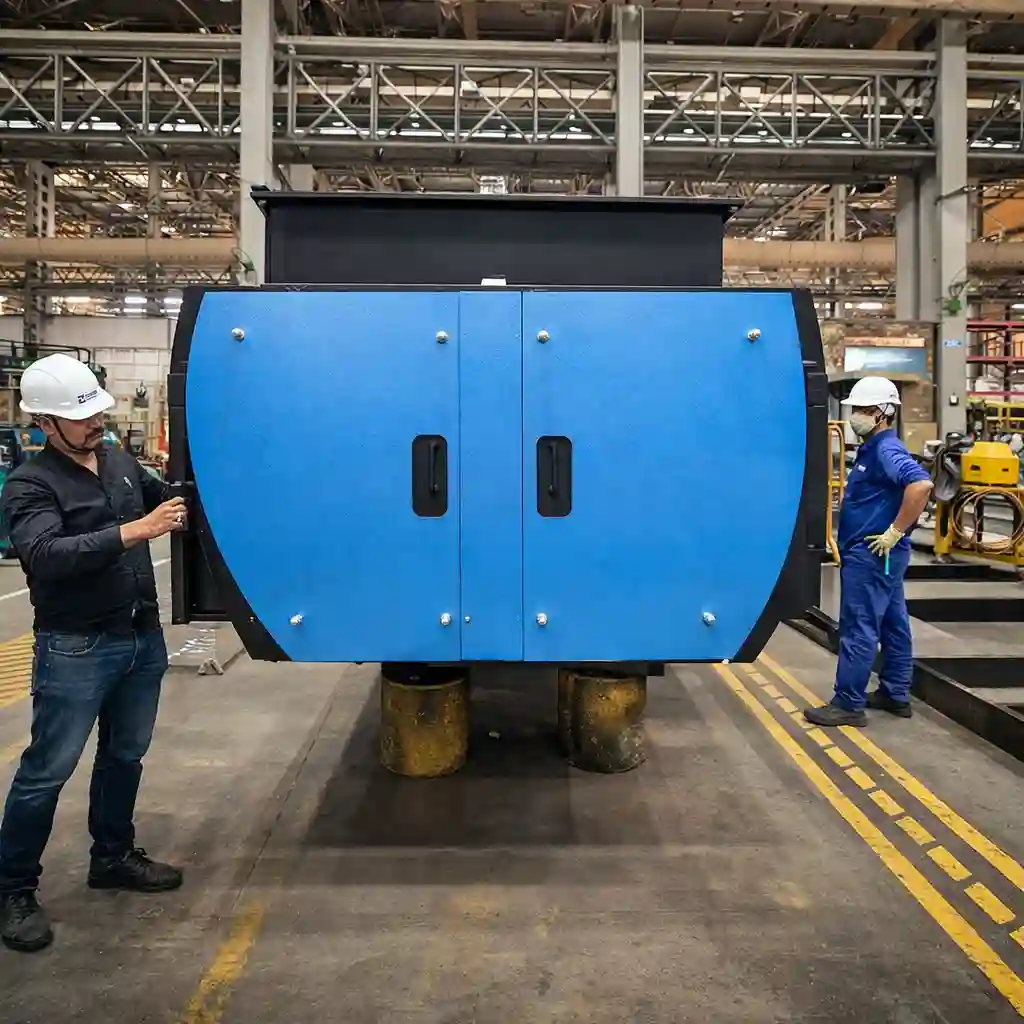
Cement plants in India lose an average of 35% of total fuel energy as exhaust heat. At current coal prices (₹8,000–₹12,000/tonne), that’s ₹2–6 crore of recoverable value per year simply vented to the atmosphere. As PAT scheme deadlines intensify and CPCB emissions norms tighten, the question facing Operations and Energy Heads isn’t “should we deploy waste heat recovery boilers?” — it’s “how soon, and with what ROI?”
Industrial Use Cases: Where Waste Heat Recovery Boilers Deliver Maximum Value
Waste heat recovery boilers (WHRB) are transforming plant economics across heavy and process industries. In cement kilns, flue gases at 300–400°C represent up to 35% of total fuel energy input; integrated WHRBs can recover over 1 MW of electrical power per 1 million tonne per year kiln capacity. In steel rerolling mills, recuperating sensible heat from reheating furnace flue gases reduces fuel oil use by up to 30%, shaving lakhs from annual OPEX. Food and beverage units—especially large breweries and edible oil refineries—use WHRBs on thermic fluid heater exhausts to generate process steam for free, reducing overall steam costs by 15–25%.
Chemical, textile, and paper industries also benefit: novel WHRBs on chemical reactor vent streams or boiler blowdown convert waste into usable clean steam. Enercon Worldwide has deployed custom WHRBs for pharma and specialty chemical plants, with paybacks frequently under two years.
How Waste Heat Recovery Boilers Work: Technology and Engineering Specs
At its core, a waste heat recovery boiler is a heat exchanger that captures energy from high-temperature exhaust gases that would otherwise be lost. The recovered energy is transferred to water, producing steam or hot water for process use or electricity generation.
Typical Operating Parameters
- Capacity ranges: 200 kg/h (small furnace) up to 40+ TPH (process stack or kiln)
- Steam pressure: 10–60 bar g (depends on application)
- Gas inlet temperature: 250–900°C (cement: 300–400°C, glass: 450–600°C, engines: 400–500°C)
- Efficiency: 70–85% sensible heat recovery, with system steam-to-gas ratios typically 0.7–1.2 kg/Nm³
Modern WHRBs employ economisers, extended surface finned tubes, and steam drum designs tailored for dust-laden or corrosive gases. Enercon Worldwide engineers WHRBs for complex gas streams, leveraging modular layouts to minimize footprint—critical for retrofits in space-constrained brownfield plants.
Energy Efficiency Gains: Quantifying the Impact
Implementing a waste heat recovery boiler typically boosts plant-wide energy efficiency by 7–18%, depending on baseline heat losses. For example, older cement kilns with no heat recovery convert just 27–30% of input fuel into useful output. Integrating a 7 MW WHRB can improve effective energy conversion to over 40%, and reduce the specific heat consumption by 80–120 kcal/kg clinker.
In textiles, process house exhaust gases (~250°C) channelled through WHRBs can satisfy up to 60% of dyeing section’s steam load. Recent deployments in Indian breweries have delivered over 22% steam cost reduction, with thermal efficiency raised from 81% (furnace oil fired standalone) to above 91% post-WHRB integration.
Cost Optimization and Payback: A Worked Financial Scenario
Consider a 1 MTPA cement plant in Madhya Pradesh. Pre-WHRB, the plant vents ~320,000 Nm³/hr of kiln gases at 330°C. Installing a 9 TPH steam WHRB (15 bar g) enables captive power generation of 1.3 MW via back-pressure turbine.
Financial Payback Calculation (2024):
- Annual energy recovered: 10,200 MWh/year
- Coal cost offset: ₹1.04 crore/year (assuming ₹8/kg coal, 240 days operation)
- POWER offset: ₹1.3 crore/year (grid cost at ₹7/kWh)
- Total savings: ₹2.34 crore/year
- Capex (WHRB + turbine): ₹6.2 crore
- Simple payback: 2.7 years
Larger units and waste heat-to-power deployments in regions like the GCC often achieve payback under 3 years due to high grid tariffs and fewer subsidies. Enercon Worldwide typically sees plants realize 10–17% IRR with well-engineered WHRB schemes.
Sustainability and Compliance: CPCB, PAT Scheme, and Global Standards
Waste heat recovery boilers are a direct lever for meeting India’s PAT (Perform, Achieve and Trade) cycle targets. For example, under PAT Cycle IV, cement and textiles faced SEC (Specific Energy Consumption) reduction targets of 5–7%. A WHRB delivering 1 MW power in a 1 MTPA cement plant cuts SEC by 15–22 kWh/tonne clinker, often exceeding PAT targets—and generating tradable ESCerts worth ₹5–10 lakh per year.
For emissions compliance, CPCB and CAQM require lower overall CO₂ per tonne product. WHRBs that offset coal consumption can reduce direct CO₂ emissions by 4,000–8,000 tonnes annually for mid-sized operations. GCC countries are similarly tightening ambient air and water standards—WHRBs can be a key line item in environmental audits to avoid penalties or closure notices.
The Cost of Inaction: Compliance Deadlines, Lost Savings, and Production Risk
Delaying WHRB projects exposes plant owners to several compounding risks:
- CPCB and State PCB penalties: Non-compliance with emission or energy norms may trigger fines (up to ₹1 crore/event) or even plant closure threats—especially after 2024 PAT cycles.
- Rising fuel costs: Coal, furnace oil, and natural gas prices in India and GCC have shown 17–22% YoY volatility. Each month without WHRB is 5–8 lakhs in foregone savings, depending on scale.
- Production losses: Aging boilers and thermal systems fail unpredictably; a 2-day outage during peak season can cost a large textile unit over ₹3.5 crore in missed output.
Enercon Worldwide advises clients to factor these risks in IRR and payback models—meaning the “opportunity cost” of delay is often far higher than the sticker price of a new WHRB system.
Operational Challenges and Solutions: What to Watch Out For
Industrial WHRB projects face several practical implementation hurdles. Plant managers cite integration with legacy utility networks, limited installation windows, and variable fuel composition as major issues.
- Space constraint: Brownfield retrofits may struggle to accommodate horizontal/vertical boiler arrangements. Enercon’s modular WHRBs with plug-in economisers minimise footprint—cases in older steel mills prove ≤15% additional utility building area required.
- Fuel & exhaust variability: Processes like glass melting or batch furnaces generate fluctuating flue characteristics, risking tube fouling. Proper material selection (alloy tube grades, soot blowers) and automated control systems mitigate risk.
- Downtime minimisation: Advanced planning—including pre-fabrication and parallel commissioning—can reduce tie-in outages to just 3–6 days, even in continuous-process sites like cement and food plants.
Enercon Worldwide supports operators with lifecycle O&M, ensuring that design choices align with realities on-the-ground, from water quality to skilled operator availability.
Technology Comparison: Waste Heat Recovery Boilers vs. Conventional Approaches
WHRBs represent an energy productivity leap over conventional “let-it-vent” strategies or free-standing auxiliary boilers.
Key Points of Comparison
- Auxiliary boilers: Typically operate at 78–82% efficiency, combusting primary (often expensive) fuels. Zero waste heat recovery means low ROI, higher OPEX, and no emission offset.
- Direct heat-to-process reuse: Some plants attempt to use exhaust for direct preheating or drying, but these applications are limited by contaminants, temperature control, and process compatibility—and usually reclaim less than 10% of potential value.
- Modern WHRBs: Enable up to 85% sensible heat capture, high steam purity, and seamless integration for power or process use.
Opting for WHRBs delivers sustained benefits in CAPEX amortization, energy savings, and regulatory performance compared to legacy or ad-hoc solutions.
Industry-Specific Applications: Cement, Steel, and Food Processing
Cement Plants
In India, over 60 large cement plants have adopted WHRBs on kiln and clinker cooler lines. For instance, an Enercon project in Rajasthan yields 4.2 MW power (2.3 MW kiln, 1.9 MW clinker cooler) with 15,000 MWh of captive generation/year. This offsets 14,000 tonnes of CO₂ annually, far exceeding BAT (Best Available Technology) benchmarks.
Steel Mills
Steel rerolling mills burning furnace oil save up to ₹1.6 crore/year by implementing high-temperature WHRBs on reheating furnaces. A Maharashtra steel cluster retrofitted ten lines with Enercon systems, averaging 0.8 MW recovered power per line with less than 2.1 years payback.
Food & Beverage Industry
Large yeast manufacturing plants in Gujarat generate over 60% of their process steam needs by recovering waste heat from gas-fired dryers via compact WHRB units—realising steam cost savings of ₹60–85 lakh per annum and rapid compliance with local pollution board mandates.
Future Trends: Where Waste Heat Recovery is Headed (2024–2028)
- Hydrogen-blended firing: Several Indian steel and cement majors are piloting blending up to 20% hydrogen with natural gas, changing exhaust gas composition. Next-gen WHRBs are being engineered for compatibility and corrosion resistance.
- AI-driven diagnostics: Plant-wide SCADA integration, IoT sensors, and AI-based fouling prediction are extending WHRB uptime and reducing manual O&M costs by up to 18%.
- Carbon capture & storage integration: WHRBs are increasingly being paired with CO₂ scrubbers and utilization units to further lower plant emissions in response to evolving CSA and ESG requirements.
- Modular, skid-mounted WHRBs: Especially popular for GCC refineries and multi-site conglomerates, enabling installation in as little as 10–14 weeks.
Enercon engineers regularly participate in industry consortia to monitor and shape these innovations, ensuring that plants remain future-ready amid shifting regulatory and cost landscapes.
Decision-Making Checklist: Selecting the Right Waste Heat Recovery Boiler Solution
Key Evaluation Criteria
- Source characteristics: What is exhaust temperature, flow, and contaminant profile?
- Boiler sizing and integration: Can the WHRB meet at least 60% of the target steam or power need?
- Space & retrofit feasibility: Is a modular solution required?
- Vendor technical depth: Does the partner (such as Enercon Worldwide) offer end-to-end EPC as well as O&M support?
- Regulatory alignment: Will the project directly assist in meeting PAT, CPCB, or GCC standards?
- Realistic payback: Do ROI figures stand up to pressure-testing with actual tariffs, production schedules, and outage impacts?
If you’re noticing rising energy bills, frequent regulatory deadlines, or persistent stack temperatures above 250°C, audit your utility flows now—delays reduce your future project IRR. Enercon Worldwide offers structured energy and feasibility studies to help plants select the optimum WHRB configuration—often uncovering more hidden savings than initial engineering estimates.
Taking the Next Step: Timeline Realities and Strategic ROI
Waste heat recovery boiler projects typically require 8–14 months from pre-feasibility to commissioning—less for modular installations, longer if integration with captive power is needed. For plants aiming to influence the April 2026 PAT cycle, assessments and RFQs should begin immediately to lock in compliance, capture available incentives, and extract maximum value before regulatory or market shifts erode economic advantages.
In summary, WHRBs are not just an energy saving device, but a strategic asset for energy-intensive sectors—cutting costs, shrinking carbon footprints, and strengthening compliance postures. For factory owners, energy managers, and operations leaders, the path forward is clear: quantify your waste heat, validate retrofit feasibility, and move rapidly from investigation to execution. Enercon Worldwide stands ready to support clients through every step—from thermal audits to EPC and lifecycle optimization—translating WHRB potential into proven results. The true cost today is the opportunity lost tomorrow.
Related Enercon solutions
Planning an energy or utility project? Talk to the engineers at Enercon Worldwide or request a consultation. You can also browse all our business areas.