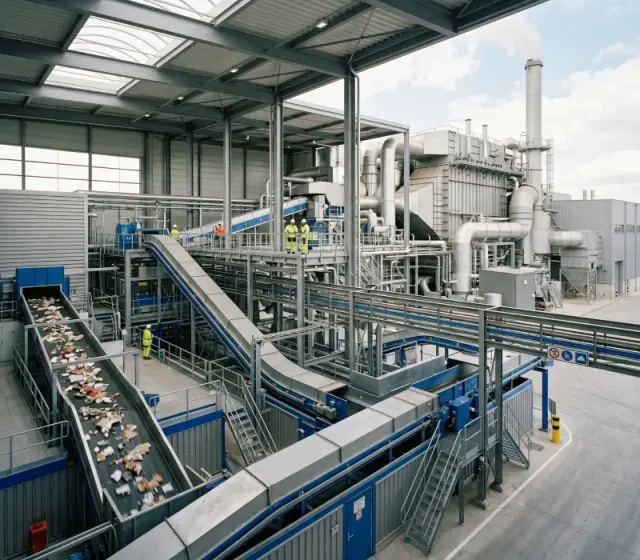
The Power of Waste Heat Recovery in Industrial Plants
In today’s competitive industrial landscape, maximizing energy efficiency is not just a goal—it’s a necessity. Waste heat recovery boilers (WHRBs) transform lost heat from industrial processes into useful energy, significantly improving a plant’s overall energy balance. By capturing thermal energy from exhaust gases and redirecting it for steam production or space heating, facilities can achieve substantial savings and minimize their environmental footprint. Enercon Worldwide, as a leader in industrial energy solutions, designs and delivers state-of-the-art WHRB systems tailored to the unique needs of manufacturers worldwide.
How Waste Heat Recovery Boilers Work
Waste heat recovery boilers are engineered to extract heat from process gases that would otherwise be vented to the atmosphere. These boilers use heat exchangers to transfer the captured energy to water, generating steam or hot water that can be used elsewhere in the facility. Typical sources include exhaust from gas turbines, diesel engines, kilns, furnaces, or chemical reactors. For industrial users, the implementation of WHRBs is a direct path toward improved thermal efficiency and reduced fossil fuel consumption.
Key Industrial Applications and Use Cases
Waste heat recovery finds applications across a broad range of industries, including:
- Cement Plants: Harnessing kiln exhaust for steam generation and pre-heating raw materials.
- Steel and Metal Processing: Recovering furnace off-gases to supply process steam or electricity via CHP (Combined Heat and Power) systems.
- Chemical and Petrochemical Plants: Utilizing heat from reactors and process vents for utility heating or driving turbines.
- Food and Beverage Manufacturing: Capturing oven or boiler stack heat to pre-heat water for cleaning and processing.
- Textile and Paper Mills: Using dryer exhaust or steam condensate to meet boiler feedwater needs.
For each of these sectors, WHRBs drive operational cost reductions and improve energy resilience, key goals for operations and utility managers.
Boosting Energy Efficiency and Cost Savings
Industrial facilities are energy-intensive environments. By deploying waste heat recovery boilers, companies can realize up to 30% improvement in overall energy efficiency, depending on the application. This translates directly to lower utility costs and reduced reliance on primary energy sources. Integrating WHRBs into existing processes typically shortens payback periods, delivering robust ROI for factory owners and energy managers looking to meet both financial and sustainability targets.
Example: Manufacturing Plant Savings
An automotive part manufacturer implemented a WHRB on their thermal oxidizer exhaust stream. The result: a 20% reduction in fuel consumption for process steam, contributing to annual savings exceeding $250,000. Enercon Worldwide supported this transformation from feasibility study to commissioning.
Sustainability and Environmental Impact Reduction
Reducing greenhouse gas (GHG) emissions is a top priority for modern manufacturing. Waste heat recovery systems contribute significantly to sustainability by slashing fuel use and cutting CO2 emissions. By converting waste heat into usable energy, industries not only comply with stringent environmental regulations but also demonstrate their commitment to climate action—an increasingly important factor for global customers and regulatory agencies. Enercon Worldwide leverages advanced engineering to maximize environmental benefits in every deployment.
Operational Challenges and Best Practices
While the advantages are numerous, the deployment of waste heat recovery boilers presents challenges that must be addressed for optimal results:
- Integration Complexity: Retrofitting WHRBs into existing plants requires careful planning to avoid process disruptions.
- Corrosive and Fouling Environments: Managing deposit build-up and corrosion from exhaust streams is essential for reliable operation and longevity.
- Auxiliary Equipment: Proper selection and maintenance of pumps, blowers, and automation systems are critical for efficient functionality.
- Heat Source Variability: Fluctuating exhaust gas temperatures and volumes require robust system design and controls.
Enercon Worldwide offers end-to-end engineering and operational support, mitigating risks and customizing solutions for each facility’s unique demands.
Technology Comparisons: Waste Heat Recovery vs. Conventional Boilers
Traditional boilers rely entirely on primary fuels to generate heat. In contrast, WHRBs utilize energy that would otherwise be wasted. This difference yields key advantages:
- Fuel Savings: WHRBs use existing thermal energy sources, resulting in significantly lower fuel bills.
- Emission Reductions: Lower fuel consumption equates to reduced GHG and pollutant emissions.
- Operational Efficiency: Streamlined operations and utility bill predictability.
Though WHRBs may require higher upfront investments and integration expertise, the long-term performance and cost benefits can far outweigh conventional systems, especially for continuous-process industries.
Industry-Specific Applications and Case Studies
Cement Industry
Cement production is notorious for high energy use and emissions. Integrating WHRBs enables cement plants to convert kiln exhaust into power or process steam, reducing grid dependence and shrink environmental impact.
Iron & Steel Manufacturing
Steel mills often install WHRBs on reheating furnaces, reusing off-gas heat for steam generation or to run turbines, leading to considerable energy and cost savings.
Chemical Processing
For chemical producers, waste heat recovery provides a reliable source of utility steam and supports continuous operations while boosting energy efficiency network-wide.
Future Trends in Waste Heat Recovery
The next generation of waste heat recovery systems is set to benefit from:
- Integration with Renewable Energy: Combining WHRBs with solar or biomass systems for hybrid energy plants.
- Digitalization and Smart Controls: AI-driven monitoring for predictive maintenance and real-time optimization.
- Advanced Materials: Development of corrosion-resistant and highly conductive heat exchangers.
- Modular and Scalable Systems: Flexible WHRB units for deployment in a wider array of industries and plant sizes.
Enercon Worldwide remains at the forefront of these innovations, delivering solutions that match the evolving needs of industry stakeholders.
Realizing Competitive Advantage with Enercon Worldwide
Choosing the right partner is critical for maximizing the impact of waste heat recovery projects. With decades of experience in industrial energy and utility optimization, Enercon Worldwide provides comprehensive engineering, procurement, and construction support—from feasibility assessments to commissioning and ongoing performance optimization. Our advanced WHRB solutions empower businesses to enhance energy efficiency, cut operational expenses, and advance their sustainability agendas, positioning them for long-term growth in a resource-constrained world.
Related Enercon solutions
Planning an energy or utility project? Talk to the engineers at Enercon Worldwide or request a consultation. You can also browse all our business areas.