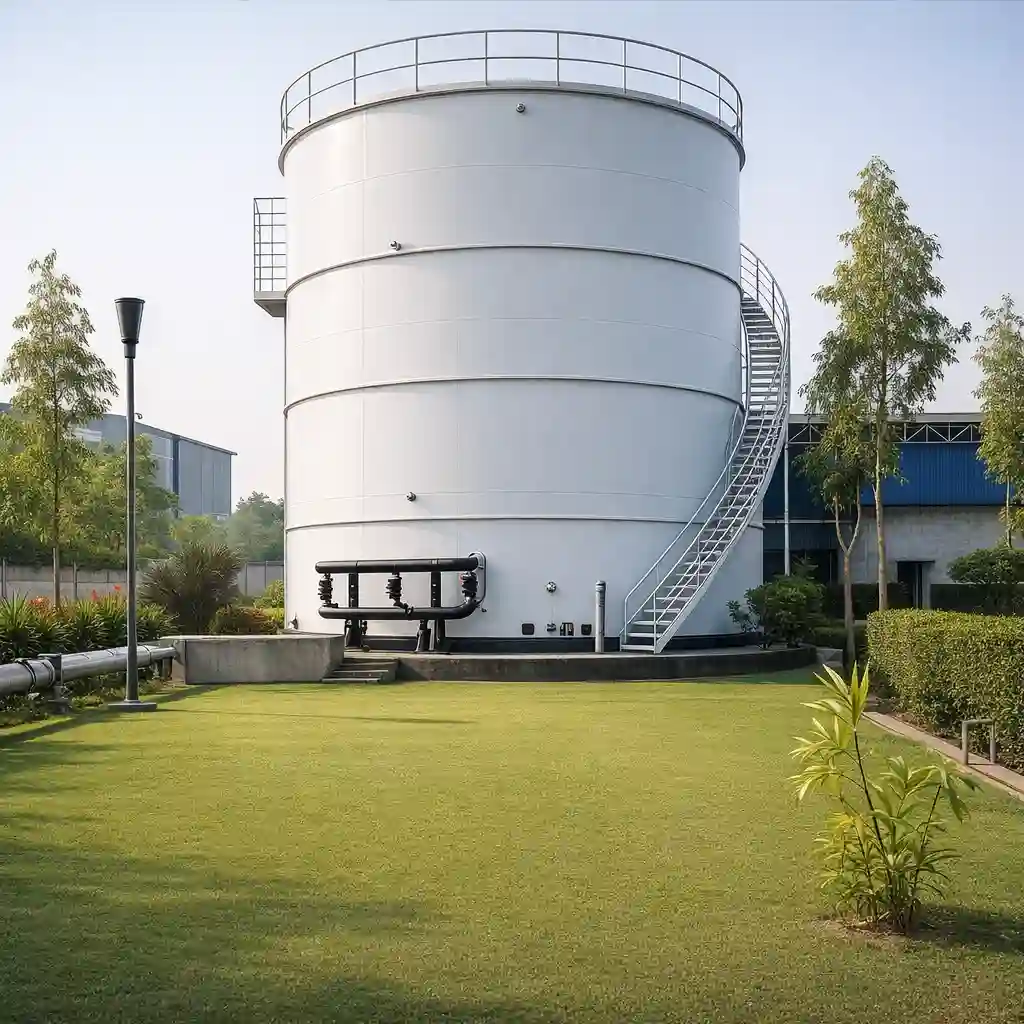
By April 2025, all textile dyeing units in Tamil Nadu discharging more than 100 KLD of wastewater must achieve Zero Liquid Discharge (ZLD) or face immediate closure warnings, as per the latest CPCB and TNPCB mandates. For a 450 KLD textile complex in Tiruppur, retrofitting a comprehensive ZLD system avoided ₹1.7 crore in annual penalties and unlocked nearly ₹82 lakh in water reuse savings. The ZLD paradigm is rapidly moving from best practice to hard legal requirement—especially for sectors with high water stress or risk of effluent-related shutdowns.
Industrial Sectors Driving ZLD Adoption: Concrete Use Cases
Chemicals, pharmaceuticals, textiles, paper, and food processing industries are at the vanguard of Zero Liquid Discharge adoption in India and the GCC. Each sector faces unique operational imperatives, but all respond to tightening water, compliance, and risk economics.
Textiles: In India’s dyeing and processing clusters (such as Surat and Tiruppur), ZLD is now mandatory above specific discharge volumes. A Surat-based plant processing 18 MLD installed a multi-stage ZLD system—comprising biological ETP, MEE, and RO—reducing freshwater demand by over 75% and reusing 14 MLD as process water while eliminating surface discharge and avoiding ₹1.1 crore in annual anti-pollution board penalties.
Chemicals & Pharma: Fine chemical and bulk drug manufacturers in Andhra Pradesh’s APIIC zones faced recurring closure risks, with high TDS (total dissolved solids) exceeding 13,000 mg/L. By integrating hybrid RO, MEE, and drier-based ZLD solutions, one 2,000 KLD plant achieved over 93% water recovery and halved hazardous waste disposal costs.
Paper Mills: Agro-based paper mills dealing with black liquor and colored effluent are shifting to ZLD to meet CAQM deadlines. A Haryana-based plant, for instance, realized a 90% reduction in groundwater extraction through in-plant ZLD integration, directly supporting enhanced ESG profile for export clients.
How Industrial ZLD Systems Work
A Zero Liquid Discharge system is a combination of advanced water treatment, separation, and evaporation technologies engineered to recover and reuse nearly all process water while minimizing or eliminating liquid waste. Think of ZLD as a “full-circle” approach: every drop entering your plant is either reused or converted into recoverable salt/solid waste—never allowed to flow out untreated.
Core Stages and Engineering Specs
- Pretreatment & Effluent Conditioning: Physical, chemical, or biological processes (clarifiers, DAF, ETP) remove suspend solids, oils, and major organics. Typical flow: 100–20,000 KLD, depending on sector.
- Membrane Separation (RO/UF): High-pressure RO units (70–80 bar for high TDS) generate permeate and concentrate streams. High-recovery RO stacks often reach 60–80% recovery in textile effluent, or 50–70% for high TDS chemical process water.
- Thermal Evaporation & Crystallization: Multi-effect evaporators (MEE), sometimes with mechanical vapor recompression (MVR), further upgrade RO reject. These units typically operate at 75–105°C under vacuum, with steam or waste heat input, concentrating brine so only a small volume moves to the final crystallizer or ATFD (Agitated Thin Film Drier).
- Solid Waste Management: Final salt/cake output (around 1–3% of initial effluent volume) is sent for secure landfill or recovered where feasible.
A mid-sized ZLD system for a 1,000 KLD effluent load in pharmaceutical production typically runs at 250–400 m3/day permeate generation, 100–130 kWh/m3 total energy footprint, and occupies 150–300 m2 (excluding buffer tanks).
Energy Efficiency Benchmarks in ZLD Operations
Thermal processes (MEE, evaporative crystallizers) are the largest energy consumers in ZLD. But modern system integration—particularly RO preconcentration and heat recovery—is delivering marked improvements.
- Pre-RO Optimization: By driving ≥65% recovery in the membrane section, subsequent thermal load is cut by 35–55% versus direct evaporation routes. For example, a hybrid RO+MEE configuration for high TDS chemical effluent typically uses ~55 kWh/m3, compared to 85–110 kWh/m3 for all-thermal systems in the same flow.
- Multiple Effect Evaporator (MEE): Each subsequent effect reduces energy input—modern four-effect MEEs reach 0.25–0.35 t steam per tonne evaporation, a 50% gain over older single-effect (0.7–0.9 t steam/t).
Enercon Worldwide engineers ZLD units with process integration to utilize waste steam or condensate from adjacent boiler or turbine systems, supporting overall plant efficiency increases of 8–14%.
Cost Optimization and Realistic Payback for ZLD Systems
ZLD implementation is a CAPEX-intensive process, typically requiring ₹8–14 lakh per KLD (India) for full integration—including civil, membranes, evaporators, and ancillary utilities. OPEX is driven by energy (steam/electricity), chemical dosing, and membrane/evaporator lifecycle maintenance.
Cost-Benefit Scenario: Textile Mill, Surat
- Effluent Load: 2,000 KLD
- Total CAPEX: ~₹22 crore
- Annual OPEX: ~₹2.9 crore (energy + O&M, 2024 figures)
- Water Savings: Freshwater purchase avoided: ₹1 crore/yr (at ₹14 per kl), effluent penalty avoided: ₹1.1 crore/yr, additional recycled water value realized: ₹60 lakh/yr
- Estimated Payback: 4.3 years purely on direct cost savings; drops to 2.5–3 years if closure risk, production loss, and ESG supply chain premiums are considered.
For GCC markets (Saudi Arabia, UAE), water cost avoidance is higher due to desalination reliance—RO-ZLD systems see faster payback, typically 2.5–4 years at $1.5–2.5 per m3 avoided water cost. Many Enercon Worldwide customers in the Middle East achieve sub-3 year payback by integrating MEE units with waste heat from on-site power generation.
Sustainability Impact and Regulatory Compliance: CPCB, PAT Scheme, GCC Norms
ZLD is increasingly non-negotiable, propelled by regulatory mandates and sustainability pressures. In India, the CPCB and CAQM have made ZLD a statutory requirement for large-scale (≥100 KLD) textile, chemical, and pharma units. The adoption rate is accelerating: as of 2023, over 550 textile units in Tamil Nadu alone are ZLD-compliant, recycling 450 MLD of water per day—avoiding over 600,000 tonnes/year of hazardous effluent discharge.
Many states (notably TN, AP, Gujarat, Haryana) now link electricity supply and production licenses to ZLD compliance. The cost of non-compliance includes:
- Closure notices with 72-hour lead time
- Fines between ₹20 lakh and ₹2 crore per event (varies by PCB and scale of violation)
- PAT scheme non-compliance: Ineligible for ESCerts and subject to Rs. 900/MToE penalty
- ESG and export contract disruptions for failing sustainability audits (especially chemicals, textiles, paper)
GCC countries, facing extreme water scarcity, are driving similar mandates, with Saudi Arabia’s MEWA and the UAE’s MoCCaE enforcing strict ZLD/near-ZLD for sectors such as oil & gas, power, and chemicals.
The High Cost of Inaction: Penalties, Production Shutdowns, and Escalating Risk
Plants that delay ZLD implementation risk outcomes far costlier than system CAPEX. In 2022, a pharma unit in Visakhapatnam sustained an 18-day shutdown after a TDS breach, losing ₹11.4 crore in lost output and incurring ₹1.26 crore in PCB penalties. Textile clusters have seen synchronized closures impacting 25,000+ workers and millions in daily revenue due to missed ZLD deadlines.
Beyond regulatory risk, failure to achieve ZLD increasingly jeopardizes global export access, with buyers now requiring water stewardship KPIs and third-party audit trails as a pre-requisite for chemical, textile, and processed food sourcing contracts. Enercon Worldwide has supported several manufacturers in regaining operational status and restoring supply chain credibility through rapid ZLD interventions.
Practical Operational Challenges and Solutions in ZLD Deployment
ZLD is technologically mature, but its success hinges on confronting practical engineering obstacles:
- High Scaling/Fouling Rates: Variable feed water chemistry (e.g., seasonally shifting TDS, COD spikes) can overwhelm membrane or evaporator performance. Best practice: pre-conditioning with robust ETP and inline monitoring.
- Energy Footprint: Large steam or power demand can impact plant economics; integrating with existing boilers, or using waste heat recovery, can reduce external energy input by 12–20%.
- Footprint Constraints: Brownfield plants, especially in export clusters, often face severe space limitations. Modular, skid-mounted ZLD designs have delivered fitment in sub-200 m2 footprints for Enercon clients.
- Manpower and Skills: Skilled O&M teams required for RO and MEE units; solutions include on-call technical support, remote diagnostics, and operator training modules.
Enercon Worldwide offers lifecycle technical support, site-specific engineering audits, and modular system upgrades to help address these pain points—minimizing retrofit downtime and maximizing ZLD reliability.
Technology Comparison: ZLD vs Conventional ETP, Hybrid Models, and Selection Criteria
Plants weighing ZLD investment must understand technology differences. Conventional Effluent Treatment Plants (ETPs) can comply for low TDS or direct dischargers, but fail regulatory audits for color, TDS, or COD in high-burden sectors. Standard ETPs achieve 35–70% water recycling, while ZLD consistently delivers ≥92% with nearly total elimination of liquid waste.
Hybrid ETP-RO-MEE: The dominant ZLD configuration uses staged membrane-treatment for bulk recovery, reserving higher-energy thermal steps for brine polishing. Outcome: reduced OPEX and 20–30% smaller thermal plant footprint. For low-TDS streams (<3,500 mg/L), all-membrane ZLD is feasible, but large chemical or pharma effluents almost always require hybridization.
ZLD for High-Salinity Waste: For paper/pulp, tannery, or agro-chemical wastes with complex organics/inorganics, robust crystallizer or ATFD units are necessary. Plants should prioritize proven evaporation technologies, redundancy in critical pumps/controls, and look for modular expansions to handle seasonal flow spikes.
Summary of Selection Criteria
- Effluent characteristics (TDS, COD, FOG, color, etc.)
- Incoming flow variability (KLD per day, seasonal peaks)
- Energy integration options (boiler/CHP, waste heat, grid power)
- Existing ETP/infrastructure compatibility
- Site space and civil constraints
- Regulatory timeline and closure risk
- Lifecycle technical support
Sector-Deep Applications: ZLD in Chemicals, Pharmaceuticals, and Food Processing
Chemicals Manufacturing
A Gujarat chemical plant faced chronic shutdown threats due to acid/brine discharge (TDS ~14,000 mg/L, pH < 3). Enercon Worldwide designed a ZLD plant integrating high-recovery RO, triple-effect MEE, and ATFD drier. Result: 94% water recycled, annual water withdrawal down by 110,000 KL, and solid waste cake compliant to TSDF norms.
Pharmaceuticals
In Hyderabad, a 1,100 KLD API manufacturing site deployed ZLD to process high COD (10,000–14,000 mg/L) effluent. With energy integration from on-site steam generators, the plant reduced groundwater dependency by 86% and now exceeds CPCB 99% recovery standards—supporting uninterrupted production and export compliance.
Food and Beverage
A large dairy in Pune shifted to effluent ZLD (including hybrid ETP, RO polishing, and low-energy MEE). This enabled recycling of 72% of process water and cut off-site sewage charges by ₹47 lakh per year. The system’s modular design allowed full retrofit between seasons with just 3.5 weeks of downtime.
Future Trends in Industrial ZLD: Technology, Regulation, and Operations
- AI-Driven Predictive Maintenance: Advanced monitoring and IoT diagnostics now forecast membrane fouling, optimize MEE operation, and schedule proactive interventions—reducing O&M downtime by up to 35%.
- Modular ZLD Skids: Deployable, containerized ZLD modules support phased investment and easier brownfield adoption—especially in SME and export processing clusters.
- Green ZLD—Solar and Waste Heat Integration: Increasing focus on integrating solar thermal, process waste heat, or CHP co-generation to reduce energy intensity of evaporation (target: sub-35 kWh/m3).
- Circular Economy Salt/Product Recovery: Emerging technologies for recovering commercial salt, gypsum, and mineral byproducts from ZLD waste streams are driving new revenue sources.
Enercon Worldwide continues to develop future-ready ZLD platforms—including digital SCADA integration and flexible capacity upscaling—helping clients stay ahead of compliance and cost trends.
Actionable Decision Support: ZLD System Selection Checklist
For plant managers and utility heads evaluating ZLD investments, a rigorous assessment is crucial. The following checklist (adapted from Enercon Worldwide's project protocols) supports confident, defensible decision-making:
- Has a plant-wide effluent audit (volume/chemistry) been conducted in the last 18 months?
- Is current ETP outflow consistently exceeding local/state TDS and color discharge norms?
- Do current water costs, effluent penalties, or production losses offset a ZLD payback <4 years?
- Can the ZLD system integrate with existing steam/heat sources or CHP?
- Are modular or retrofit ZLD layouts feasible given site constraints?
- Is preferred ZLD vendor providing lifecycle technical support and performance guarantees?
- Are you approaching a sectoral compliance deadline (CPCB/PCB/ESG)?
If three or more boxes are ticked, immediate ZLD project feasibility assessment is recommended. Enercon Worldwide partners with manufacturers across India and the GCC to conduct site audits, pilot testing, and system scale-up planning tailored to sector and compliance urgency.
Project Timelines, Compliance Milestones, and Urgency for Action
Industrial ZLD retrofits are complex undertakings, typically requiring 8–15 months from initial audit to full commissioning for a 1,000–5,000 KLD installation. With CAQM (Delhi/NCR) and multiple state PCB deadlines set for 2025, and peak GCC water pricing cycles approaching, delay risks regulatory non-compliance, production halt, and irreversible loss of supply chain contracts.
Manufacturers eyeing Q2 2025 compliance must already be conducting audits and partner selection. The logical next step for decision-makers is a customized site assessment and ZLD feasibility study. Enercon Worldwide stands ready to engineer solutions tailored to flow, chemistry, space, and regulatory context—allowing plants to move ahead of compliance deadlines and leverage the full ROI and sustainability value of strategic ZLD investments.
Related Enercon solutions
Planning an energy or utility project? Talk to the engineers at Enercon Worldwide or request a consultation. You can also browse all our business areas.