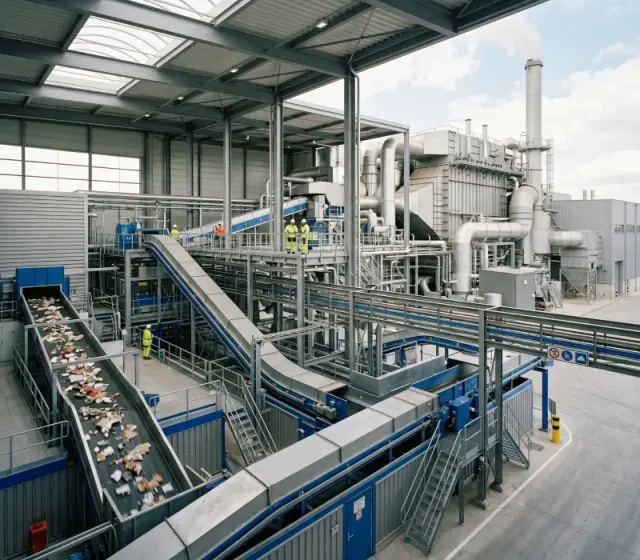
Cement plants in Gujarat routinely lose 35% of their kiln fuel input as stack exhaust—translating to ₹3.6 crore per year in wasted value for a 2 MTPA facility at current petcoke prices. With CPCB's enhanced focus on energy benchmarks (PAT Cycle IV), manufacturers delaying waste heat recovery investments now also risk regulatory penalties, not just eroded profit margins. The question is no longer whether waste heat recovery is feasible, but how to select, justify, and implement the right system for your plant's profile.
Industrial Sectors Benefiting from Waste Heat Recovery
Waste heat recovery systems are now mission-critical in sectors with high-temperature exhaust streams and sizeable utility footprints. The largest adopters include:
- Cement Plants: Average kiln exhaust temperatures exceed 300°C, yielding rich potential for heat capture. Case: An Indian cement plant (2.5 MTPA) integrated a 12 MW waste heat recovery boiler, offsetting 55,000 tonnes CO2 annually.
- Steel Mills: Rolling mills and reheating furnaces emit flue gases above 450°C. Recovery can offset up to 20% of steam/thermal oil demand.
- Textile Processing: Stenter and dryer exhaust (150–180°C) offers returns with air-to-water heat exchangers feeding pre-dyeing operations.
- Chemical & Fertilizer Units: Process vents, acid plants, and reformers often discharge high-grade heat suitable for steam generation.
Beyond these, food processing, pulp & paper, and glass manufacturers with high continuous throughput increasingly deploy waste heat recovery for compliance, cost, and sustainability mandates. Each faces unique load profiles and fuel price pressures, underscoring the need for plant-specific system design.
How Waste Heat Recovery Systems Work: Process, Key Equipment, and Specs
At its core, waste heat recovery repurposes unused thermal energy from process exhaust streams—transforming what was once a lost cost into a productive asset. Technically, this revolves around:
- Heat Exchangers: Shell & tube, plate, or air preheater designs transfer heat from high-temperature flue gas to water, air, or thermal oil.
- Waste Heat Recovery Boilers (WHRBs): Generate steam (saturated or superheated, typically 3–40 TPH at 10–45 bar) using exhaust heat from sources like kiln stacks, furnace flues, or turbine exhaust.
- Absorption Chillers: Use recovered heat to generate chilled water for process or comfort cooling—notably in pharma and chemical plants.
System scale ranges from 100 kW recovery in textiles to 20+ MW in large cement or steel plants. Modern WHRBs can achieve 77–88% boiler efficiency (on recovered input), with stack temperature drops from 270°C to sub-120°C routinely observed after installation. Plant layout, available footprint (often 80–150 m2 per MW), and integration with existing utilities are central engineering considerations—areas where Enercon Worldwide’s design expertise consistently addresses client constraints.
Energy Efficiency Improvements and Benchmarks
What efficiency gains are achievable? For cement kilns, retrofitting a WHRB typically delivers a 6–12% reduction in total fuel consumption per tonne of clinker. Steel reheating furnaces have seen 8–15% fuel savings and CO2 reductions up to 60,000 tonnes/year in Indian rolling mills implementing aggressive recovery schemes.
Consider this: Older cement plants operate at 60–65% overall energy efficiency. After full-stack waste heat recovery integration, this can rise to 70–76%. Textile processing units recording 18–22% fuel losses via stenter exhaust report reductions to below 10% following recovery system deployment, validated in post-installation energy audits under the PAT scheme.
Cost Optimization: Waste Heat Recovery ROI & Real-World Payback
CFOs and plant heads increasingly ask: What is the payback? In India, installed costs for waste heat recovery systems typically range from ₹45–60 lakh per MW (steam), with operational savings between ₹16–26 lakh/month/MW depending on fuel type and utility tariffs.
Worked Example: Indian Cement Plant Retrofit
- System: 7 MW WHRB (process and power)
- Capex: ₹4.2 crore
- Annual Fuel Savings: ₹1.7 crore (at ₹8,500/tonne coal avoided)
- Power Offset: 3.5 MW (₹5.50/unit grid tariff), saves ₹1.69 crore/year
- Total Annual Savings: ₹3.39 crore
- Simple Payback: 15–16 months
Pipelines and additional value may come from reduced operation of auxiliary boilers, lower cooling requirements, and even partial grid independence. In GCC markets (e.g., UAE), paybacks of 24–36 months are standard, shaped by subsidized natural gas and lower grid tariffs.
Sustainability Gains and Environmental Compliance
Environmental compliance is now a strategic driver, not just a box to tick. Under the PAT scheme (Perform, Achieve and Trade), Indian energy-intensive sectors are mandated to deliver specific energy consumption reductions, penalized for underperformance. Waste heat recovery offers a direct compliance lever:
- Carbon Footprint: Medium-sized cement plant (10 MW WHRB) avoids 48,000–60,000 tonnes CO2/year.
- Water Savings: In steel, bypassing traditional steam generation cuts cooling water demand by 10–15%.
- CPCB/State Boards: Lower stack temperatures and pollutants, helping meet NOx, SOx, and stack temp norms under CAQM (Delhi-NCR) and Gujarat PCB stipulations.
GCC players, notably in UAE and Saudi Arabia, benefit from reduced heat island effects and stronger alignment with the region’s Vision 2030 and Net Zero policies. Enercon Worldwide’s clients routinely leverage these environmental KPIs in ESG reporting and emissions trading mechanisms.
The Cost of Inaction: Regulatory and Market Risks
Delaying waste heat recovery upgrades increasingly carries measurable downside:
- CPCB/State Pollution Board Non-Compliance: Failure to reduce stack temperatures and thermal emissions can lead to ₹10–25 lakh fines and, in severe PAT underperformance cases, denial of expansion permissions.
- Exploding Fuel Costs: With average Indian coal price inflation of 12–18% over the last 5 years, every month lost is unrecoverable OPEX—and direct hits to EBITDA margin.
- Production Risks: Over-reliance on aging or single-fuel boilers, without recovery, increases unplanned downtime and maintenance outlay.
Globally, ESG-focused clients also now require supplier disclosure regarding process emissions and energy usage. Failure to demonstrate progress on recovery jeopardizes major contracts in sectors like automotive and food exports.
Engineering and Operational Challenges — and Solutions
Waste heat recovery retrofits are not plug-and-play. Plants face:
- Variable Exhaust Profiles: Cement and steel operations have fluctuating loads. Custom engineering of control logic and bypass systems is essential to avoid underperforming installations.
- Integration Complexity: Tying new WHRBs into legacy control/automation (DCS/SCADA) requires vendor experience. Enercon Worldwide’s project teams routinely interface with existing PLC networks, minimizing commissioning delays.
- Footprint Constraints: Brownfield projects face space and routing limitations—solutions include modular exchangers or elevated duct runs designed in via 3D layout simulation.
- Maintenance Needs: Fouling in textile or food flue gas, silicate or dust accumulation in cement/steel—effective sootblowing regimes and access planning are essential, backed by local O&M support.
Solutions revolve around site-specific audit, robust physical design, and phased implementation—areas where Enercon’s experience in over 60 commissioned recovery systems streamlines both engineering and operational bottlenecks.
Technology Comparison: Waste Heat Recovery vs Traditional Approaches
Direct Firing vs Recovery-Based Systems: Conventional utility boilers (coal/gas) convert only 78–82% of fuel energy to useful output. Waste heat recovery displaces a portion of this fresh fuel need, effectively boosting overall system efficiency to 90–95% in integrated flows.
Status of Competing Solutions:
- AFBC Boilers: Efficient, but still require dedicated fuel input—no reduction in total plant emissions unless paired with recovery.
- Condensing Economizers: Maximize low-grade heat capture, but only viable when feedwater demand is high and stack gas composition is favorable.
- Direct Power Generation (ORC): Organic Rankine Cycle solutions are maturing for low/medium temperature streams (down to 120°C), but cost/kW remains higher than direct WHRB integration for now.
Where exhaust is plentiful and regular (cement, steel), direct WHRBs offer the best LCOE (levelized cost of energy). In variable-load pharmaceutical or food plants, hybrid solutions—combining heat exchangers with chiller integration—prove more economic. Enercon Worldwide tailors technology selection based on core process realities, not catalog sales.
Deep-Dive: Sector-Driven Applications and Outcomes
Cement: Transforming Kiln Stack Losses to Grid-Offsetting Power
An Odisha cement plant (2.8 MTPA) was constrained by grid reliability and rising petcoke costs. Installing an 11 MW WHRB with downstream turbine not only cut purchased power by 28%, but enabled the plant to sell 2 MW surplus during off-peak — realized net savings of ₹4.8 crore/year, with 14-month payback.
Steel: Reheating Furnace Retrofit Under Tight Water Norms
Gujarat-based coil manufacturer faced upcoming water consumption restrictions under PCB norms. Integrating a 6 MW WHRB, with advanced gas filtration and closed-loop cooling, reduced make-up water by 13% and coal by 8,000 tonnes annually. BOD compliance success led to green channel permitting for expansion.
Textile: Stenter Exhaust to Process Preheating
A South India textile processor leveraged air-to-water exchangers on dryer and stenter lines, heating DM water feed by 35°C—saved 2600 tonnes/yr FO, with an 18-month payback post-ZLD regulation rollout.
Emerging Trends: What’s Next for Industrial Waste Heat Recovery?
The landscape of waste heat recovery is evolving quickly:
- AI-Powered Predictive O&M: IRC/SCADA software platforms with machine-learning algorithms now deliver 5–8% additional system uptime by anticipating exchanger fouling or drop points.
- Hydrogen-Ready Retrofits: As green hydrogen enters fuel mixes (notably in GCC steel), new WHRBs are being specified for H2-compatible metallurgy and operating protocols.
- Modular/Containerized Recovery Units: Accelerate deployment for spatially-constrained brownfields in pharma, F&B, and automotive sectors—reducing site disruption by 40–60 days.
- Carbon Capture Integration: Early movers are coupling recovery with post-combustion CO2 scrubbing to enhance ESG value and futureproof compliance.
- Circular Economy Applications: Some Indian clusters now pool process heat between adjacent mills via district energy networks, boosting overall regional energy utilization factors.
Enercon Worldwide remains at the forefront of these innovations, bringing international best practices to Indian and GCC industrial upgrades.
Making the Right Decision: Evaluation Checklist for Waste Heat Recovery Systems
Before greenlighting a waste heat recovery initiative, energy managers and plant decision-makers should systematically address:
- Waste Heat Profile: What are your actual exhaust temperatures/flows over a representative production cycle? Is the stream clean or particulate-laden?
- Steam/Utility Demand Mapping: Can recovered energy be continuously absorbed, or are there seasonal/daily fluctuations?
- Operational Realities: How disruptive will installation be? Is there contingency for integration with old DCS/logistics chains?
- Compliance Roadmap: Will this solution directly support your next PAT cycle target, CPCB deadline, or upcoming state PCB requirements?
- Lifecycle Support: Does your engineering partner offer long-term O&M, remote monitoring, and spare parts accessibility?
Enercon Worldwide recommends starting with a comprehensive plant energy audit—including process mapping, utility simulation, and environmental compliance review. This diagnostic phase typically uncovers bottlenecks, reveals real recovery potential, and ensures capital is prioritized for maximum impact.
Acting Now: Project Timelines, Compliance Urgency, and Next Steps
Most waste heat recovery projects—from feasibility to commissioned operation—require 10–16 months. Plants aiming for compliance by April 2026 (PAT Cycle V) or seeking to avoid CPCB closure threats under CAQM guidelines should already be in assessment. Delays risk missing incentive periods, incurring penalties, or entering the peak construction window with limited EPC capacity.
The logical next step is a detailed techno-economic feasibility study tailored to your sector, process, and compliance pathway. Enercon Worldwide’s teams routinely support such studies, helping clients across cement, steel, and textiles build robust business cases—linking projected fuel, water, and emissions savings to hard financial outcomes.
Ultimately, aligning technical potential, regulatory timelines, and real payback horizons is the surest path to both compliance and commercialization. With proven benchmarks, sector expertise, and commissioning experience in both India and GCC, Enercon is positioned as your trusted engineering partner—ensuring your waste heat recovery investment delivers measurable, auditable value.
Related Enercon solutions
Planning an energy or utility project? Talk to the engineers at Enercon Worldwide or request a consultation. You can also browse all our business areas.