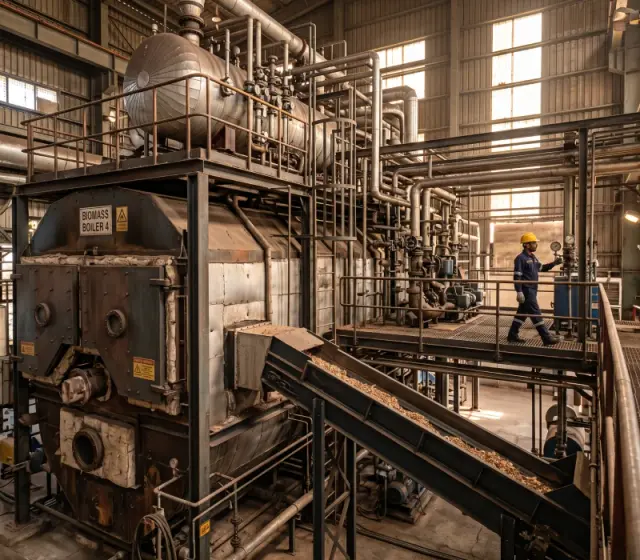
A sugar mill in Uttar Pradesh, running two legacy coal boilers, was burning through over ₹6 crore in annual coal costs — and still failing to meet the 2023 CPCB particulate norms. Less than 14 months after commissioning a 32 TPH bagasse-fired water-tube boiler with Enercon Worldwide as the EPC partner, the mill not only cut annual fuel spend by ₹2.3 crore but also reported stack emissions comfortably below the CPCB’s 50 mg/Nm³ limit. As industrial biomass boilers gain traction across India’s manufacturing heartland, the question for plant heads is no longer 'should we convert?' but rather 'when, and how fast can we realize the upside?'
Industrial Biomass Boilers: Core Sectors and Operational Scenarios
Biomass boilers have become critical for sectors facing pressure to optimize operational costs and comply with tightening environmental requirements. Their value proposition is strongest in industries with steady steam demand and reliable access to agro-residues or biogenic fuels.
- Sugar Mills: These facilities produce bagasse as a by-product — a fuel source that, when burned in modern biomass boilers, can generate all required process steam and export surplus power.
- Distilleries: Spent wash/biogas and wood chips fuel hybrid boilers, treating waste streams while creating energy and supporting Zero Liquid Discharge (ZLD).
- Food Processing Units: These pivot from costly furnace oil or LPG to rice husk or sawdust, achieving savings of ₹15–25 lakh/month (for 10–30 TPH steam demand).
- Textile Plants: Biomass-fired utility boilers offer a route to fuel diversification and energy security, mitigating price shocks in gas or imported coal.
Forward-thinking cement, paper, and chemical plants are also evaluating total or partial conversion to biomass boilers, especially in states incentivizing renewable energy in process heat (e.g., the Gujarat government’s green energy procurement mandate).
Engineering Fundamentals: How Biomass Boilers Work
A biomass boiler converts the chemical energy stored in plant-based fuels — bagasse, rice husk, wood chips, palm kernel shells, and agro-residues — into thermal energy via direct combustion. In water-tube models (common for higher capacities: 10–100+ TPH), water circulates within the tubes, heated by flue gases from the combustion chamber. High-pressure steam is generated for process requirements or power generation.
Key Engineering Specifications
- Capacity Range: 2–120 TPH (tons per hour) common for Indian industry
- Pressure: 10.5–87 bar g; Superheated steam up to 500°C
- Fuel Types: Bagasse, rice husk, wood chips, sawdust, palm shell, pressed cane trash, biomass pellets
- Footprint: A 20 TPH biomass water-tube boiler (AFBC) requires ~200–350 m², depending on O&M access and fuel storage needs
- Emissions Control: Multicyclones/bag filters, wet scrubbers, or ESP to meet 50 mg/Nm³ particulate limit (CPCB, 2023 update)
Enercon Worldwide specializes in system integration: fuel handling (mechanized conveyors), combustion air preheaters, high-turndown controls, and remote SCADA — ensuring operational reliability even with mixed or variable fuels.
Achieving Superior Energy Efficiency: Design and Outcomes
Energy efficiency is a primary driver for biomass boiler investment. Legacy smoke-tube boilers, still widespread, offer thermal efficiency of 68–75%. In contrast, contemporary water-tube boilers with three-stage economizers and combustion tuning regularly deliver 84–89% gross efficiency on Indian agro-biomass fuels — a 12–20 percentage point uplift.
Efficiency Benchmarks
- Fire-tube (legacy): 68–75% (biomass), 72–80% (coal)
- Modern water-tube (with economizer): 84–89% (biomass), 87–92% (coal with FGD & advanced controls)
For a food processor converting a 15 TPH furnace oil boiler (at 75% efficiency) to a rice husk-fired water-tube boiler (at 87% efficiency), this translates to a 16% reduction in fuel input per ton of steam — or approx. 1,900 tonnes fuel saved annually, worth ₹1.14 crore at 2024's rice husk delivered price (~₹6/kg, North India).
Cost Optimization and Realistic Payback Scenarios
Fuel cost savings remain the single biggest contributor to biomass boiler project ROI — but these must be grounded in local context and market prices. Three drivers unlock payback:
- Cheaper Biomass Inputs: Rice husk, bagasse, or wood chips typically cost ₹4–8/kg (2024, delivered), versus ₹12–14/kg for imported coal and ₹52–68/litre for furnace oil.
- Thermal Efficiency Gains: A 14% bump in efficiency reduces fuel usage and waste per tonne of steam.
- Regulatory Incentives: Plants can generate Renewable Energy Certificates (RECs) or meet state-level renewable procurement mandates, offering additional financial return.
Worked Example: Distillery Steam Boiler
A 30 KLPD distillery replaces two 12 TPH FO-fired boilers with one 20 TPH spent wash/biomass hybrid boiler:
- Annual steam demand: 110,000 tonnes
- FO cost: ₹58/litre (North India, 2024); Rice husk: ₹6.5/kg
- Annual FO spend (pre-upgrade): ₹3.27 crore
- Annual biomass spend (post-upgrade): ₹1.32 crore
- Net fuel savings: ₹1.95 crore/year
- Total installed cost (20 TPH hybrid, incl. fuel handling & ESP): ₹5.2 crore
- Simple payback: 2.7 years
This aligns with observed payback ranges for well-managed, right-sized biomass boiler projects — typically 2–4 years for Indian process industries (rice/paper/sugar: 1.8–2.4 years using in-house residues).
Sustainability, Compliance, and Environmental Gains
Compliance is now an economic reality, not a nice-to-have. CPCB and many State Pollution Control Boards (SPCBs) enforce particulate emission norms (<50 mg/Nm³ for new biomass boilers post-Jan 2023) and ZLD for effluent-intensive sectors.
- Emissions Reductions: Converting 20 TPH steam from coal to biomass (operating 6,600 hours/year) cuts direct CO2 by 8,200 tonnes/yr — essentially zero net, as biomass is biogenic. Particulates drop below regulatory limits with ESP/bag filter integration.
- Process ZLD Enablement: In distilleries, spent wash-fired boilers are central to ZLD compliance by incinerating waste onsite. Textile units in Gujarat and Tamil Nadu meet ETP/ZLD deadlines by integrating biomass-fueled steam and incorporating spent ETP cake.
- PAT Scheme: Upgrading to high-efficiency biomass boilers helps designated consumers (DCs) like steel and cement plants achieve their Energy Performance Index (EPI) targets — avoiding PAT penalties and unlocking tradable ESCerts. A cement plant with 60 TPH heat load converted 18% of its fuel mix to biomass and improved its EPI by 1.8%.
Enercon Worldwide’s biomass boiler solutions are tailored to support clients in aligning not just with CPCB/SPCB requirements, but also PAT and CAQM mandates — minimizing compliance risk, audit failures, and future retrofit costs.
The Cost of Non-Compliance and Delay
Delayed biomass boiler conversion carries escalating consequences — far beyond fuel premiums. SPCB notices can halt production for persistent emission excess. In 2024, several textile dyeing clusters in Gujarat received closure threats after failing to upgrade legacy boilers, risking collective losses estimated at ₹7 crore/day.
- CPCB/CAQM Fines: ₹10–25 lakh per incident for repeated violations (source: UP SPCB closure statistics, 2023)
- PAT Scheme Penalties: ₹10,000/tonne shortfall in EPI savings (can amount to ₹15–35 lakh/yr for large DCs)
- Fuel Cost Escalation: Every year running on FO instead of rice husk can cost a 10 TPH boiler user upwards of ₹1.2 crore in avoidable spend
- ESG/Corporate Risk: Repeated non-compliance impacts credit ratings, export contracts, and public perception
Put simply, the longer a plant delays conversion, the more it risks both regulatory action and eroding cost competitiveness in the supply chain. Early project scoping and budgeting for a new biomass boiler is often less costly — and disruptive — than a forced closure or rushed retrofit under pressure.
Operational Challenges — and How Industry Leaders Overcome Them
Successful biomass boiler adoption is not plug-and-play, especially for plants accustomed to fossil fuel systems. The main hurdles and proven solutions include:
- Fuel Variability: Biomass moisture (up to 50% in bagasse), ash content, and calorific value fluctuate seasonally. Automated combustion controls, rotary airlocks, and robust fuel drying/storage are essential.
- Space Constraints: Biomass boiler plus fuel handling and emissions control require 30–40% more footprint than equivalent oil-fired systems. Enercon Worldwide specializes in modular designs and vertical arrangements for tight brownfield retrofits.
- O&M Complexity: Skilled operators must manage fuel feeding, ash removal, and emissions equipment. Remote diagnostics, SCADA integration, and hands-on OEM commissioning support (as provided by Enercon) mitigate operational risks.
- Integration Downtime: Retrofitting new boilers or pressure parts often means 10–30 days of partial shutdown and hot switching — downtime that can be minimized with pre-assembled skid packages and detailed switchover planning.
The best results arise when EPC partners provide upfront feasibility studies, on-site commissioning supervision, and ongoing O&M/troubleshooting support post-commissioning, ensuring stable long-term performance.
Technology Comparison: Biomass Boilers vs. Coal, Oil, and Gas Systems
Choosing a biomass boiler over traditional fossil fuel options is not always a simple drop-in. Key comparison points include:
- Fuel Cost and Availability: Local biomass typically offers 40–60% lower fuel per tonne of steam versus imported coal or FO, but logistics and quality assurance are critical.
- Boiler Efficiency: Modern biomass water-tube units reach 84–89% gross efficiency, compared to 75–80% for legacy fire-tube FO or gas systems and 88–92% for supercritical coal-fired plants (with much higher capex and compliance burdens).
- Emissions: Biomass boilers, when fitted with ESP/bag filter, easily comply with India’s <50 mg/Nm³ particulate standard; gas/oil may be cleaner at source but lack renewable credentials.
- Capex and ROI: Biomass boiler capex is typically 10–30% higher (₹24–42 lakh/TPH installed, 2024), but offset by 2–4 year payback via fuel savings and regulatory incentives.
- Regulatory Risk: Biomass qualifies as ‘renewable’ for PAT/CAQM compliance, unlike coal or oil, and future carbon pricing further tilts economics toward biomass.
This technology fit varies by industry: for sugar or agro-processing, with in-house fuel supply, biomass is an immediate win; for high-pressure, continuous process users (steel, cement), hybridization or staged fuel switching may be optimal. Enercon Worldwide offers detailed fuel-flexibility and techno-economic studies to match the right boiler to each plant’s unique operating environment.
Sector Deep-Dive: Real-World Biomass Boiler Applications
Sugar Mill (Bagasse-Fired):
A 3,000 TCD sugar mill integrated an Enercon-engineered 32 TPH bagasse-fired boiler, meeting all process steam and captive power needs, while generating 3.1 MW electricity for export. Annual savings: ₹2.2 crore (fuel), 10,900 tonnes CO2e abated, full compliance with 2023 stack norms.
Food Processing (Rice Husk):
A Basmati rice export unit in Haryana replaced a 12 TPH FO-fired boiler with a 10 TPH rice husk system. In the first year, the plant saved ₹1.08 crore, reduced water consumption (via dry ash handling), and reported zero downtime during the critical harvest-crushing season.
Distillery (Spent Wash/Hybrid):
A 45 KLPD distillery in Maharashtra deployed a hybrid AFBC boiler (18 TPH) firing biogas, spent wash, and wood chips — meeting ZLD, dropping ETP load by 12%, and achieving payback in less than 2.2 years. Enercon Worldwide provided full turnkey commissioning and operator training.
Innovation and Future Trends in Industrial Biomass Boilers
The next five years will reshape industrial biomass application in India and the GCC, driven by real technology and policy shifts:
- Hydrogen-Ready Combustion: Forthcoming biomass boiler models are being engineered for co-firing up to 25% hydrogen, unlocking further emissions reductions and future regulatory compliance.
- AI-Based Predictive Controls: Machine learning models integrated to optimize combustion, lower excess air, and predict fuel feed rates — initial data shows 2–4% extra efficiency yield and reduced operator intervention.
- Modularization and Skid Systems: Pre-packaged high-pressure biomass boiler modules (2–20 TPH) allow for 30–50% faster brownfield retrofits, minimizing downtime in congested plant layouts.
- Circular Economy Integration: Biomass projects are integrating with ETP/ZLD, using process waste (e.g. ETP cake, distillery spent wash) as partial boiler fuel and closing the carbon/material loop.
- SCADA & Remote Monitoring: Industry 4.0-enabled platforms enable remote health diagnostics and real-time compliance records, aiding SBUs in proactive management and fast troubleshooting.
Clients engaging Enercon Worldwide benefit from access to these next-generation technologies, supported by a global engineering and controls development team versed in local Indian regulations and plant realities.
Checklist: Deciding on a Biomass Boiler Conversion
Making the leap to a biomass boiler is high-impact — but demands structured decision-making. Use this evaluation checklist to pressure-test your plant’s readiness:
- Confirm stable, year-round biomass fuel availability within 100 km radius (get three vendor quotes and test for moisture, ash, and calorific value)
- Audit current boiler efficiency and fuel consumption — is there at least 12% improvement potential?
- Estimate savings using local coal/oil/gas prices and rice husk/bagasse supply rates
- Model steam/heat demand profiles: any frequent turndown or batch cycles that need controls flexibility?
- Verify space/footprint for boiler house, fuel yard, ash silo, and emissions controls
- Check compliance history: any recent SPCB/CAQM notices or PAT/EPI shortfalls?
- Engage an EPC partner for detailed techno-commercial feasibility analysis (including emissions modelling, O&M planning, and funding grant eligibility)
Warning Signs It’s Time to Act:
- Annual fuel bill exceeds ₹2 crore and keeps climbing
- Boiler stack analysis shows 80+ mg/Nm³ particulates or repeated SPCB out-of-compliance flags
- Peer plants in the same region are upgrading, impacting your supply chain or market standing
Enercon Worldwide is regularly called in by manufacturers seeking both first-principles technical advice and hands-on project delivery support. Plant heads who take a structured, proactive approach consistently outpace competitors scrambling to retrofit under regulatory or economic duress.
Timelines, Compliance Deadlines, and the Road Ahead
Successful biomass boiler projects — from feasibility study and EPC, to cold/hot commissioning — typically require 10 to 14 months from order to steam-on. Plants aiming to align with upcoming PAT cycle or CPCB emission compliance (such as the April 2026 audit window) should already be in the technology review or budget approval phase.
The right next step is not an immediate order, but a detailed fuel supply study, boiler house space audit, and formal energy/cost-benefit assessment. This de-risks capex decisions, aligns internal stakeholders, and ensures the final solution is right-sized for long-term operational reliability and compliant performance.
Enercon Worldwide stands ready as your engineering partner, offering deep sector expertise — from in-depth feasibility studies to end-to-end EPC delivery, controls integration, and post-commissioning O&M support. Whether you lead a sugar mill, food processor, distillery, or large continuous process manufacturing plant, the window to act is narrowing as compliance deadlines and fuel price escalations converge.
Summing up: Secure your plant’s future-facing energy and compliance roadmap by initiating structured evaluation — and ensure your boiler investment will not just provide rapid payback, but resilient, sustainable, and regulation-ready performance for a decade to come.
Related Enercon solutions
Planning an energy or utility project? Talk to the engineers at Enercon Worldwide or request a consultation. You can also browse all our business areas.