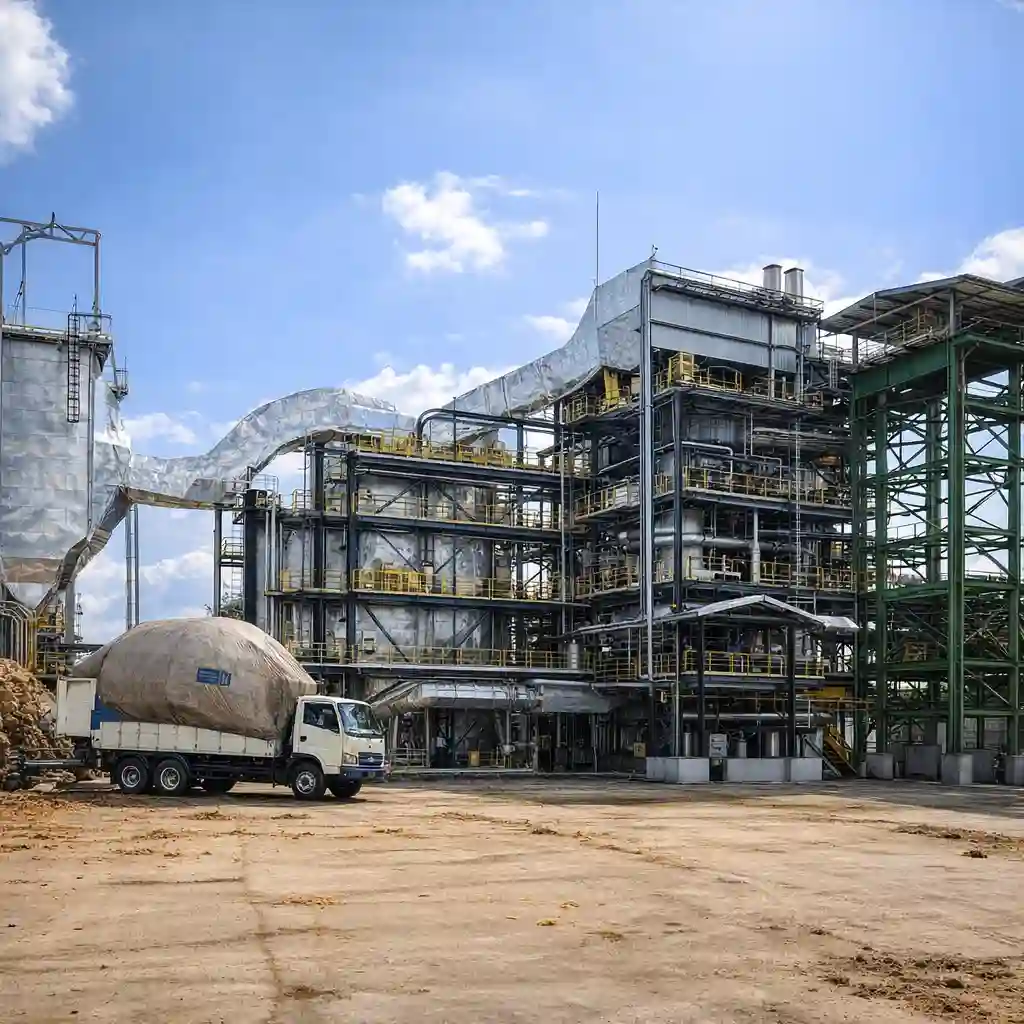
Maharashtra’s sugar, textile, and distillery clusters have faced annual energy spends exceeding ₹5–7 crore from fossil fuel-fired boilers, only to see costs, emission compliance hurdles, and supply volatility escalate. In 2023, as CPCB ratcheted up tightening of emission norms and PAT scheme cycles expanded, several plants retrofitted to high-efficiency biomass fired boiler systems — reporting energy cost reductions of over 28% and emission intensity improvements well above mandated targets within 14 months.
Why Industrial Sectors in India and the GCC are Switching to Biomass Fired Boiler Systems
Industrial plants across food processing, distilleries, sugar, textiles, and even cement and paper sectors are aggressively adopting biomass fired boiler systems. In India, more than 40% of sugar mills now operate on bagasse-based boilers, while distilleries increasingly use spent wash or agrowaste blends to lower their primary fuel costs and emissions. In the GCC, agro-industries and food processors seek to hedge against natural gas price volatility while pursuing ESG and local content goals.
Sector Scenarios:
- Sugar Mills: Shift bagasse from waste to main boiler fuel, saving up to ₹1.6 crore/year in steam costs versus coal, while enabling zero fossil fuel operations.
- Textile Plants: Convert rice husk or wood chips to process steam, helping units in Gujarat and Tamil Nadu reduce specific emission load by over 25% for ZLD and ETP integration.
- Distilleries: Use slop-fired systems to combust high-COD spent wash, addressing both fuel needs and regulatory disposal mandates.
How Biomass Fired Boiler Systems Work: Core Technologies and Process Flow
Biomass fired boilers use agrowaste (bagasse, rice husk, wood chips, palm kernel shells, sawdust, etc.) as fuel, combusted in a furnace to generate steam for industrial processes or power generation. Typical system elements include a fuel storage and handling system, combustion chamber (grate, fluidized bed, or stoker design), heat exchange surfaces (water-tube or fire-tube), economizers, air preheaters, and advanced emission control.
Engineering Specifications:
- Capacity: 2 TPH to 200 TPH (steam), common in India: 8–40 TPH for most plants.
- Steam Pressure: 10 kg/cm² to 110 kg/cm² (g), with process plants typically at 16–45 kg/cm².
- Efficiency: 80% (old systems) to up to 92% (modern, with economizer and automation).
- Footprint: 30–60 m²/TPH required for integrated fuel handling and ash management.
- Fuel Flexibility: Systems often engineered for multi-biomass blends (multi-fuel firing capability).
Boosting Energy Efficiency: Quantified Gains in Real Plants
Industry studies and Enercon Worldwide commissioning data show that replacing aging fire-tube fossil boilers (with typical 73–80% efficiency) with modern biomass water-tube setups with economizer and continuous emission monitoring increases boiler efficiency to 88–92%. For a 20 TPH process plant (textile or food), this translates to:
- Annual fuel savings: 2,000–2,800 tonnes versus coal (₹88 lakh–₹1.3 crore/year at ₹4,000/tonne differential, 2024 pricing).
- Steam cycle efficiency: From 74% to 90% (16 percentage point gain), reducing fuel input for the same steam output.
In the GCC, where natural gas is primary, switching to biomass for 25–50% of a plant’s base load can lower energy bill exposure by 12–21%, depending on local subsidies.
Cost Optimization and Payback: Real-World Boiler Economics in India and GCC
Switching to a biomass fired boiler is not just about regulatory compliance—it delivers robust cost benefits. A typical 15–30 TPH biomass boiler installation (with complete fuel handling, emission control, and automation) in India costs ₹4.5–7.5 crore. When fueled by agro-waste at ₹2.7/kg (bagasse or rice husk, 2024 average), compared to imported coal/FO at ₹8–12/kg:
- Fuel savings (20 TPH, 70% load factor): Circa ₹1.1–1.6 crore per year
- O&M cost differential: Slightly higher (biomass: ₹130–₹165/MT steam, coal: ₹110–₹140/MT), but offset by fuel cost windfall
- Typical payback period: 2.7–4.5 years, further shortened by PAT scheme incentives or carbon credits
For GCC plants, local agrowaste or imported biomass blends can be cost-competitive with natural gas above $7/MMBTU. Enercon Worldwide has documented food processing projects in the UAE achieving ROI below 4 years, factoring in dual-fuel flexibility and emission compliance value.
Sustainability, Emissions, and Regulatory Compliance: Meeting India's and GCC's Demands
CPCB’s emission ceilings for SO2, NOx, and particulate matter now apply across sugar, distillery, and textile units. Upgrading to high-ash-mitigated biomass boilers with automated ESP (electrostatic precipitator) and CEMS typically reduces particulate emissions by 75–90% versus old units, easily meeting norms (<100 mg/Nm³ PM for stack emissions). Biomass combustion, depending on source and efficiency, reduces net greenhouse gas footprint by 80–90% compared to fossil fuels.
Key Regulatory Context:
- PAT Scheme: Credits for specific steam consumption reduction, with certificate monetization for over-performance
- CPCB Guidelines: Mandate online emission monitoring for units ≥25 TPH; stringency rising in all major industrial clusters
- GCC Standards: National air quality and water conservation benchmarks, increasingly referencing European and US EPA best practices—biomass systems engineered to comply position plants strategically for future expansions
The Cost of Non-Compliance and Delay: Hidden Risks for Industrial Plants
Plants postponing a biomass conversion risk more than high fuel bills. CPCB and state boards have issued over 190 closure notices in 2022–23 alone for outdated, non-compliant boiler operations across textile and paper clusters in Gujarat and Punjab. Penalties for missing PAT scheme targets run ₹10–₹40 lakh per cycle for a mid-sized steam plant, and repeat audit failures trigger production shutdown risk. Over the next five years, non-compliance will likely mean:
- Tariff ineligibility for green energy-related incentives
- Negative findings in ESG and lender audits—impacting working capital costs
- Escalating maintenance from unplanned outages in old fossil systems
Enercon Worldwide advises clients that the cost of inaction—between avoidable emission penalties and excess fuel spend—can exceed ₹75 lakh per year for a single 20 TPH boiler room, before factoring in lost production days from emergency regulatory action.
Common Implementation Challenges and Proven Solutions in Biomass Boiler Retrofits
No new energy system is risk-free. Adopting a biomass fired boiler involves:
- Fuel variability: Agro-waste moisture can range 6–50%. Modern systems use twin-feed grates, automated stoking, and fuel pre-drying to stabilize combustion.
- Space and integration: Footpringt for storage/handling; Enercon Worldwide includes 3D site modeling to optimize fit in legacy plants.
- Start-up ramp time: Biomass systems have slower ramp-up than oil/gas. Automation and hybrid controls can optimize startup and system harmonization.
- Manpower: Operator training essential for ash/slag handling, ESP/automation use—delivered as part of post-commissioning support.
By proactively addressing these technical issues, most plants report stable, predictable steam output within 6–9 months of commissioning, comparable to oil/gas benchmarks but at much lower ongoing OpEx.
Technology Comparisons: Biomass Fired Boilers vs. Coal, Oil, and Advanced Alternatives
Biomass vs. Coal: Modern CFBC and AFBC biomass units achieve 88–92% efficiency, on par with best-in-class coal boilers, but avoid ash disposal issues and eliminate SO2 emissions (with low-sulphur fuel). Biomass fuel variability and supply chain are more complex but are manageable through multi-fuel design and local storage planning.
Biomass vs. Oil & Gas: While oil/gas-fired units offer faster response and higher automation, their threefold higher fuel cost and mounting environmental costs make them difficult to justify unless uptime is critical and biofuel supply is constrained.
When to Choose Which?
- Biofuel abundant and regulatory scrutiny high: Biomass wins, especially for ZLD, ETP, and emission-driven sectors.
- Limited footprint, highly variable steam loads: Hybrid (biomass + gas) may make sense for food or pharma units.
- Future hydrogen blending: High-spec water-tube units are superior, offering easier migration toward green fuels.
Deep Dives: Sector-Specific Applications of Biomass Boiler Systems
Sugar Mills Using Bagasse-Fired Boilers
Sugar mills generate bagasse as process waste. Enercon Worldwide has engineered 60+ projects where high-pressure bagasse-fired boilers (60–90 bar) enabled surplus electricity export in co-gen mode, reducing off-season power purchase and achieving PAT over-performance by 18–27%.
Distilleries Utilizing Spent Wash
Distilleries in UP and Maharashtra face both fuel demand and waste disposal headaches. Enercon’s high-COD slop-fired systems combust spent wash directly, replacing 35–50% fossil fuel needs and lowering annual compliance cost by ₹19–₹36 lakh for a 120 KLPD distillery.
Textile Clusters Converting to Agro-Waste
Gujarat textile cluster operators have swapped coal with rice husk and wood chip-fired boilers, integrating with RO+ZLD water systems. This shift reduced stack PM10 emissions by 60%, fuel spend by 33%, and returned payback in under 4 years, all while meeting stringent CAQM requirements for the National Capital Region.
Future Trends in Biomass Boiler Technology: What’s Next?
Several innovations will define high-performance biomass fired boiler systems over the next 3–5 years:
- Hydrogen-Ready Designs: Boiler OEMs like Enercon Worldwide are engineering multi-fuel/biomass/hydrogen hybrid units, allowing gradual decarbonization with minimal downtime.
- AI-Driven Predictive Maintenance: Advanced sensors with machine learning algorithms optimize combustion, scheduling cleaning and maintenance based on real-world data—minimizing forced downtime.
- Modular Plug-and-Play Systems: Especially suited for brownfield retrofits in space-constrained facilities; modules pre-tested at factory, reducing site work and commissioning cycle by up to 30%.
- Integrated Emission Control: Next-gen ESP and bag filters with online monitoring for real-time compliance reporting to CPCB or GCC authorities.
Decision-Making Criteria: How to Select the Right Biomass Boiler System
Given the capital and operational stakes, a structured approach to biomass boiler selection is essential. Key criteria include:
- Fuel Supply Security: Verify agro-waste/biomass supply chains—at least 1.2–1.5x annual plant needs, with dual-fuel capability if possible.
- Efficiency & Compliance: Insist on 88%+ guaranteed efficiency (for water-tube units), online CEMS/ESP for emission, and certified ash disposal protocols.
- Retrofitting & Integration: Assess footprint, tie-ins with existing utilities, and automation compatibility (SCADA/DCS integration).
- Vendor Capabilities: Prioritize EPC players like Enercon Worldwide with proven commissioning track record and local after-sales manpower.
- Payback & Incentives: Demand detailed ROI models with sensitivity analysis—fuel cost volatility, PAT/ESG incentives, and process steam utilization efficiency.
Warning signs for urgent action: repeated regulatory warnings, unscheduled fossil fuel outages, steam cost above ₹1,800–2,000/tonne, and persistent emission exceedances. Plants facing any of these should request a detailed feasibility/energy audit without delay.
Moving Forward: Project Timelines, Compliance Deadlines, and the Role of Enercon Worldwide
Most industrial biomass boiler projects in India or the GCC require at least 8–14 months from initial site assessment to successful commissioning. As the next PAT cycle deadline looms in April 2026, and with enforcement of stricter CAQM and CPCB norms, units intending to benefit from compliance-linked incentives must start project evaluation by Q2 2025 at the latest.
Recommended Next Steps:
- Initiate a formal energy audit, including current boiler efficiency and emission baseline.
- Engage with a solution engineering partner (such as Enercon Worldwide) for site-specific feasibility, payback, and integration planning.
- Assess project funding options, considering available PAT/ESG/green financing incentives available to Indian and GCC manufacturers.
Waiting risks compounding costs—from penalty outflows and rising fuel differential to missing generational retrofitting windows that can lock in compliance and energy savings for a decade. Factories that start their switch now will be best placed to not only meet the next round of regulatory challenges, but also to benchmark operational performance and sustainability leadership going forward.
Related Enercon solutions
Planning an energy or utility project? Talk to the engineers at Enercon Worldwide or request a consultation. You can also browse all our business areas.